The Building Automation System succeeded in reducing energy costs (natural gas and electricity) at the WPCP. Reducing the heating and ventilating (H&V) requirements in two of the main buildings when unoccupied could lead to significant savings. A computer-based BAS was installed to manage the H&V for:
- Biological Aerated Filter (BAF) building
- Dissolved Air Floatation (DAF) building
Levels of ventilation and heating
By code, specific minimum levels of ventilation and heating are required during both occupied and unoccupied times. We can operate the BAS using either programmable schedules or occupancy sensors to regulate the H&V systems.
Annual savings
Based on current utility rates and average heating degree days, the estimated total annual savings to-date as a result of this project are:
- $84,000/yr Natural Gas
- $29,000/yr Electricity
$113,000/yr Total
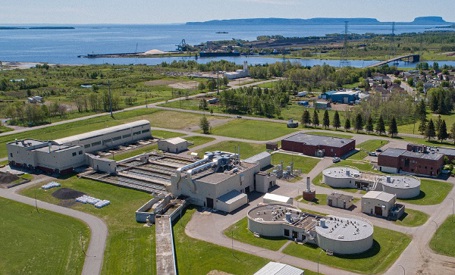
Thunder Bay's Water Pollution Control Plant (WPCP) has undertaken several projects aimed at lowering operating costs and reducing the City’s carbon footprint and air emissions. This is according to the City of Thunder Bay’s goal to reduce greenhouse gas (GHG) emissions, energy and fuel consumption as per the 2015-2018 Corporate Strategic Plan strategy 8.2, and aims set forth in the EarthCare Sustainability Plan 2014-2020.
These savings initiatives include:
- New Building Automation System (BAS) to control building heating and ventilation
- Replacement of two main sewage pumps
- New higher-efficiency turbo blowers
- New LED area lighting
- Optimization of the cogeneration system
Summary
The City of Thunder Bay's WPCP has made significant strides toward reducing the City’s carbon footprint, air emissions, and overall operating costs. Total savings as of October 2016 for these recent projects is estimated at:
- BAS H&V Controls $113,000/yr
- Main Pumps $110,000/yr
- BAF Turbo Blowers $250,000/yr
- LED Lighting $ 2,300/yr
- Cogen Optimization $ 58,000/yr
- Total Savings $ 533,300/yr
These savings include both bottom-line cost reductions, and economies in the form of ongoing cost avoidance. WPCP’s investment in new technologies and process improvements brings long-term benefits that will continue to return significant savings in the areas of pumping, process aeration, cogeneration, building heating and ventilation, and lighting.
Reducing the City’s carbon footprint and air emissions
We are now studying other opportunities for energy savings and process optimization as possible future projects to enhance cost savings and reduce of the City’s carbon footprint and air emissions.
Our projects