




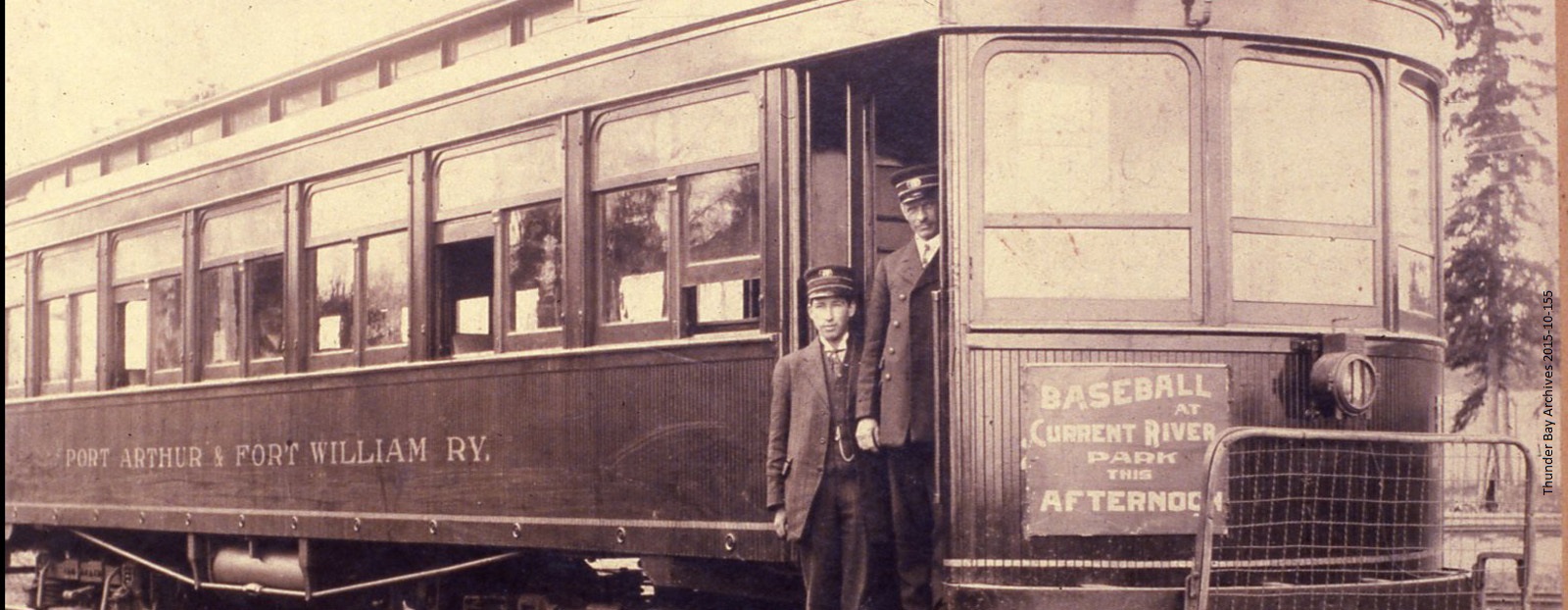


After the Second World War, public transit in the Thunder Bay region began to evolve. The expense of maintaining streetcar fleets and track was too much for smaller cities like Fort William and Port Arthur. Combined with the immediate demand for postwar employment, the introduction of the electric trolley and gas buses proved to be the solution to a number of postwar problems. The switch to bus building allowed companies like Canadian Car and Foundry to remain in business, while at the same time employing hundreds of Thunder Bay residents in need of jobs. From streetcars to buses, the end of WWII brought major changes to the public transportation systems of the Lakehead, and these changes would only continue as the sister cities expanded to eventually amalgamate.
| The Electric Trolley |
|
In 1949, in Port Arthur and Fort William, history made way for the modern trackless trolley coaches which employed two roof poles connected to the overhead wires. Trolley coaches were nothing new. The first primitive version was developed in Germany in 1882, and was being offered as an alternative to the streetcar as early as 1900. Great Britain had begun using them widely in the 1920s. At first there was no market for them in North America because most transit authorities, including those at the Lakehead, had streetcar systems.
Today we know that modern, user-friendly streetcars can play a major role in large urban centres, but they don’t pay for themselves in smaller areas. After the Second World War, even large cities in both Canada and the United States were discovering that they just didn’t have the money required to repair aging street car track, while at the same time replacing rolling stock that was often decades old. Coupled with the need for postwar employment, the introduction of trackless electric trolleys allowed companies like Canadian Car and Foundry (Can Car) to remain in the manufacturing field for decades to come.
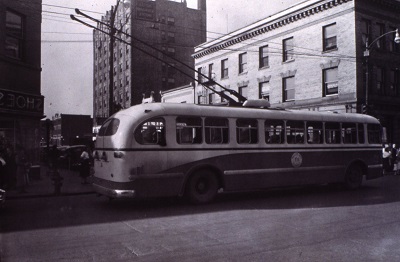
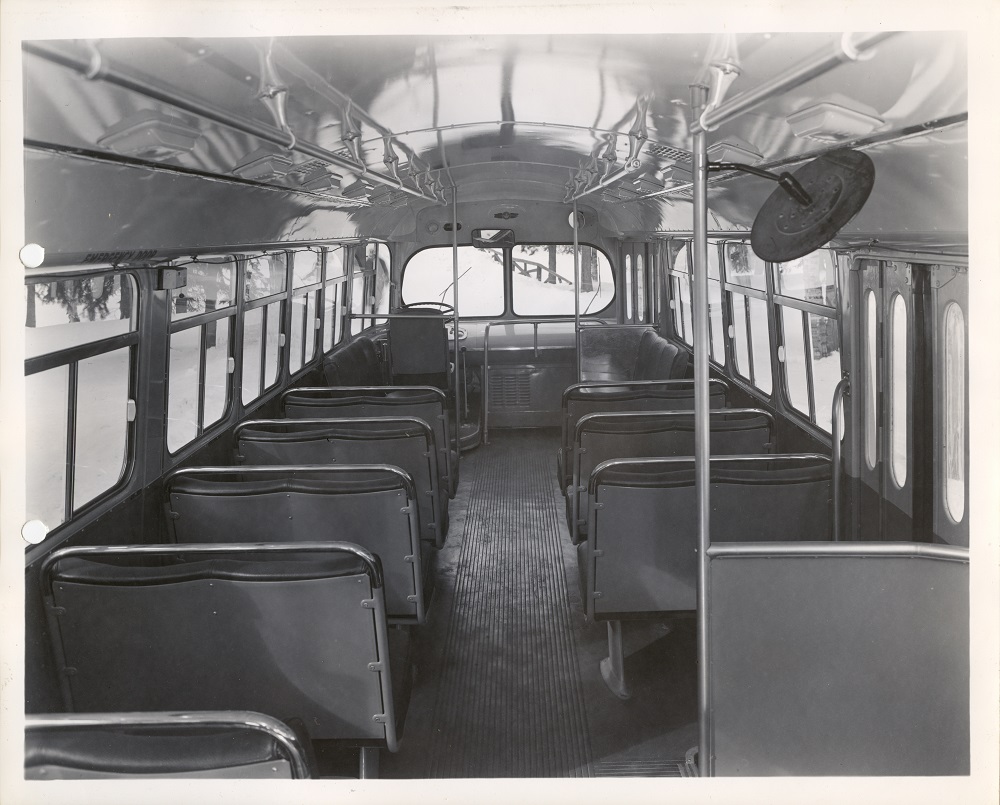
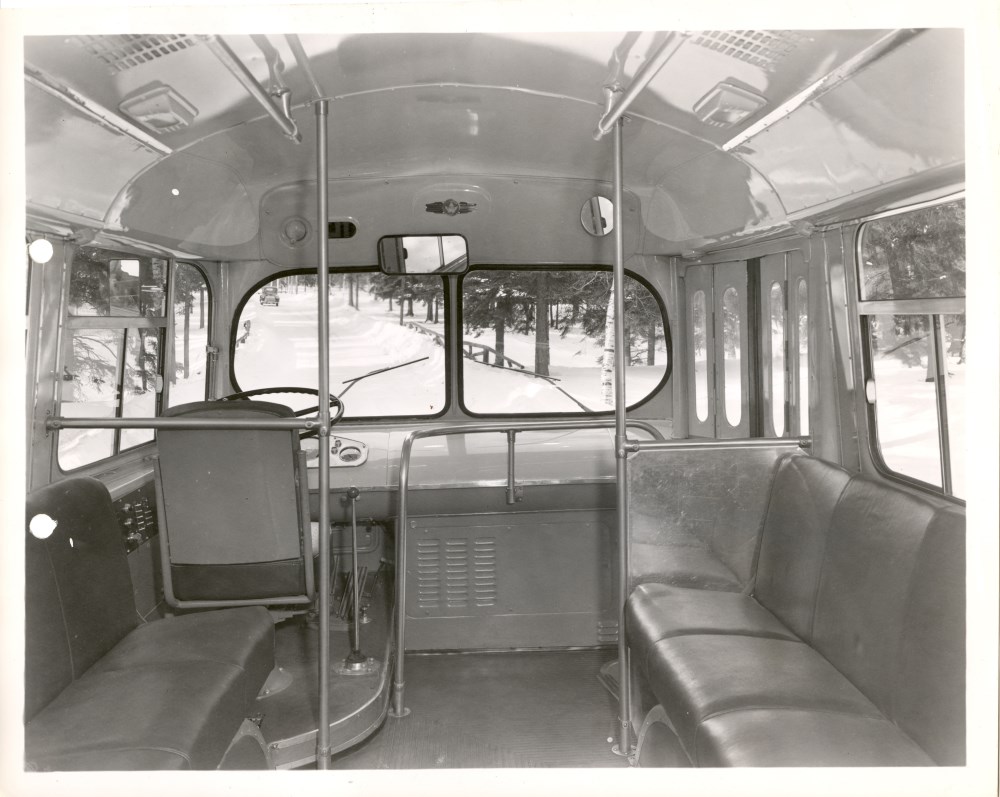
Trolley buses or “Trackless trolleys,” as Can Car at first called them, were immediately attractive to transit authorities across Canada. They were completely pollution-free, they required no tracks and unlike street cars, their flexible overhead poles enabled them to pull over to the side of the street to pick up passengers. Because they ran on electrical power, they were attractive to utilities with a streetcar system who were often locked into long contracts with electric companies. An electric trolley bus motor required less maintenance and had a far longer service life than gas-operated vehicles. By 1947 there were three thousand trolleys in service in the United The buses themselves, which sold for $19,980 each, could accommodate forty-four seated passengers and another twenty-eight standees. They were extraordinarily effective on hills, and their electric heating made for a cozy ride during the Canadian winter. They were also capable of reaching 30km/h in 6.5s, a fact which the Company cleverly trumpeted to transit authorities in the February 1947 issue of the Canadian Car Journal, even as they struck a note of caution: “In cities where the new trolley coaches have been put in operation, it has been deemed advisable to warn the public and motorists that the ten-ton vehicles move silently and without apparent effort and possess an amazing rate of acceleration which might prove startling to motorists accustomed to beating streetcars through tight squeezes by an advantage in pickup.” However, what impressed transit authorities the most was that the public loved the new buses. In June 1947, the Canadian Car Journal reported: “In the first three months Public Utilities Commission trolley coaches at Kitchener, Ont. carried 230,850 more passengers than were carried by the street cars in the corresponding period last year.” Along with Calgary and Winnipeg, they also discovered that high use and low maintenance was netting them greater monetary returns than they had imagined possible. At the Lakehead, the experience was the same as in Kitchener: streetcars were totally abandoned, with the two city councils jointly developing a single interlocking trolley bus line. Residents were required to buy a second bus fare at the Loop beside the Exhibition Grounds as Port Arthur and Fort William remained separate cities at this time.
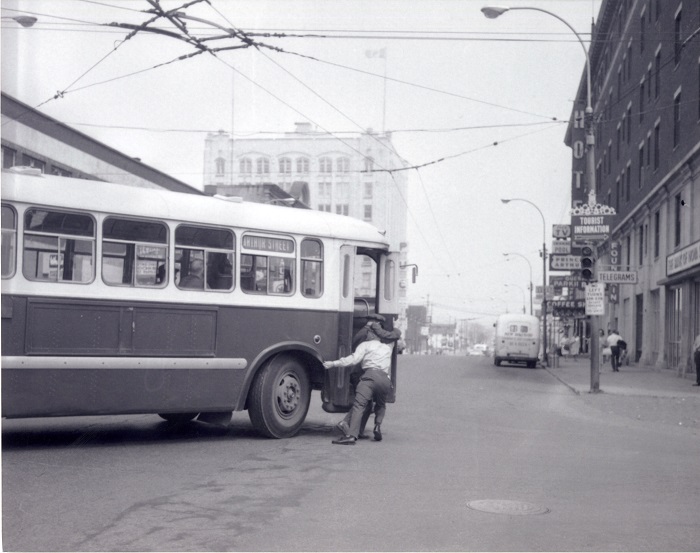
However, electrical technology had its drawbacks. In the Thunder Bay region, if a driver accidentally overshot a corner, the bus would jump the overhead tracks, the trolley system would disengage and the bus would lose power, causing a truck to be dispatched from the transit headquarters to push the bus back on the tracks. The poles that drew current from the overhead lines were sometimes referred to as “wigwags” while the buses ran through a limited service area on 500 volts of DC power that was provided through two overhead lines.
The power was generated from the Walsh Street Hydro yard. It would take nearly all the power in a section of line to enable a bus to climb a hill while other buses waited below for their turn. In Thunder Bay, a central loop was introduced in 1955 and was located near the Canadian Lakehead Exhibition Grounds where buses would turn around to remain in their cities while passengers disembarked and transferred to continue their journey. During wet or icy conditions, the first bus out in the morning would be fitted with carbon shoes on the trolley connectors. This bus would travel the entire line systems and clean water and ice from the lines. The rest of the buses would then follow normal routes. Retired controller Jim Baker reminisces in a newspaper article: “Times were busy back then. Drivers would spend mornings using extra buses (motor coaches) to transport students, elevator, mill and plant workers to their schools and jobs. They would then pick up their regular shift through the afternoon and evening.”
Cities that have stuck with their trolley buses are glad of the decision; the electrical motors on these vehicles have few moving parts and last practically forever. Unfortunately, many cities, including the Lakehead, abandoned trolleys in the 1960s for the flexibility of gas and diesel buses. with the amalgamation of Fort William and Port Arthur in 1970, diesel and gas-powered buses were on the horizon. By 1972, the last Brill trolley was retired. |
| Canadian Car and Foundry |
|
Shortly after the Second World War, when the Canadian Car and Foundry plant (Can Car) was slated to close, more than 5,000 employees who made a living building Hell Driver aircrafts were facing layoffs. A last minute partnership with American Car and Foundry (ACF) gave hope for jobs during the years following the war. For upwards of two decades Canadian transit authorities had made no new fleet orders due to economic depression and war. The ACF-Brill Motors of Philadelphia, who had been in the public transportation business since 1869 by manufacturing horse-drawn streetcars, was now a new partner of the Fort William plant of Can Car.
The partnership with ACF-Brill was an especially fortunate decision for both sides. On the one hand, Can Car now had access to both an excellent design and Brill’s decades of experience in bus making. On the other, Can Car’s years in aircraft building had given it great expertise in working with aluminum and other light alloys and Brill’s personnel needed that expertise in developing and manufacturing a new generation of lightweight buses. When it was announced that Can Car would be moving into the bus business in March 1945, the Canadian economy was still on a war footing with essential manufacturing materials often difficult to find for peacetime use. Buses would make their way to depression and war weary transit facilities in constituencies across the nation. Canadian Car promised that the new vehicles would have “the highest possible proportion of Canadian components and material” including great amounts of aluminum to be supplied by Alcan in Southern Ontario, which was of course scheduled to lose a great proportion of its business as the wartime aircraft industry wound down.
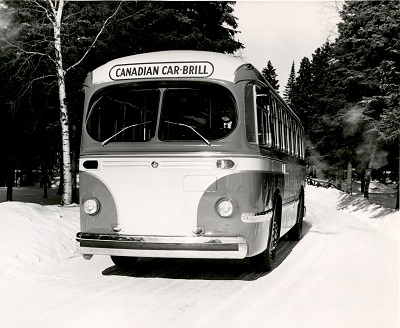
Fittingly, one of the first orders for Can Car buses came from the Lakehead. On August 30, 1945, at a special meeting of the Port Arthur Utility Commission, it was announced that the city would purchase 10 gasoline buses at a cost of $13,800 apiece—and investigate the possibility of getting a fleet of trolley buses. For a year after the war had ended, Can Car used Building 8 at the plant as a training centre for veterans to learn various technical trades. Despite the Second World War having a long remaining presence at the plant, the main focus of attention was understandably the new bus production line. The bus line was one of the best organized production efforts in the plant’s history and its workforce was out to prove that to cities across Canada: incredibly, the first bus rolled off the line on September 26, 1945, exactly six short weeks after the surrender of Japan. Less than a month later, it was delivered to BC Motor Transportation Company. From the beginning, there were two product lines, one for intercity coaches, and the other for city transit use. Incorporating such new technical features as Duo-flex springs and air conditioning, the intercity bus, the IC41, was named “The Country Gentleman.” The plant’s aircraft background was reflected in bodies, framing and sub-structures that were virtually all aluminum in construction.
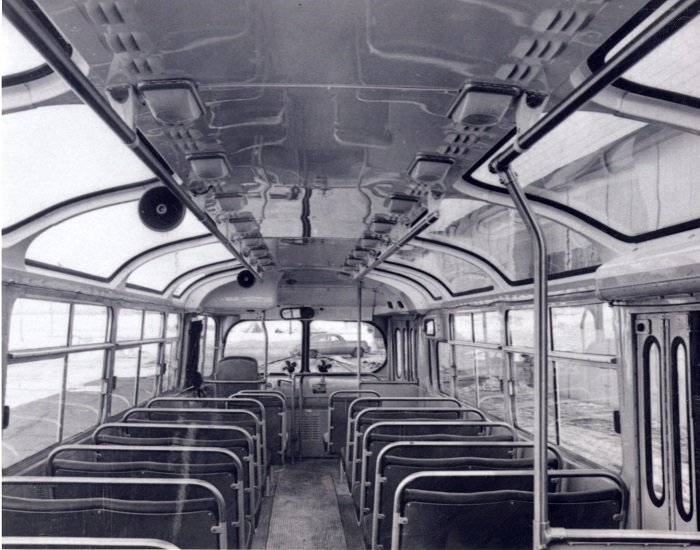
The city transit bus, whose first model number was C36, began with a 36 passenger capacity - which grew to 52 as new design followed new design over the years. Like the Country Gentleman, it was powered by a Hall Scott six cylinder, 5.025 liter gasoline engine developing 214 horsepower (160 kw) at 2200 rpm; made in a “pancake” style to fit under the bus floor, it allowed for a more streamlined, compact vehicle design. In design terms, perhaps the most distinctive feature of buses was the large number of curves. Unlike today’s box-like designs, both the Country Gentleman and the C36 had roofs that flowed smoothly at front and rear into the main body of the vehicle. The curves were achieved by “spinning", a high labour-intensive process by which flat pieces of metal are gradually shaped. Used originally for Hurricane nose cones, spinning would be phased out of later designs for Can Car buses. Assembling the Buses
Much of the work along the line was more labour intensive - and tougher - than it is today. One of the dirtiest jobs was buffing the rub strips. These were strips made out of aluminum about 3 inches wide; they ran on either side of the bus and across the bumpers. The buffing room was in “C” bay, and if one went in the room where they were, everything was coated in black from the wax being blown all over the place.
As with any production effort, there were the inevitable snags. The building of public transit vehicles to take a constant daily pounding is much more difficult than one would imagine. “There was a lot of trouble in bus building because there was no inspection of the parts of any kind. They would make them fit right on the line - there was an awful lot of rejection and stuff, compared to an aircraft where everything was measured and so on, and things had to fit."
While line inspection - at least at the beginning of the bus era - may have been somewhat cursory, the quality inspection at the end of production was very thorough indeed. Every bus which came off the line was put through a detailed set of tests by the Bus Technical Section then put into the hands of a test driver who put the new vehicle through its paces, both on the streets of Thunder Bay and in the surrounding countryside. One of the main difficulties was adapting the buses to Canada's frequently hostile winter weather. Buses in the northwestern Ontario region had trouble with their under frames rotting and deteriorating. The problem was fixed by developing an under panel that could be installed in winter to protect the bottom of the vehicles. By May 1950, Can Car had manufactured its 2,000th bus. Can Car and Foundry, in making the buses, had used nearly 100,000 square meters of plywood from Canada's west coast - and more than 3,000 tons of aluminum mined in Quebec and processed in Ontario. Can Car would go on to expand their manufacturing capabilities as they had entered the rail-car market as well when they began manufacturing buses. Economic decline in the late 1950s and the shrinking of the bus market after the post-war era forced the company to refocus their production line on subway cars, streetcars, and commuter rail cars. In 1992 the facility was acquired by Bombardier and has continued rail car production to this day. |
| Trolley Versus Gas Study |
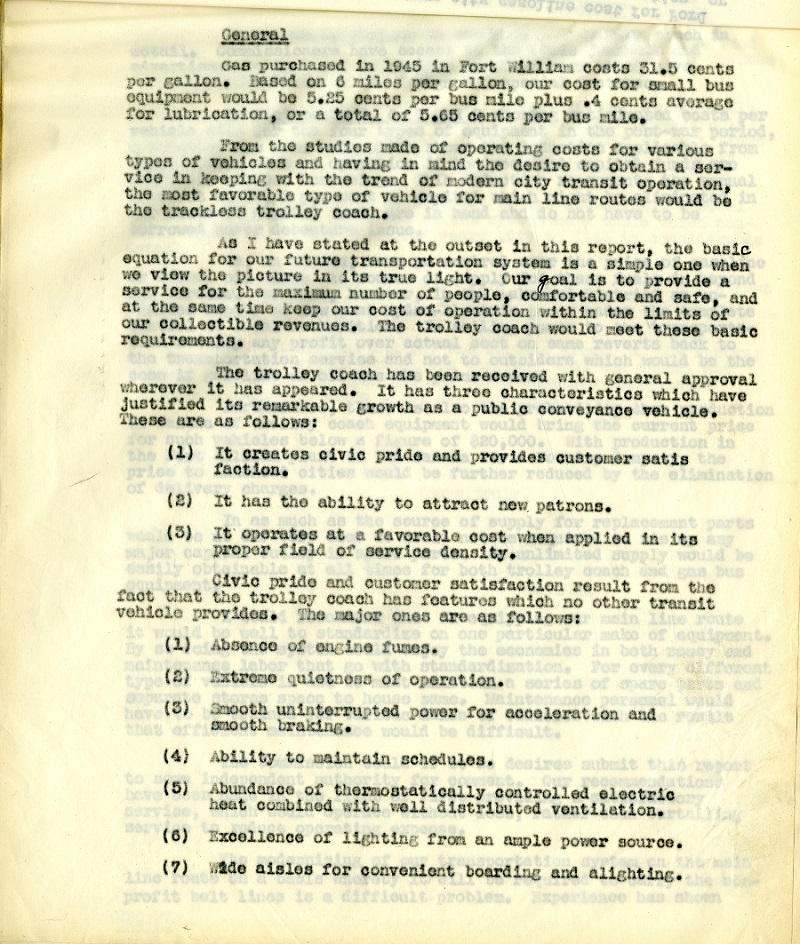
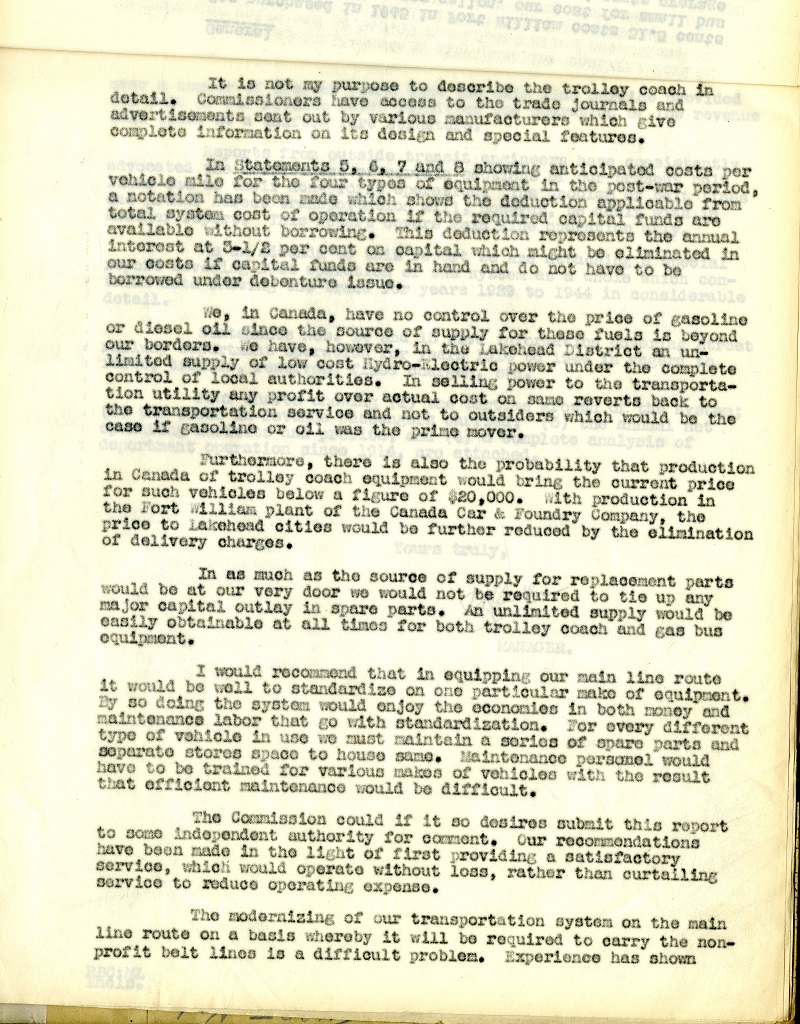
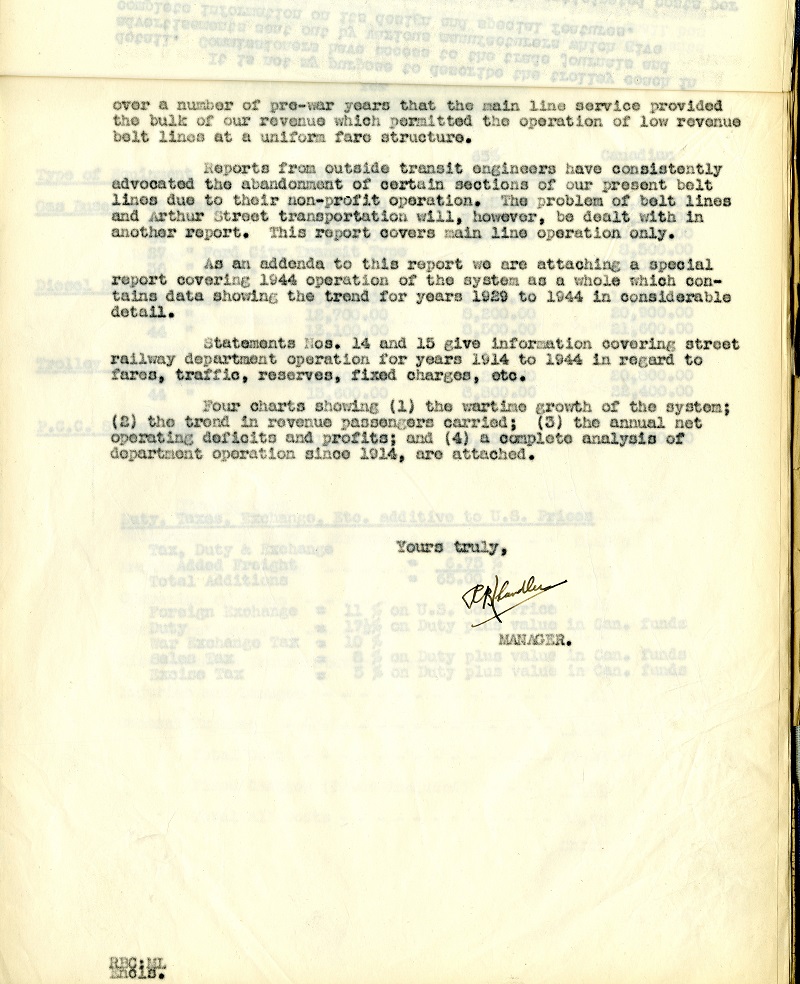
| In the 1940s, a number of studies were undertaken to examine the operating costs of various types of vehicles and which one would be able to stay in line with the trends of modern city transportation of the time. It was found that the most favorable type of vehicle for mainline routes would be the trackless trolley coach instead of gas buses. Below is the general findings and recommendations pertaining to the Trolley Versus Gas Study. As a result of these findings, Port Arthur and Fort William began introducing trolley buses at the end of the 1940s ushering the next era of public transit at the Lakehead.
|
| Photographs 1940s-1970s |
|
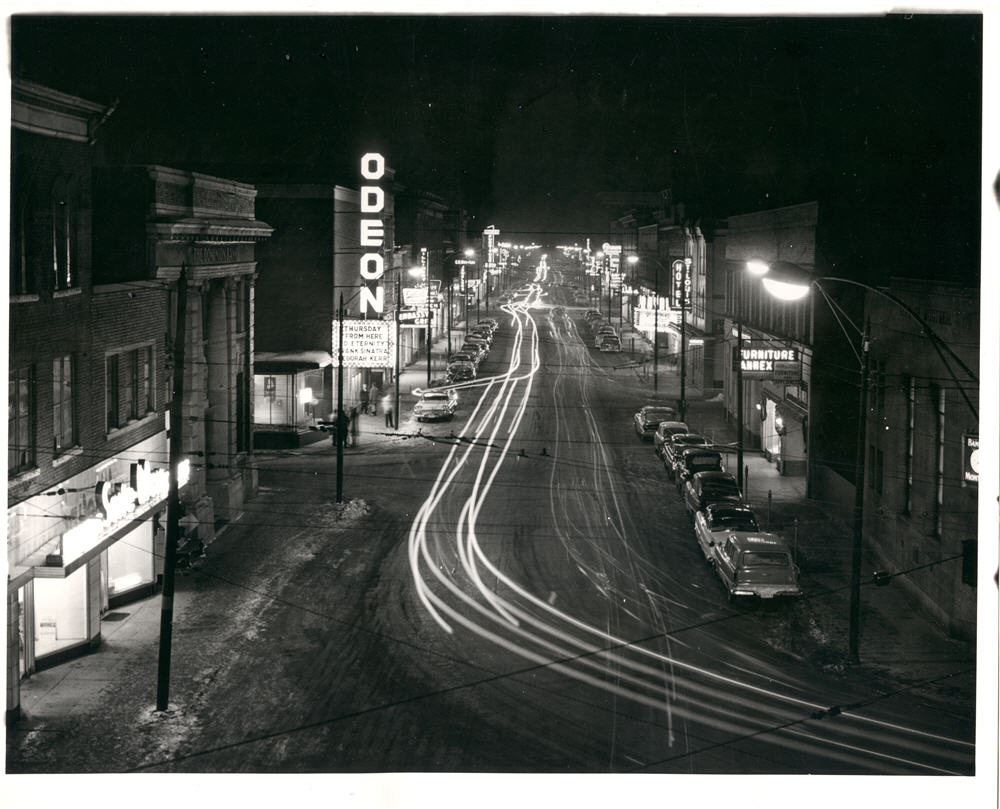
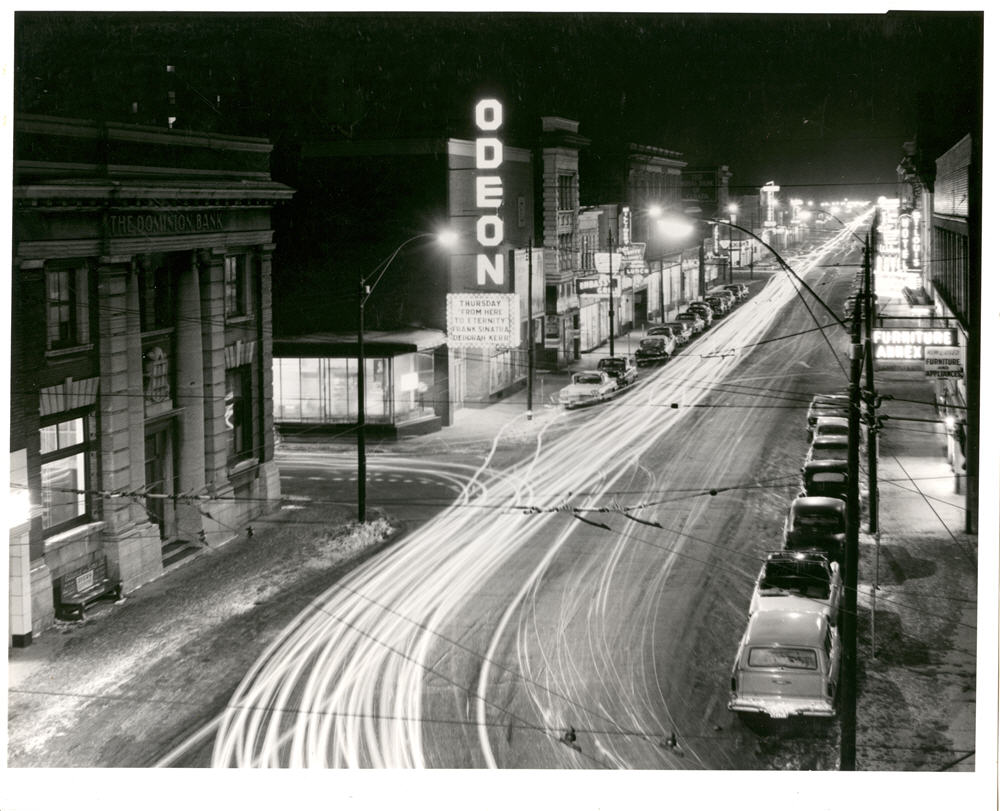
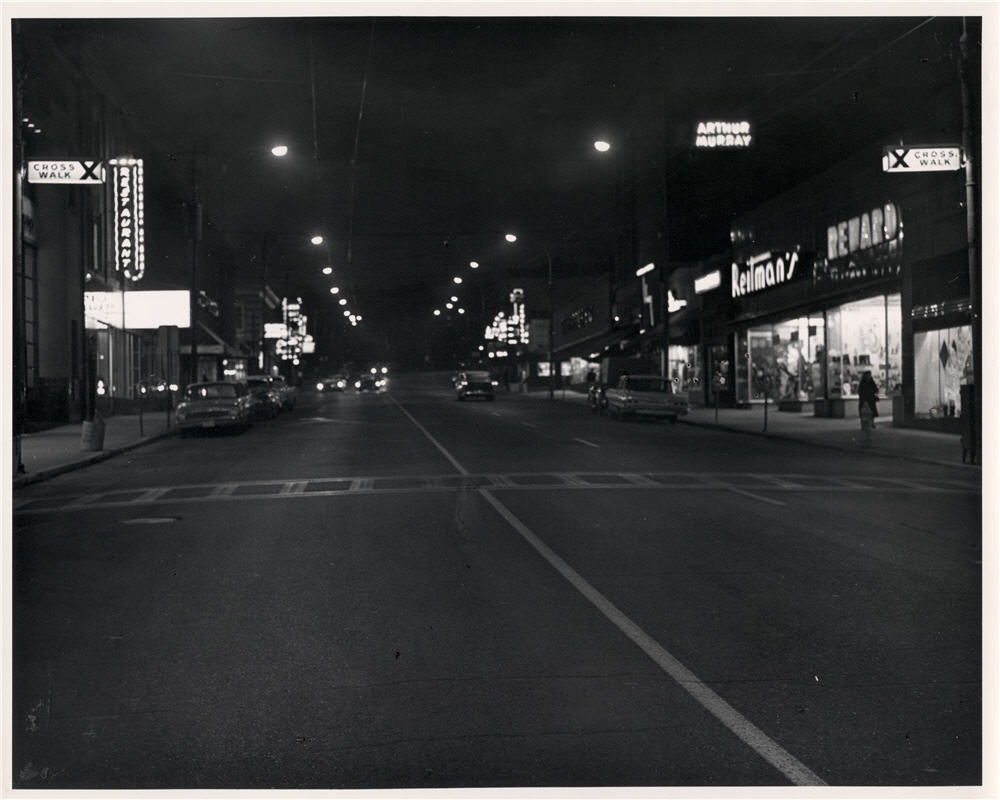
Title: Victoria Avenue at Night
Title: Victoria Avenue at Night
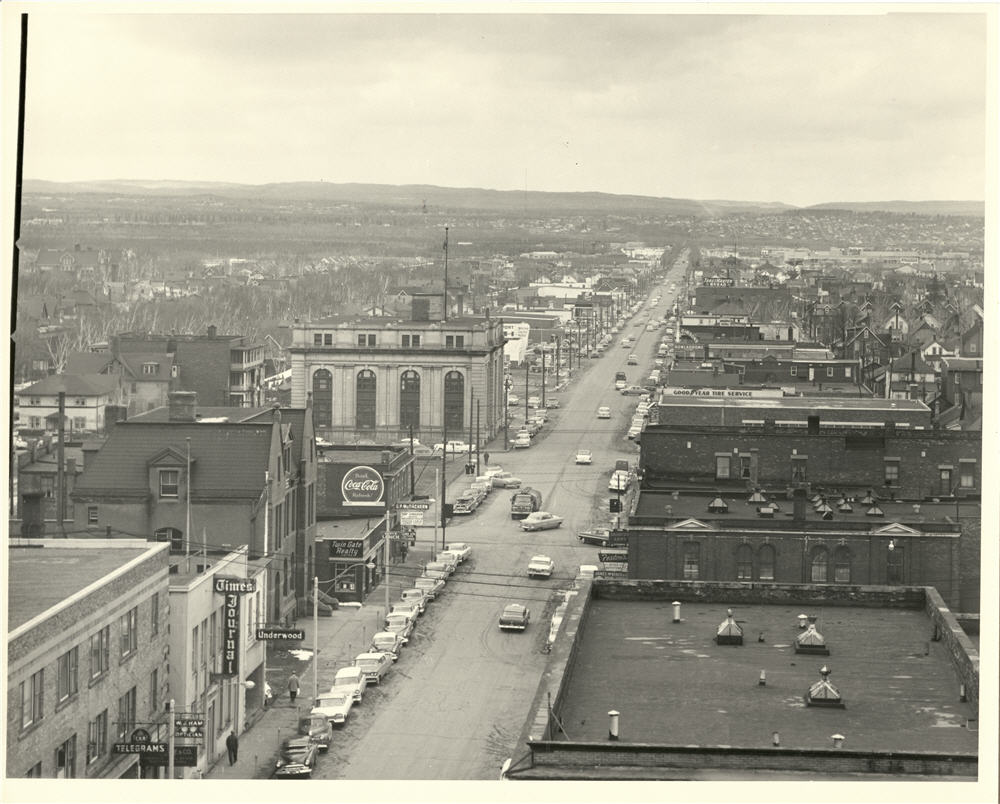
Title: View of May Street Date: 1950s
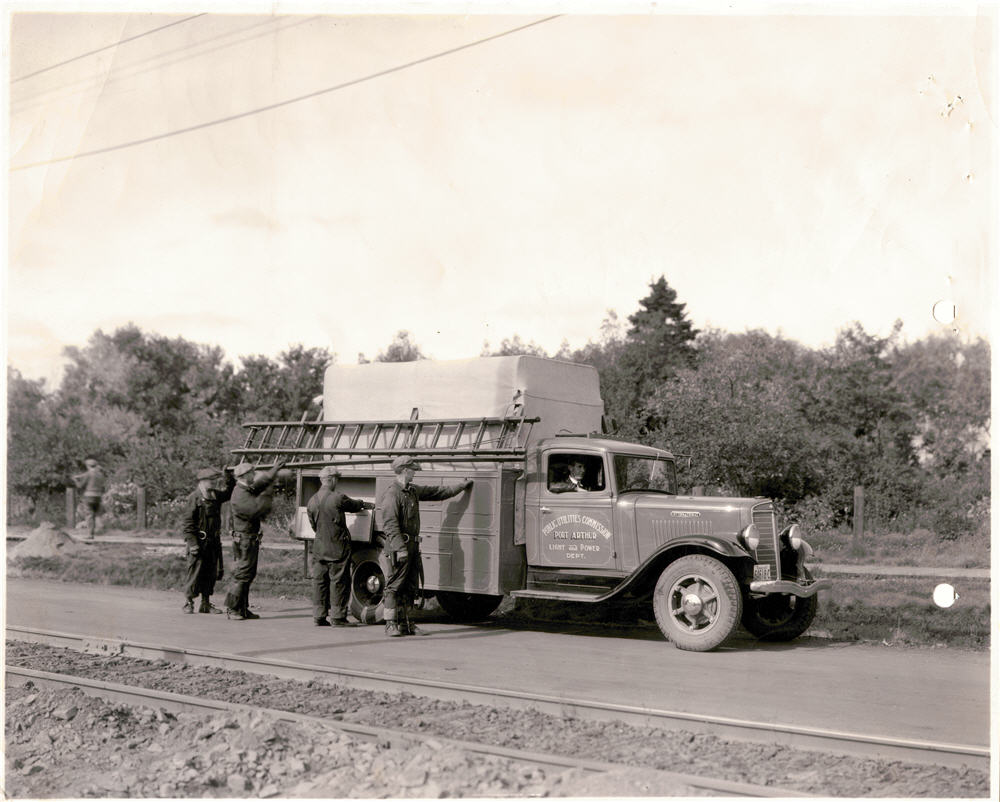
Title: Port Arthur Public Utilities Commission Light and Power Department Truck Title: Bus
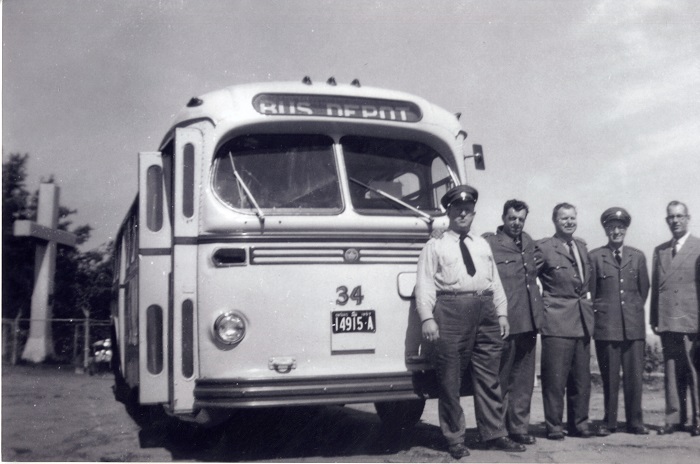
Title: Bus
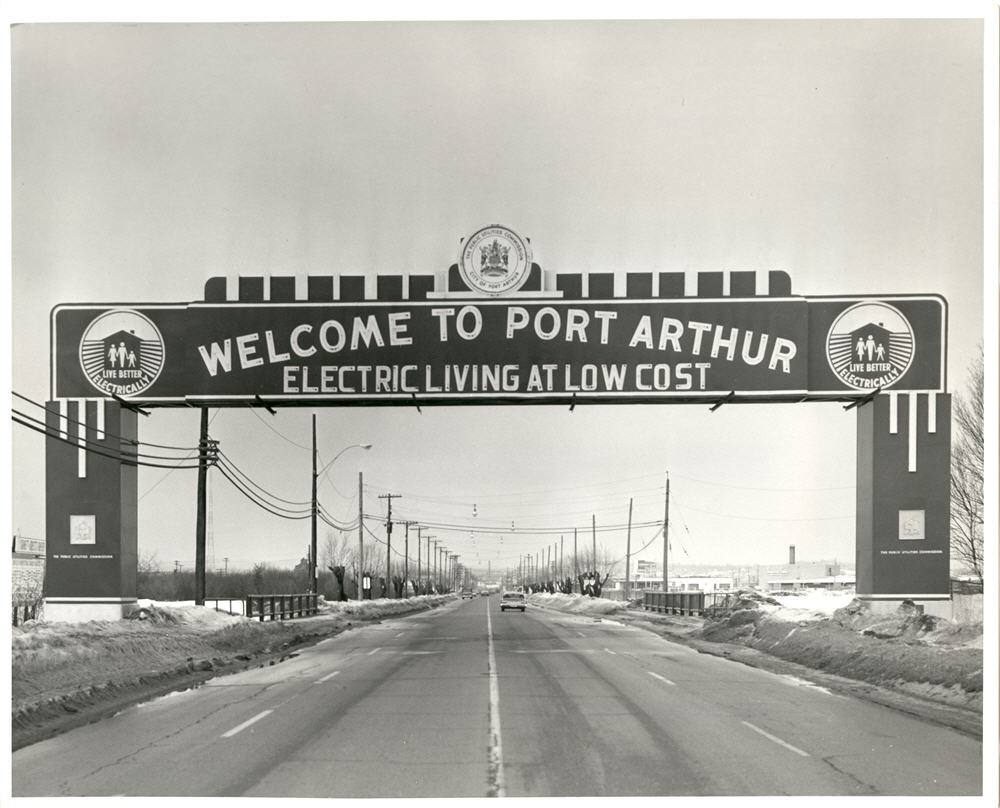
Title: Welcome Arch
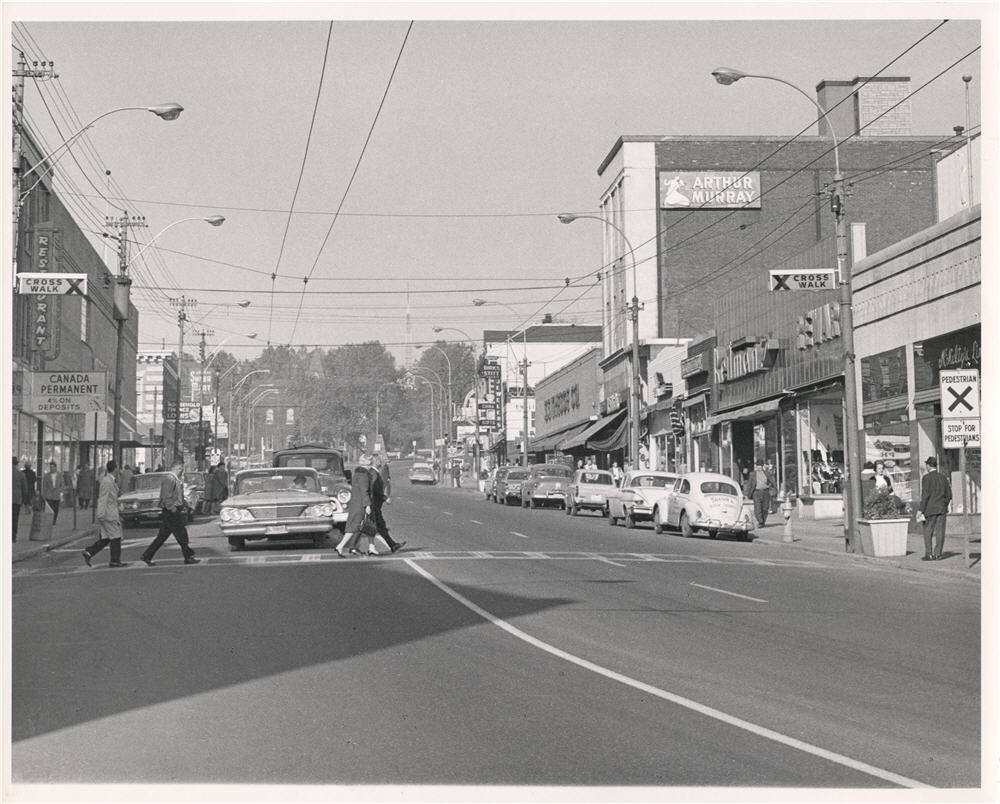
Title: Street Scene
Title: Street Scene
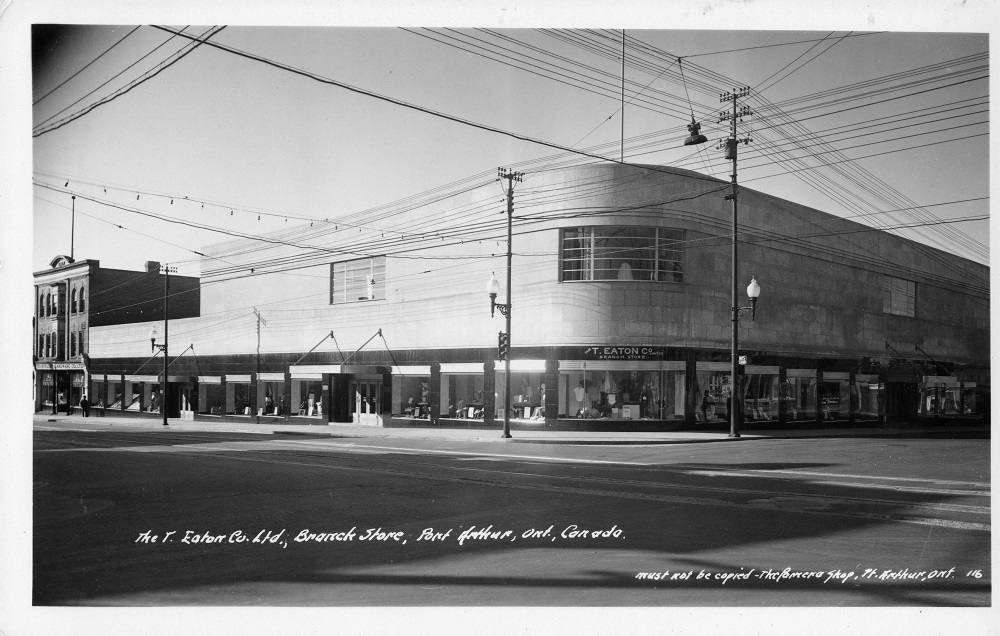
Title: The T. Eaton Co. Ltd, Branch Store, Port Arthur Ontario, Canada Date: (c.1930s)
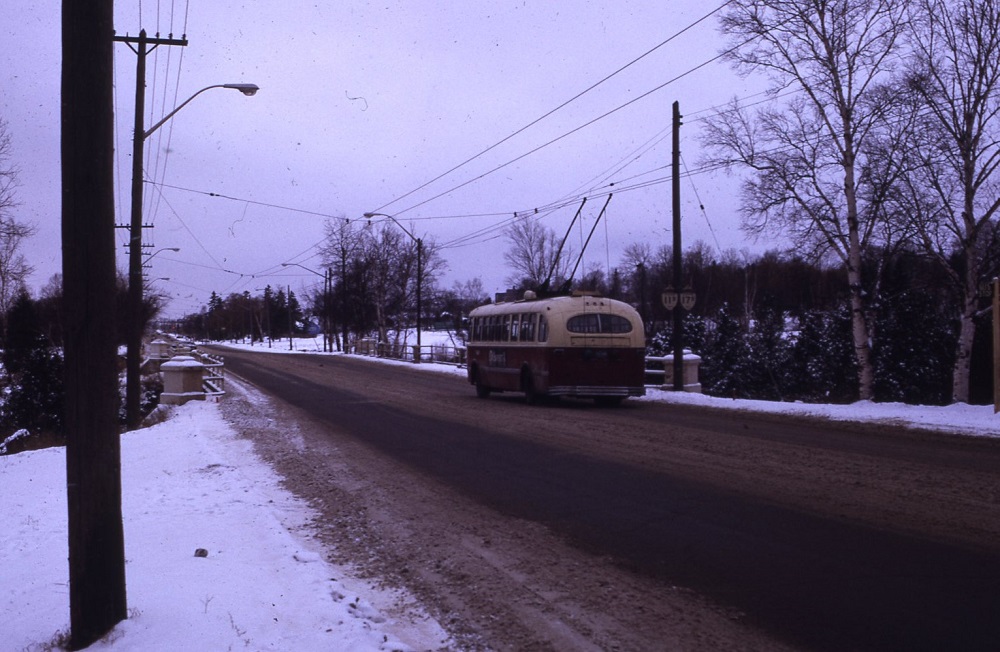
Title: Trolley Bus
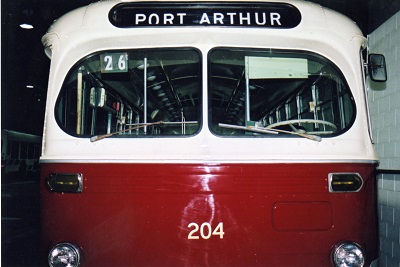
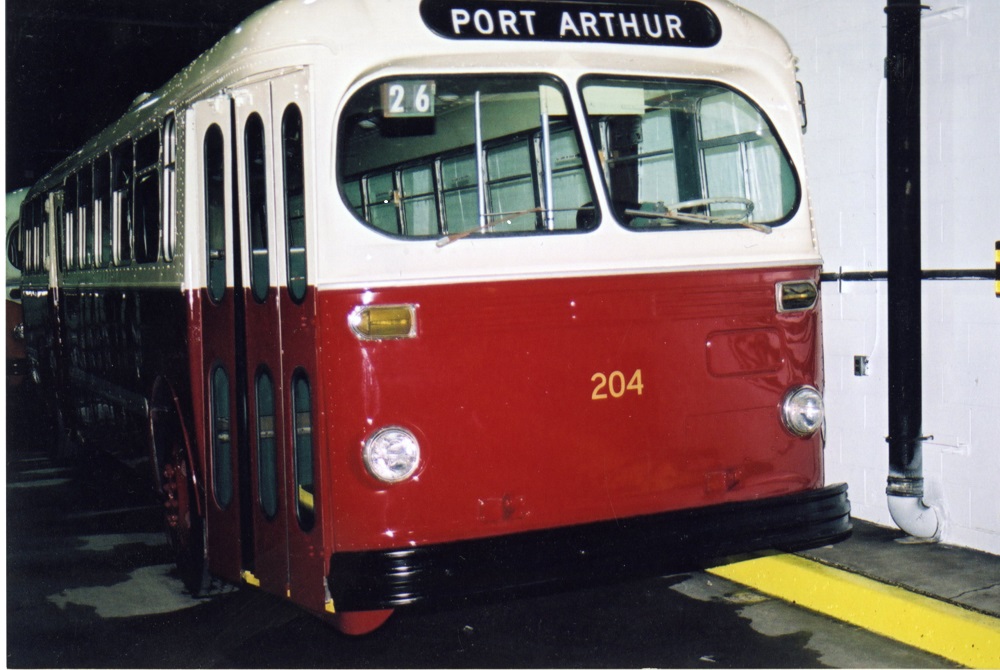
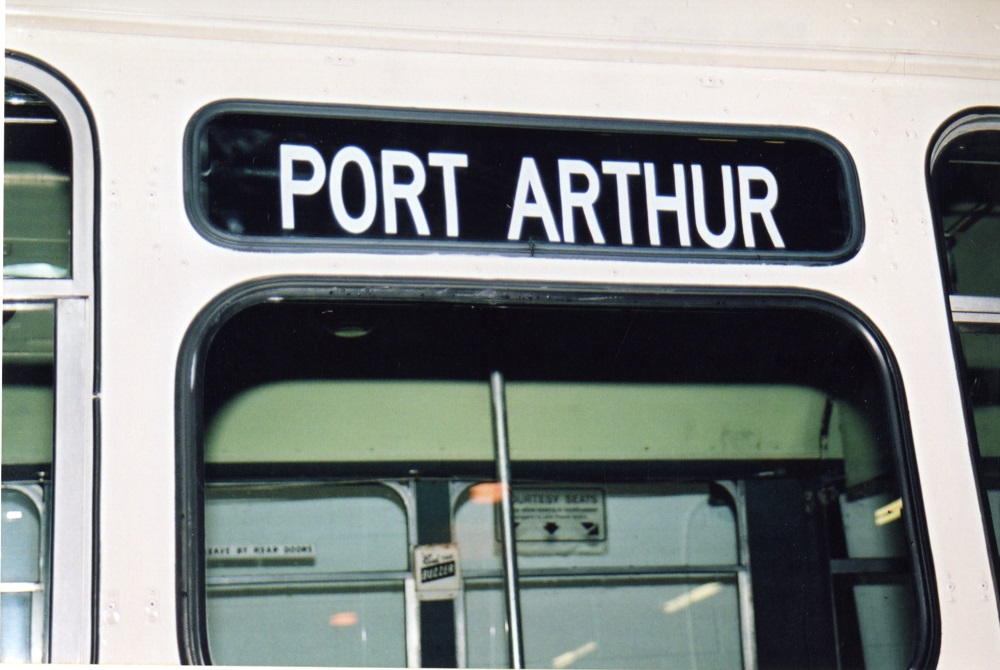
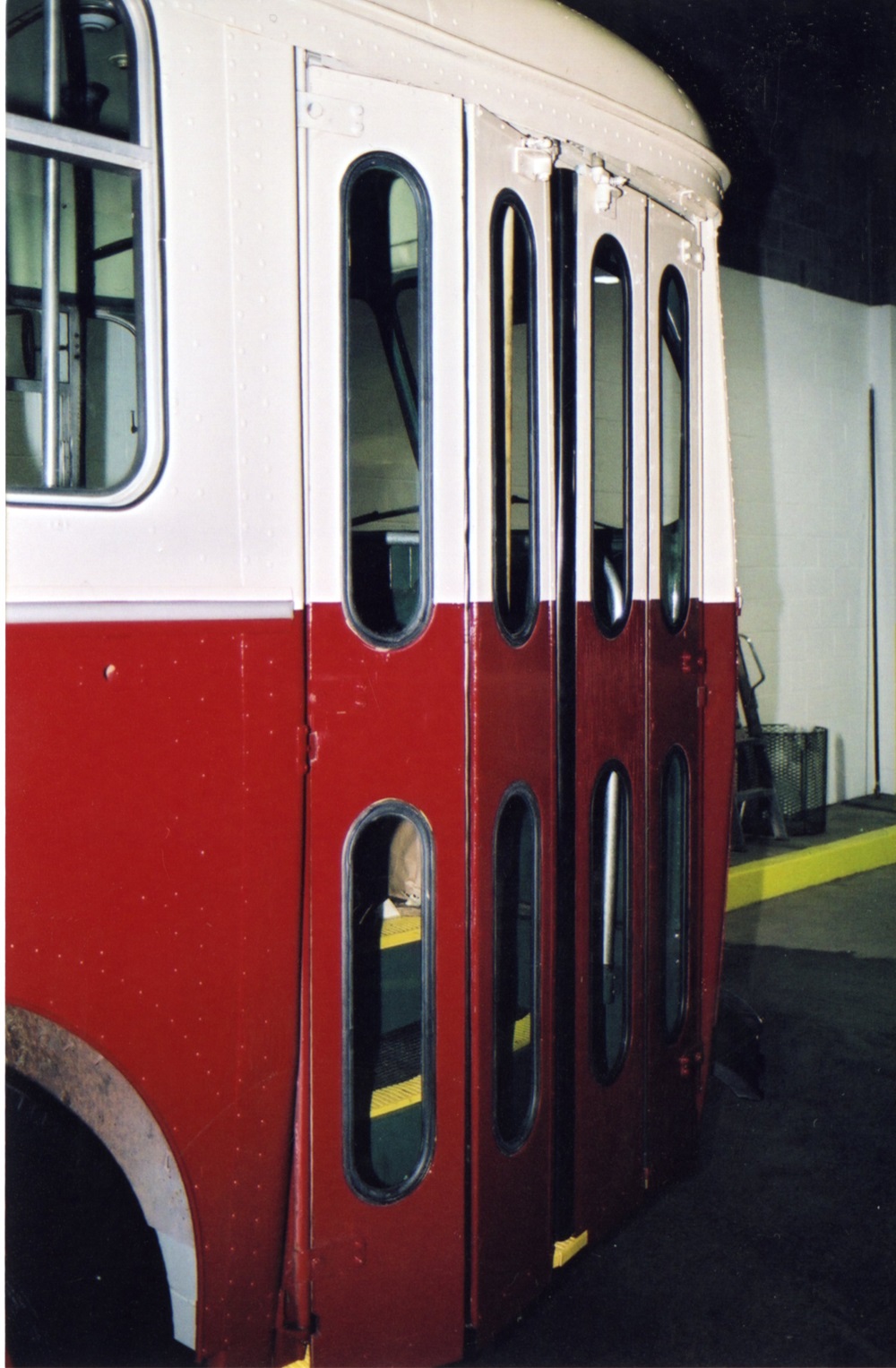
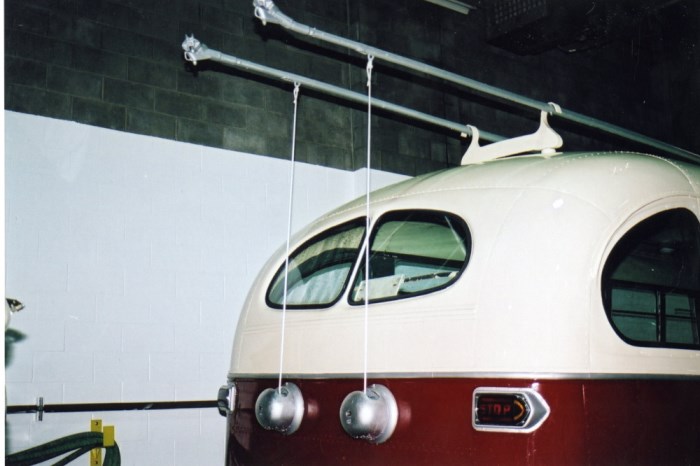
Title: Brill Bus #204 Port Arthur
Title: Brill Bus #204 Port Arthur
Title: Brill Bus #204 Port Arthur
Title: Brill Bus #204 Port Arthur
Title: Brill Bus logo
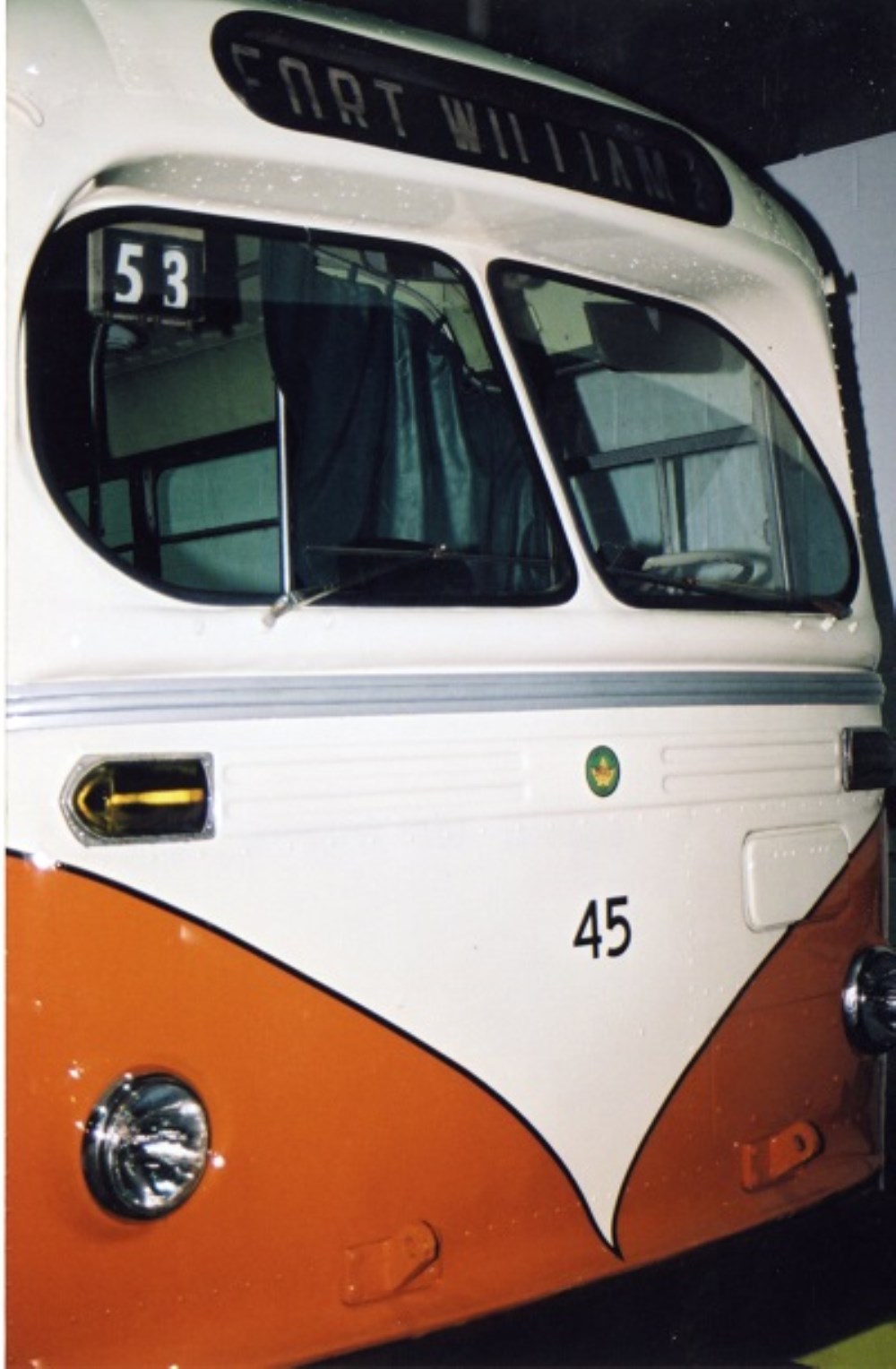
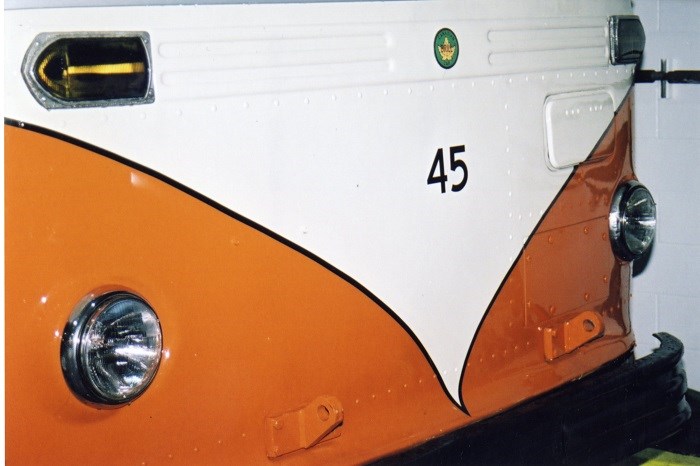
Title: Brill Bus #45 Fort William
Title: Brill Bus #45 Fort William
Title: Brill Bus #45 Fort William
Title: Brill Bus #45 Fort William
Title: Brill Bus #45 Fort William
Title: Victoria Avenue Street Lights
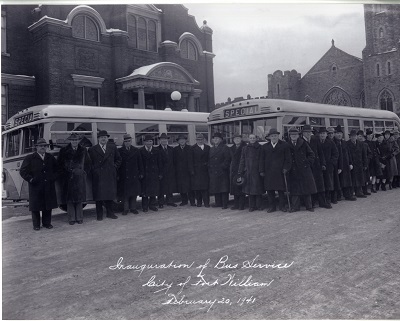
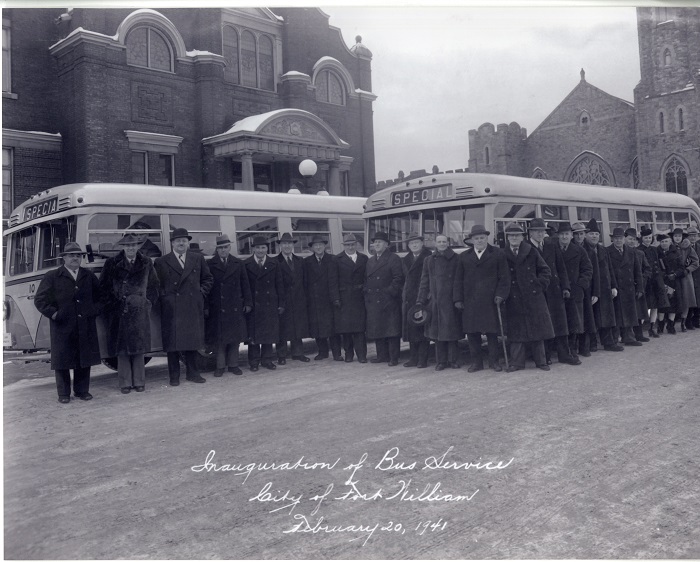
Title: Inauguration of Bus Service Fort William
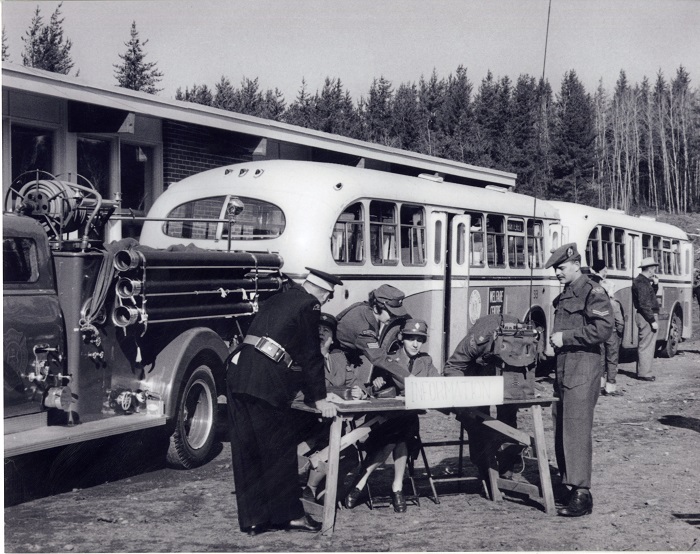
Title: Welfare Centre Information Table
Title: Pushing the Trolley
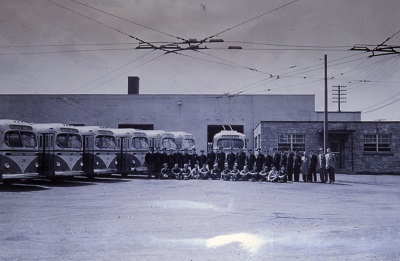
Title: Group photo with Bus
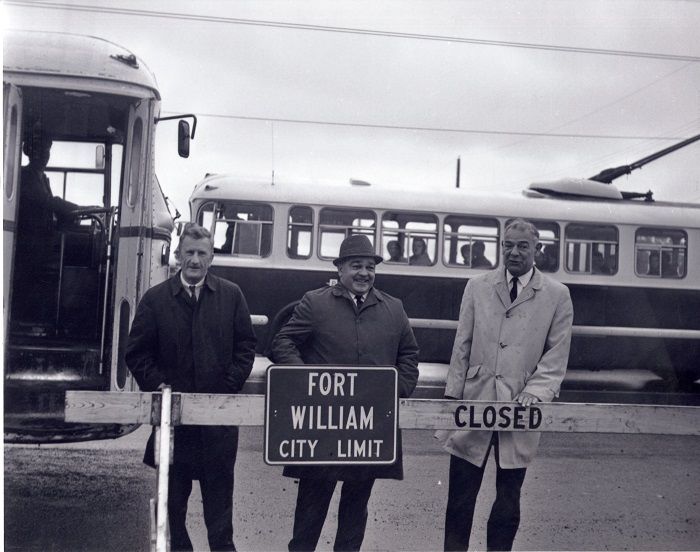
Title: Fort William City Limit
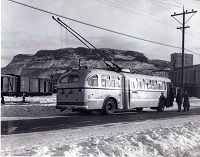
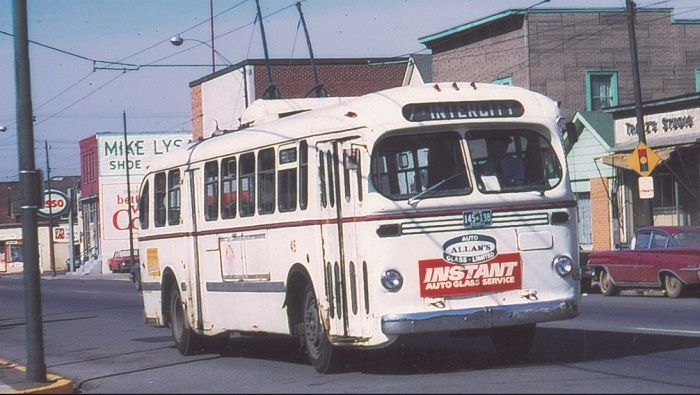
Title: Intercity Trolley
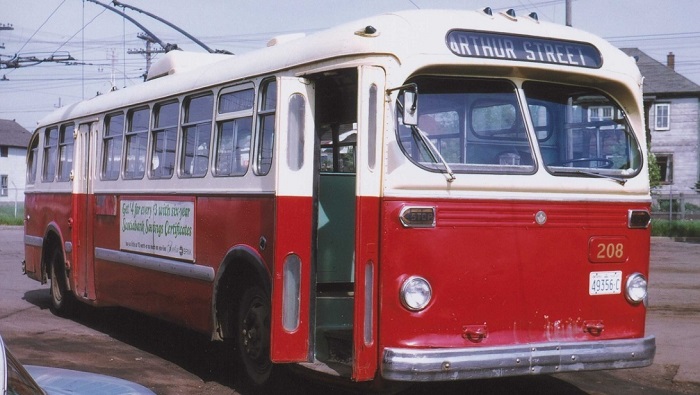
Title: Arthur Street Trolley |
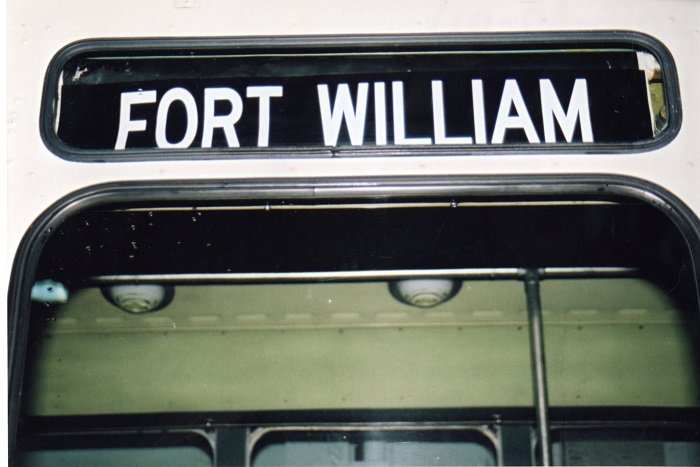
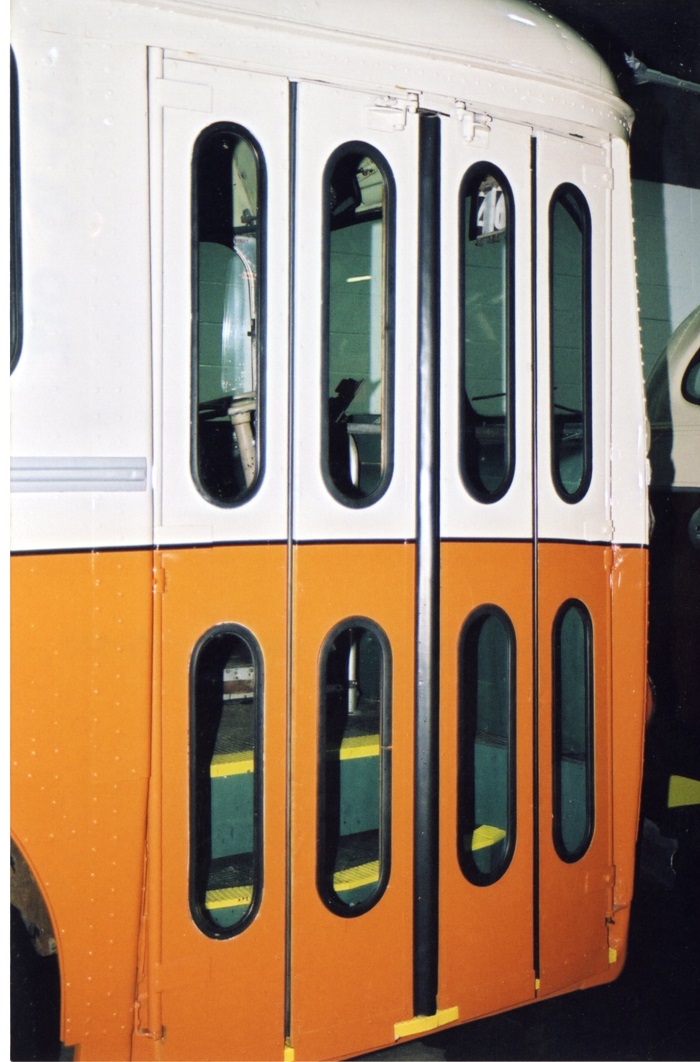
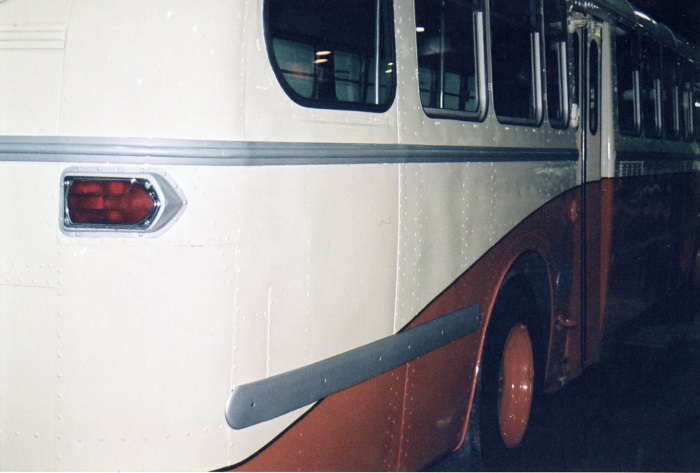
 After coming close to closing, as many manufacturing plants did in the postwar era, Can Car moved into the bus manufacturing business. The Lakehead region was the first to order ten gasoline buses and wanted to investigate the possibility of acquiring a fleet of trolley buses. After a study was undertaken to assess the benefits of gas versus trolley buses, the trolley system was deemed superior.
 States and another four thousand on order. CanCar was quick to ride the same trend in Canada. By September 25 1946, Can Car engineers and workmen in the Fort William plant had completed a prototype trolley bus—which they used as a demonstrator model in city after city during the month of November
 In 1950, Can Car announced that diesel engines would become available on both its city and inter-city models. In Thunder Bay, by 1965, the mainline of the Fort William Transit system was a trolley bus route more than 5 miles in length running though the city and connecting with one of Port Arthur’s trolley routes at the intercity boundary. With the introduction of diesel engines by Can Car in 1950, there were also four regular motor bus routes serving as feeders, and extra buses were operated to industries, schools, and other authorized destinations as required.
 During the trolley's run on Thunder Bay streets, the last of the wartime ‘Rosies’ in the workforce were finishing their shifts around the midnight hour. The controller who operated the old Can Car bus would meet these ladies every evening, and because this bus was on its last run of the day, he would venture off the scheduled route and drive each lady safely to their doorstep. “I had those girls riding on my bus,” he said. “They were riveters and painters and all on the verge of retirement. They actually built the bus I was driving them home in.”
 The year 1945 was pivotal for the future of Canadian Car and Foundry at the Lakehead. The plant had achieved enormous things during the Second World War but the hard fact was that it had only been active for 12 out of the 33 years since construction began in 1912. There seems little question that Can Car would today be a distant memory if the Company had not taken the decision to move into bus manufacturing, ushering in a new era in Thunder Bay’s transit history.
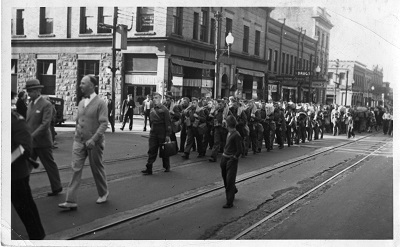 Can Car had been planning for some time for the post-war activities of the plant; that is the chief reason why 1,500 employees remained at work even after the massive layoffs of August 1945. Can Car’s entry into the bus market would involve the selection of a proven design, a well-thought out marketing strategy, and a firm grasp of the realities of Canadian postwar politics.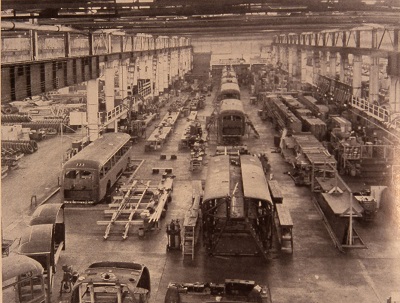
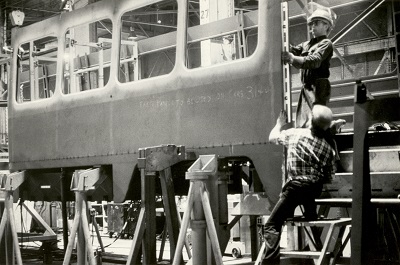 By September of 1946, Can Car engineers and workmen in the Fort William plant had completed a prototype trolley bus. In Can Car's efforts to diversify its product and remain in competition with rival transportation manufacturing companies, they were able to rapidly introduce the electrically powered buses which drew current from overhead wires via two trolley poles. Production began in November of that year, with the first ten vehicles going to Kitchener-Waterloo. In Thunder Bay, the buses were assembled on two parallel lines stretching down “B” Bay, with thirteen line stations. The vehicles were mounted on tubular supports to facilitate work on the underframe. Most important was the modular construction of the bus, with the front, rear and other major sections being constructed separately, and then spliced together into a whole vehicle. It was a production-friendly approach that would enable Can Car to produce thousands of buses rapidly and at low cost.A former worker remembers the bus line:
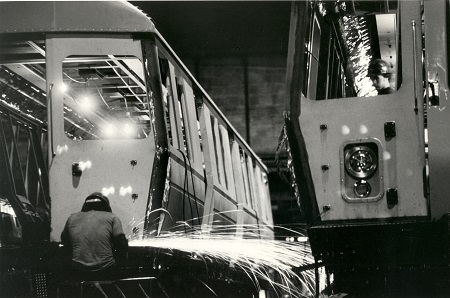 Similarly taxing was the paint process, as one worker recalls:
Contact Us
 Connect