




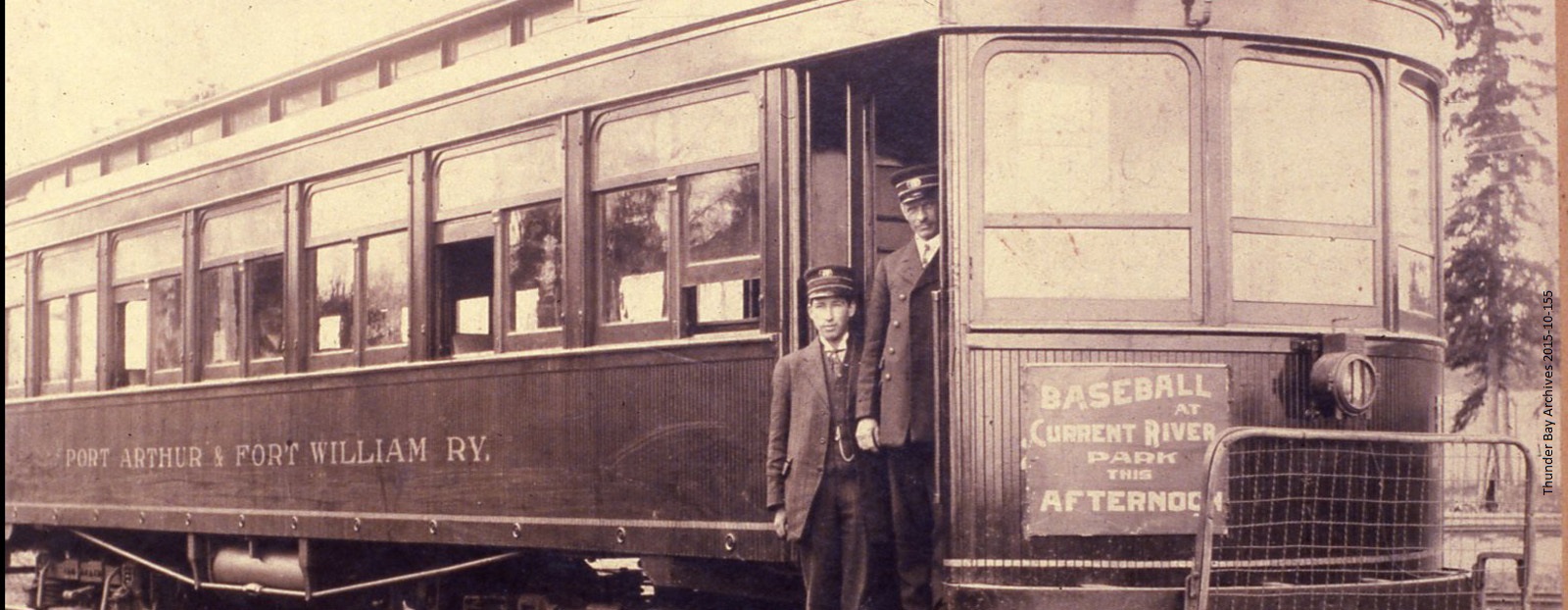


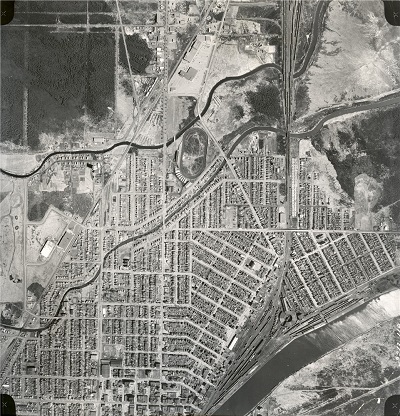
The population of the Thunder Bay region by 1968 was approximately 97,000. There were two daily newspapers, two transit systems, two police departments and two mayors who presided over two separate cities.
On Tuesday, April 16, 1968, 150 residents heard Provincial Municipal Affairs’ Minister Darcy McKeough outline major recommendations contained in the Lakehead Government Review Report, otherwise known as the Hardy Report. The number one recommendation in this report was that the cities of Fort William and Port Arthur, and adjacent territories from the Municipalities of Shuniah and Neebing, be joined to form a single city.
On January 1, 1970, Thunder Bay was born. With the amalgamation of two cities, Thunder Bay Transit (TBT) was created and the city underwent a large public transit study to establish the best way to service the new city. Thunder Bay transit faced a number of issues during its early years as officials attempted to find the most economical way to provide public transportation to a region that was once two separate cities with surrounding townships.
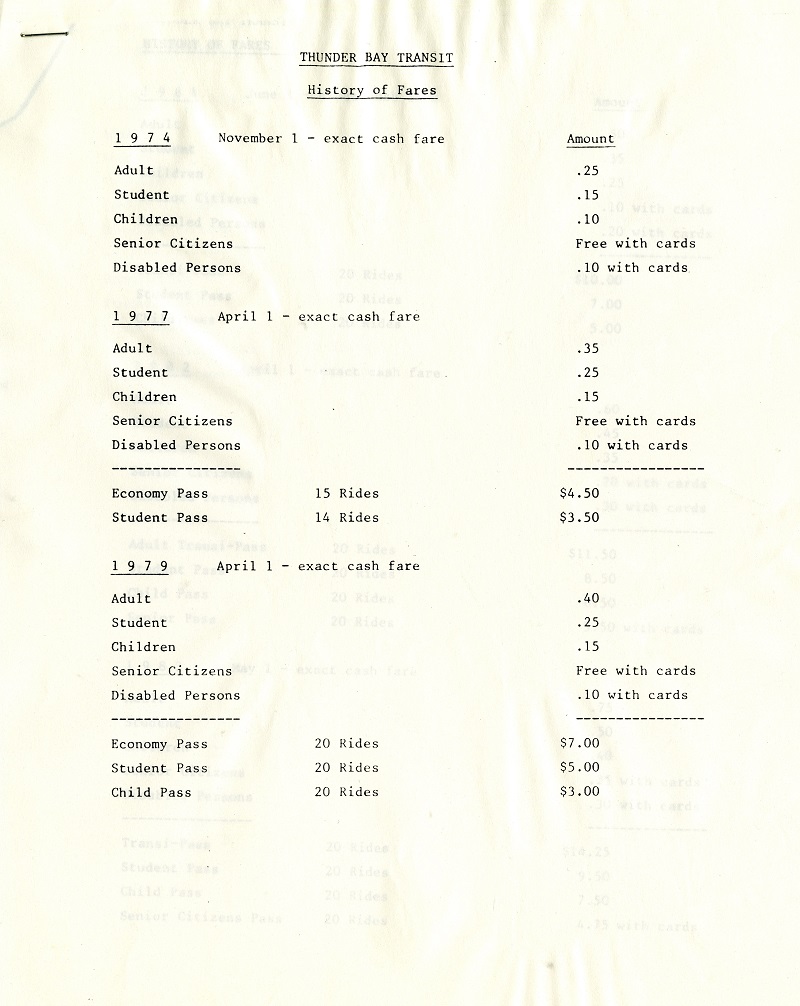
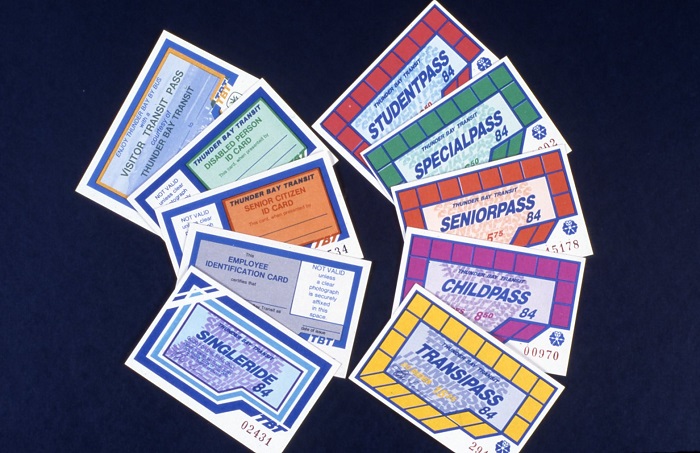
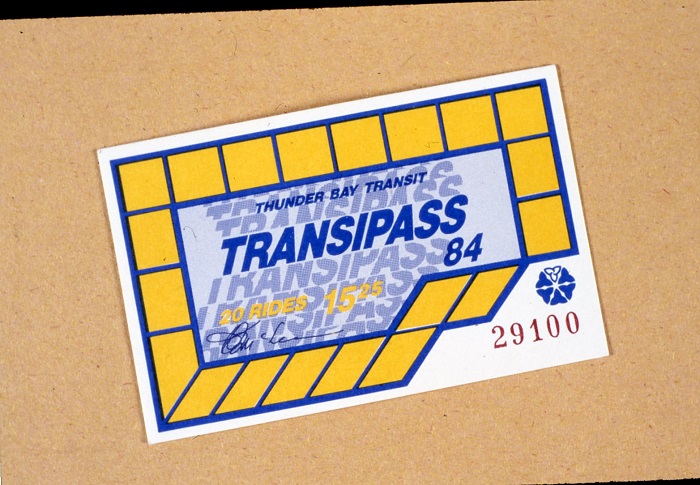
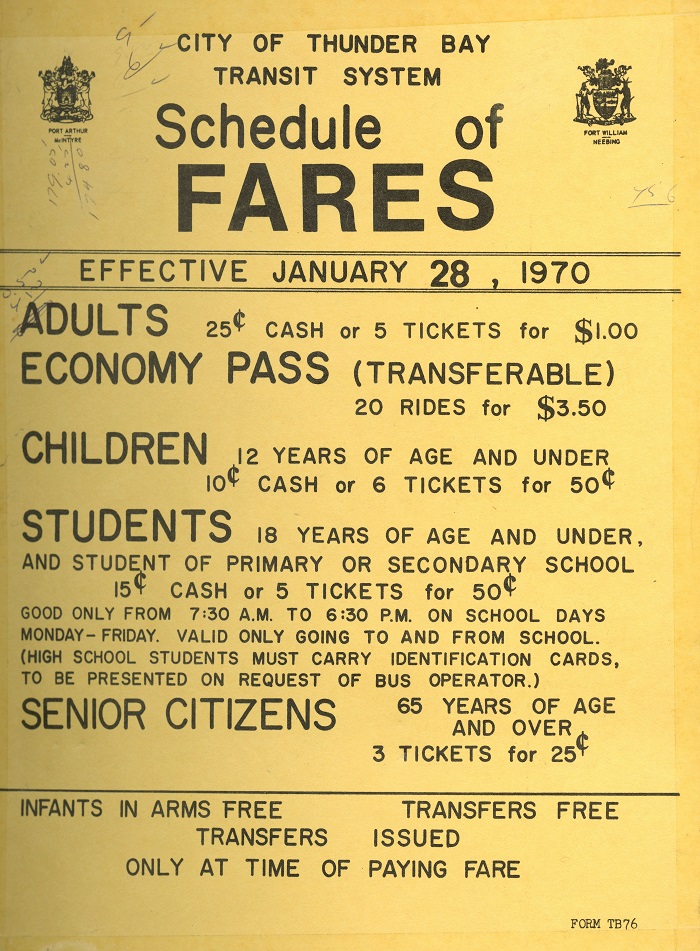
The first step to transit integration was taken in October of 1969 with the start of the main-line coach operation in both cities while still turning at the intercity boundary. In January of 1970, a new fare structure came into effect. Adult ticket and cash rates were increased but the collection of additional fares on buses going from one ward to another were eliminated. Thunder Bay citizens were now able to travel anywhere on the transit system for the payment of one fare. Additionally, to facilitate passenger loading and handling of fares, and to reduce costs to passengers who regularly travel by bus in one ward only, a special "economy" pass was introduced where patrons could purchase twenty rides for $3.50. The new pass was popular from the start - 58,000 were sold by the end of the year. Rates for students, children and senior citizens did not change. By June of 1970, the new "Crosstown" route started providing direct service from the southwest section of Thunder Bay to the Arthur and Cumberland districts, and reducing travel time by 15 minutes.
With financial assistance from the Department of Transportation and Communications, the City of Thunder Bay decided to create a transit study intended to give goals and objectives for the transit system and to upgrade its operation.
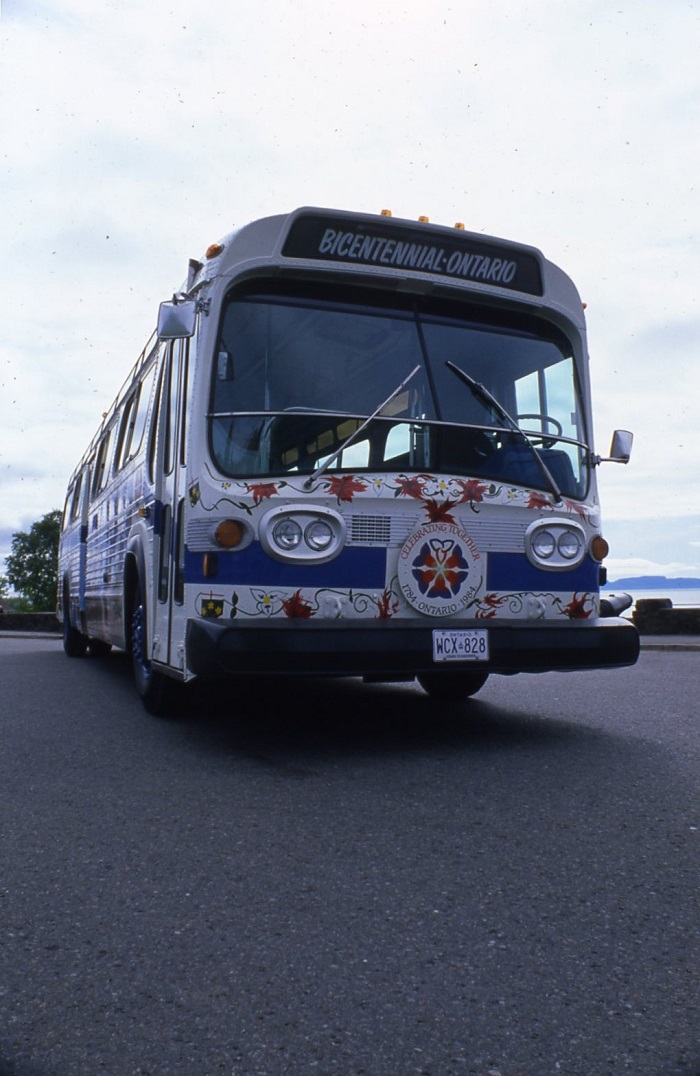
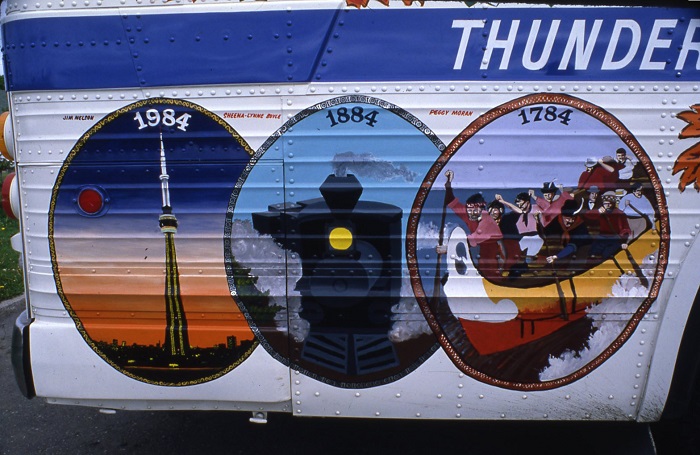
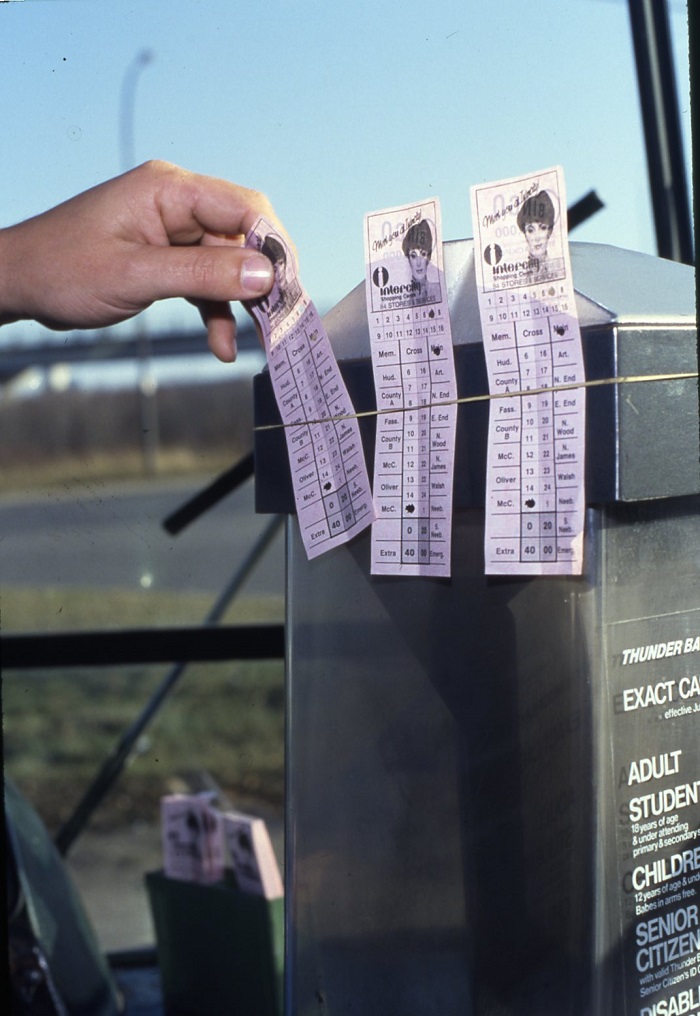
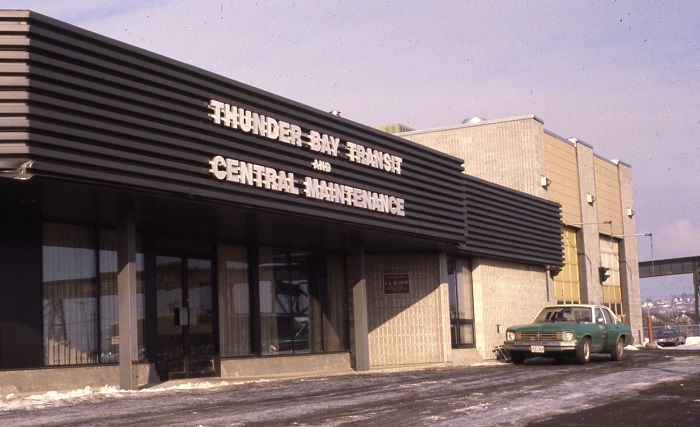
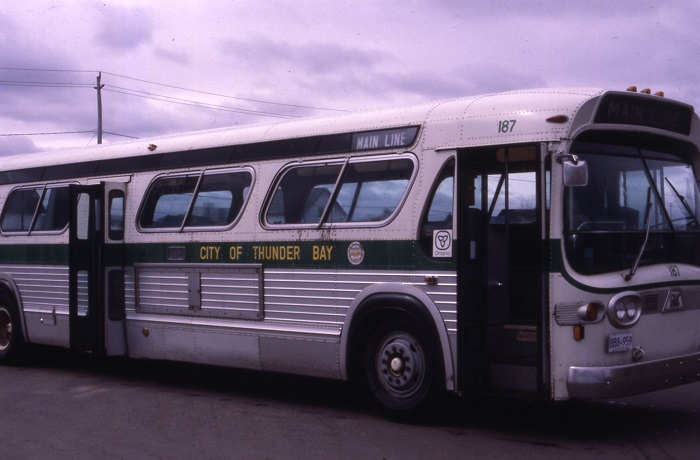
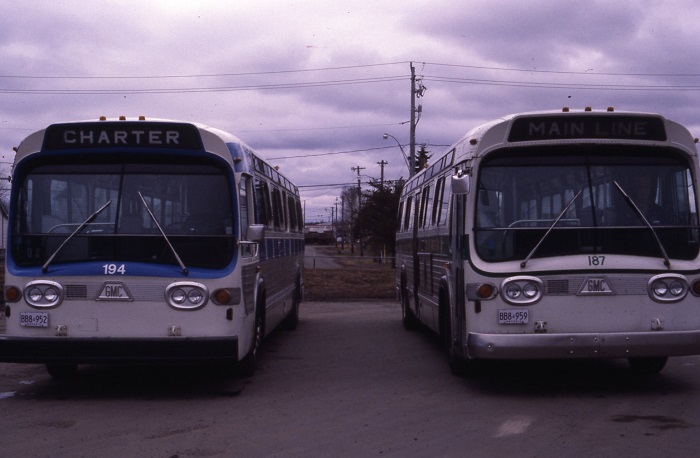
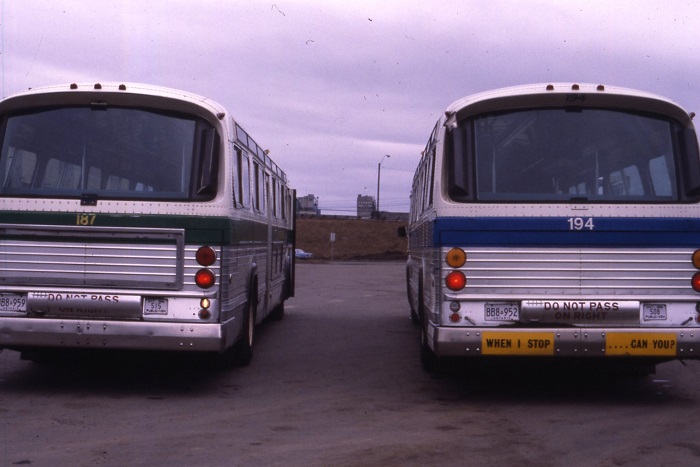
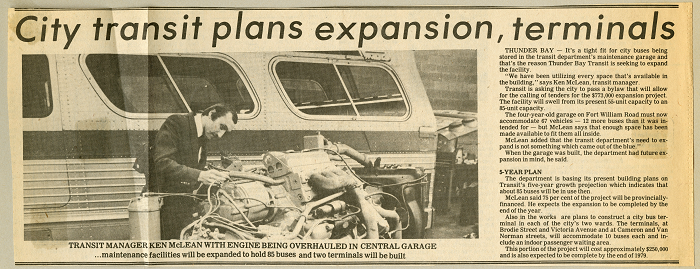
It was the flexibility of the diesel bus over the trolley and the cost of maintaining the aging fleet of trolleys that decided that the last remnants of the Lakehead's electric public transit would be put to rest. As per the recommendation of the 1970 Public Transit Study, a new centrally-located Transit facility was opened in 1975 in the intercity area on Fort William Road. By 1982, the Brodie and Water Street Terminals were added, as well as the new and familiar colour scheme of blue and white. The exact cash fare system came into effect in the 1980s, and by 1987 electronic registering fare boxes were installed on all buses.
During the 1980s Thunder Bay Transit received eight prestigious awards from the Canadian Urban Transit Association (CUTA) and American Public Transit Association (APTA). Four of the awards that TBT received were Certificates of Achievement from the APTA for improved safety records from previous years. From CUTA, Thunder Bay Transit received awards for industrial and passenger safety improvements in 1981 and then again in 1982 and 1985.
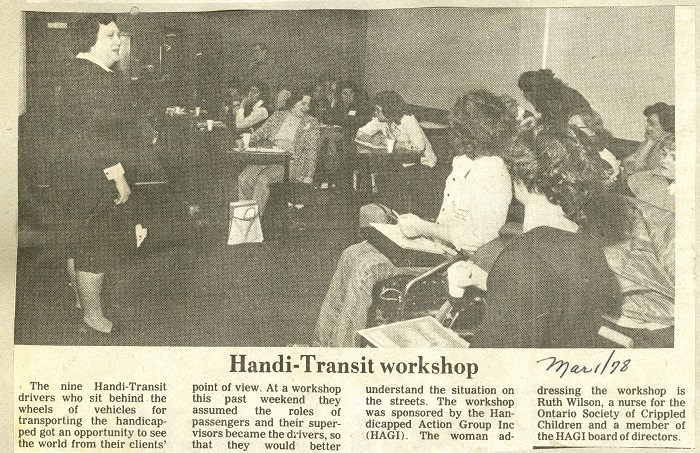
In 1975, Handi-Transit, a parallel system to carry those unable to board a conventional bus, was established. In 1985, Handi-Transit was incorporated into the Transit department's annual budget so that they would no longer need to apply and compete for federal and provincial funding every year. Accessible Transit has had an increased demand for service ever since.
As Thunder Bay Transit entered into the 90s, another major study by a consulting firm was undertaken. The study was approved by Council in July 1990 and implemented in two stages in September of that year and January 1991. The major features were a new route into the Balmoral area, doubling the service in the Neebing area and changes to several other routes. Ridership climbed steadily in the late 1980s and reached a peak of 4.5 million in 1989. By 1990 the total number of passengers was levelling off at 4.3 million.
| Thunder Bay Transit Study 1970 |
|
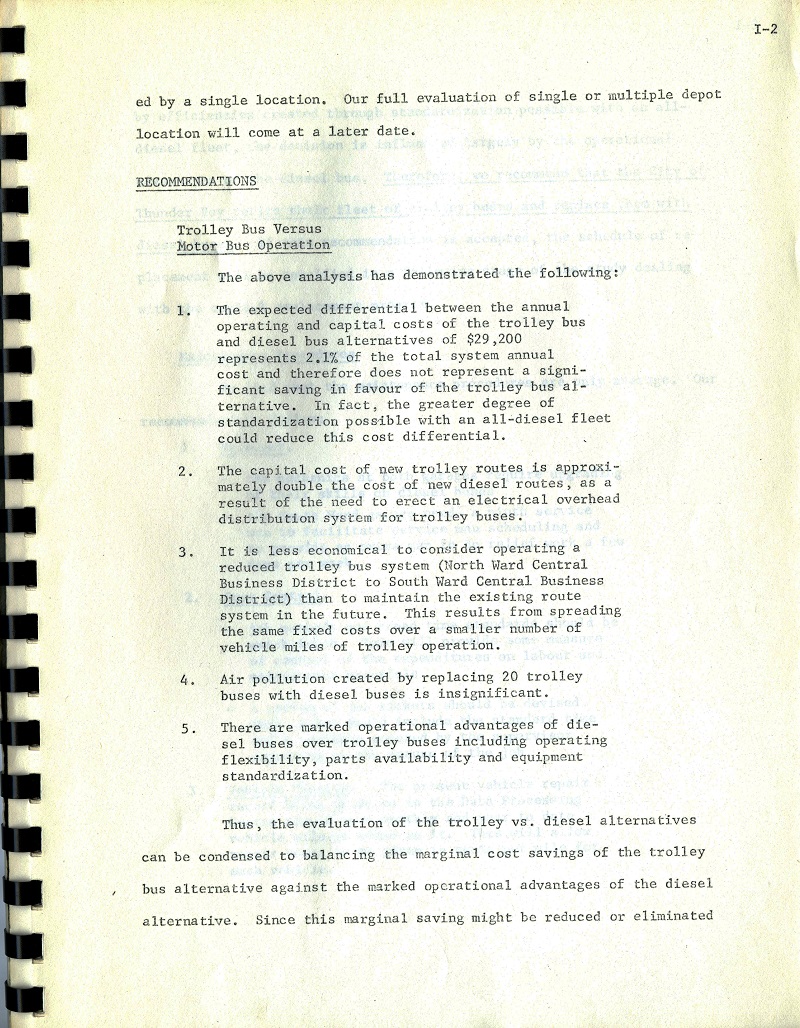
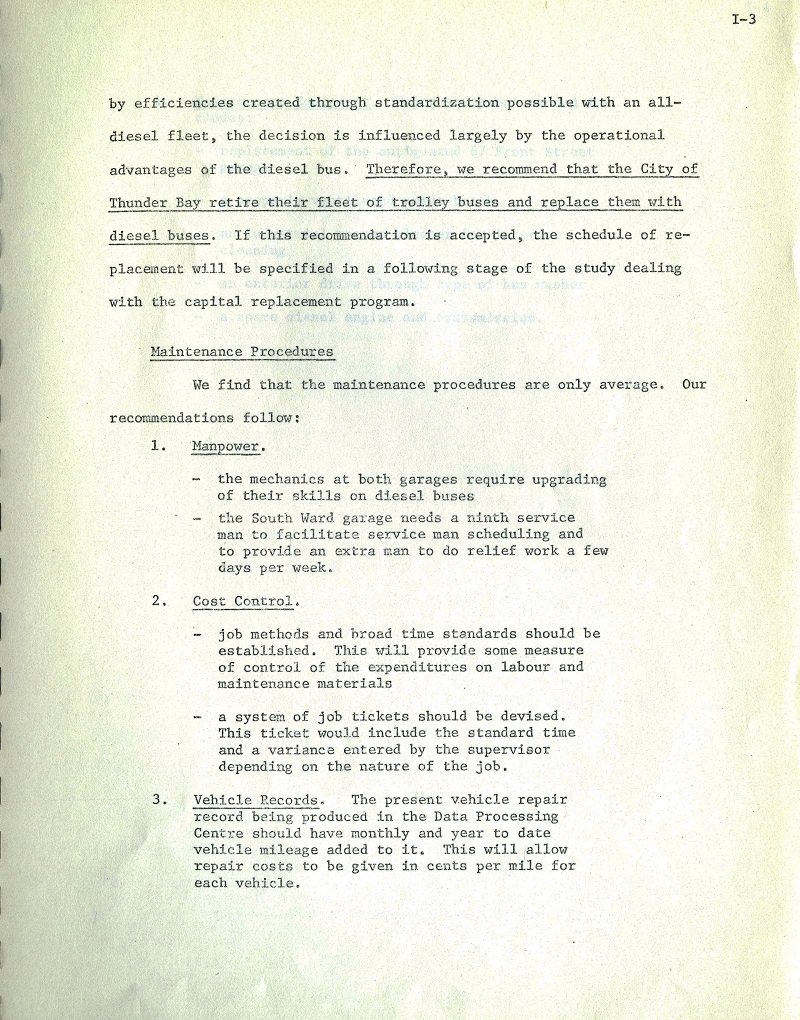
In 1970, Thunder Bay underwent another major study to assess three phases of public transit operation.
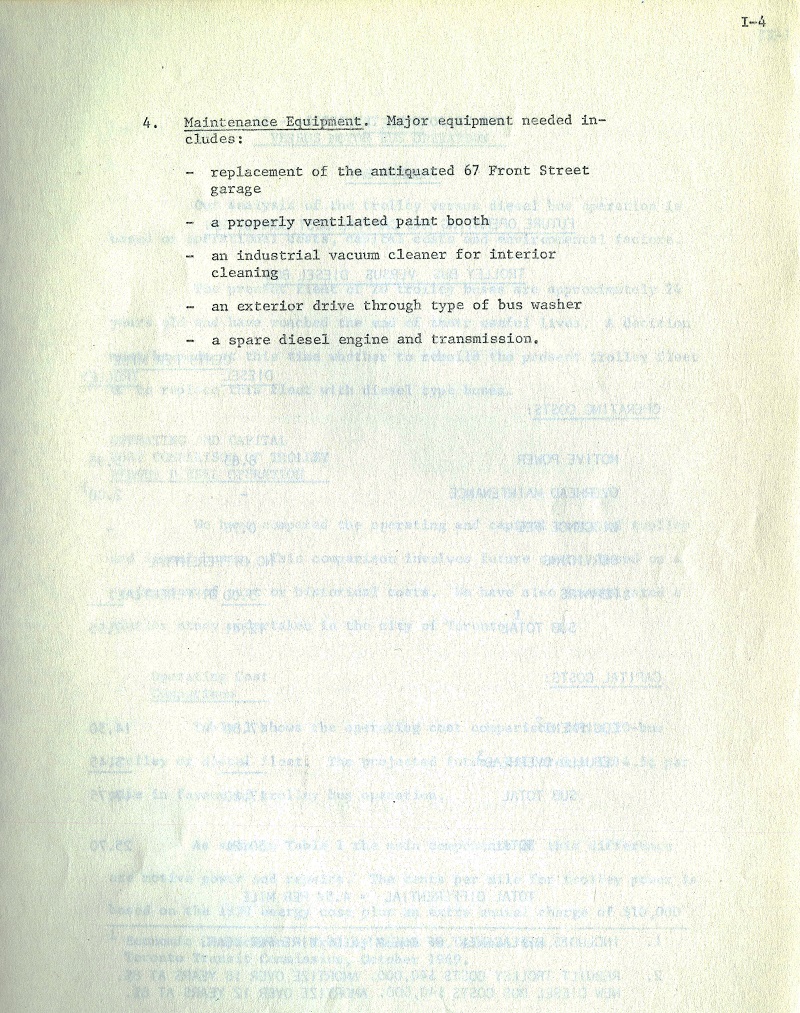
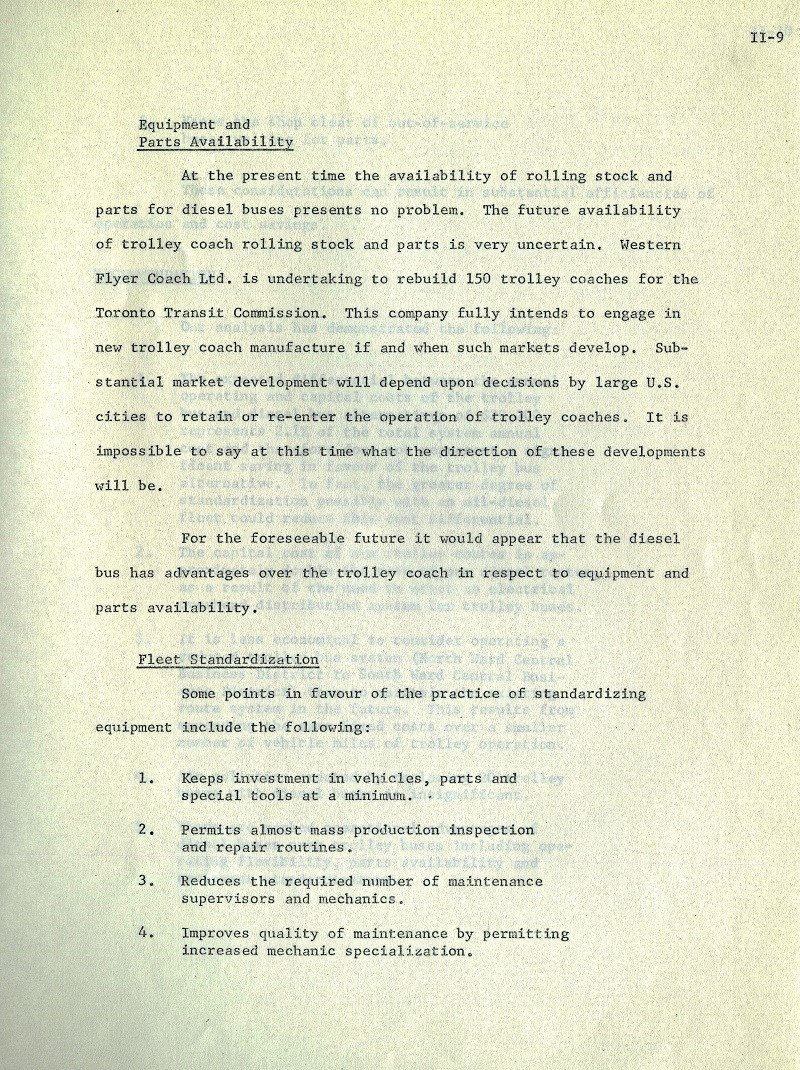
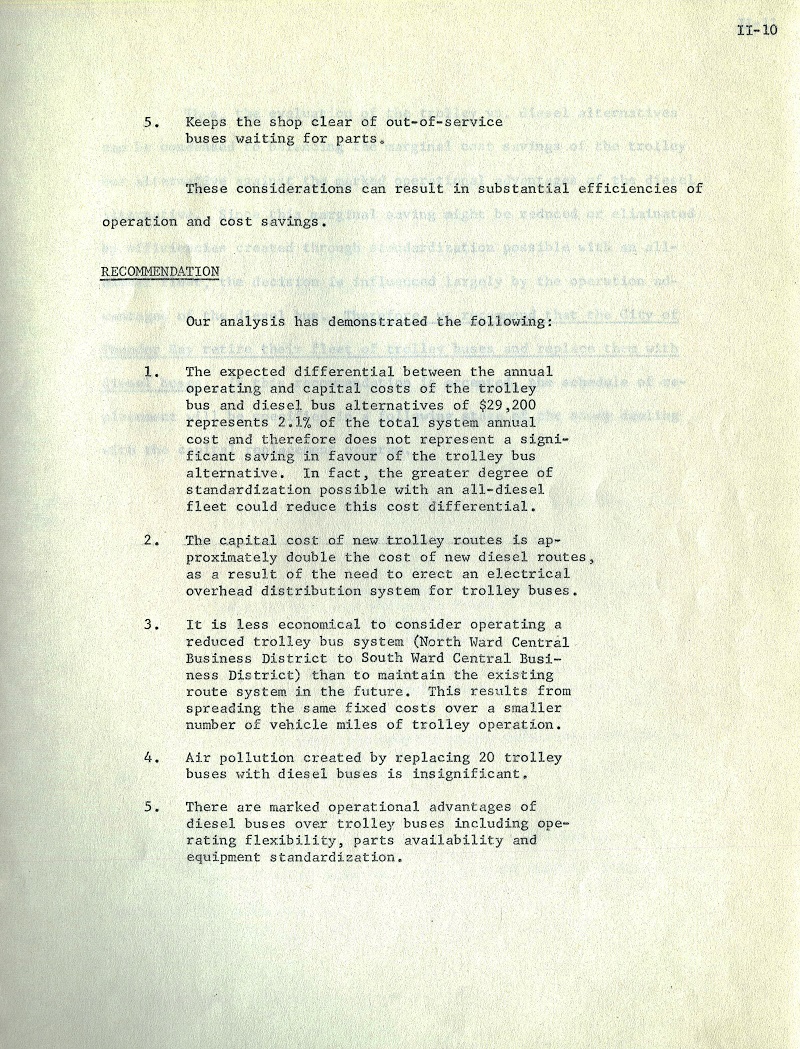
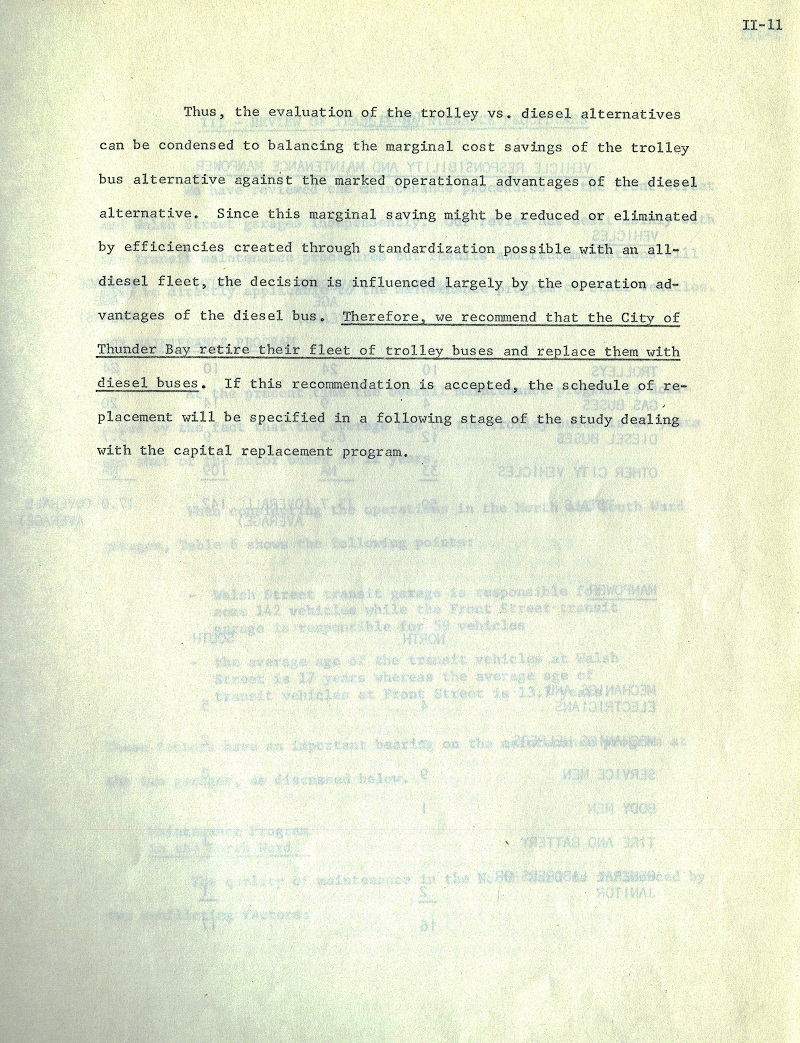
After bringing two separate systems together under one management, the "Thunder Bay Public Transit Study - Trolley Buses versus Motor Bus Operation" provided the recommendations, seen in the documents below, in favour of diesel buses. By 1971 Thunder Bay was pulling their last electric trolley off the road.
If you require a copy of this document in an accessible format, contact |
| Handi-Transit |
|
In order to keep the service operational, City Council approved $32,543 in financial assistance in the spring of 1976. Handi-Transit again applied for financial assistance in 1977, receiving $72,435 to cover operations to the end of the year. The Financial Assistance Review Group recommended continued financial support to Handi-Transit for the year, on the condition that a full operational review would be undertaken on the service through the Chief Administrators office, which Council agreed with. On July 19, 1977, a meeting was held to review the proposals presented in the recommendations report by the Study. Attending the meeting were representatives from Handi-Transit, the Handicapped Action Group Incorporated, the Lakehead Social Planning Council, the Volunteer Bureau of Thunder Bay, the Lakehead Board of Education, the Parks and Recreation Department, the Social Services Department, and the Transit Department. The purpose of the meeting was to review each recommendation to determine if it was reasonable, practical, and if it could be implemented in the Handi-Transit system. After the group from the July meeting agreed which recommendations would be implemented and which ones were impractical, a special meeting was held on August 13, where the revised recommendations were presented to the financial department of the City. After their review of the report it was generally observed that:
City Council concurred agreed with the report's recommendation recommendations and directed Administration to assist Handi-Transit with an implementation plan. Handi-Transit therefore, immediately established created an Advisory Committee to oversee operations and began implementing each of the recommendations noted in the report. A copy of the Operational Study was sent to the Province of Ontario along with Council's resolution requesting that the City be considered for operating assistance for their parallel transit service.
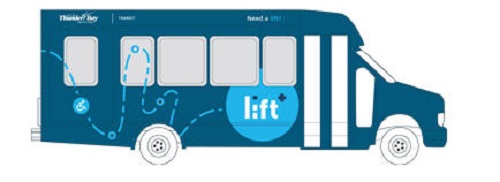
On July 1, 1979, the Province of Ontario established a subsidy program for Transportation for the Physically Disabled. The City of Thunder Bay was one of the first municipalities in Ontario to receive an interim subsidy allocation for the operation of Handi-Transit for six months ending December 31, 1979. By August 1980, the Minister of Transportation and Communications approved the Public Transit Operating Agreement between The City of Thunder Bay and the Handicapped Action Group Incorporated (Handi-Transit) for Transportation for the Physically Disabled for the purpose of providing subsidy. On January 1, 1983, Handi-Transit was officially incorporated as HAGI Transit, separate from its parent the Handicapped Action Group. Although the 1977 study recommended, at the time, that the Handi-Transit system remain an independent body outside of City services and continued to be treated as a financial assistance request, by 2012 HAGI Transit had proven its ability to provide a safe, reliable and relatively inexpensive transit service to person’s with mobility impairments. In 2012, The City of Thunder Bay made HAGI an official division of its Transit Department changing its name to Lift+ Specialized Transit.
Handi-Transit Operational Study 1977
|
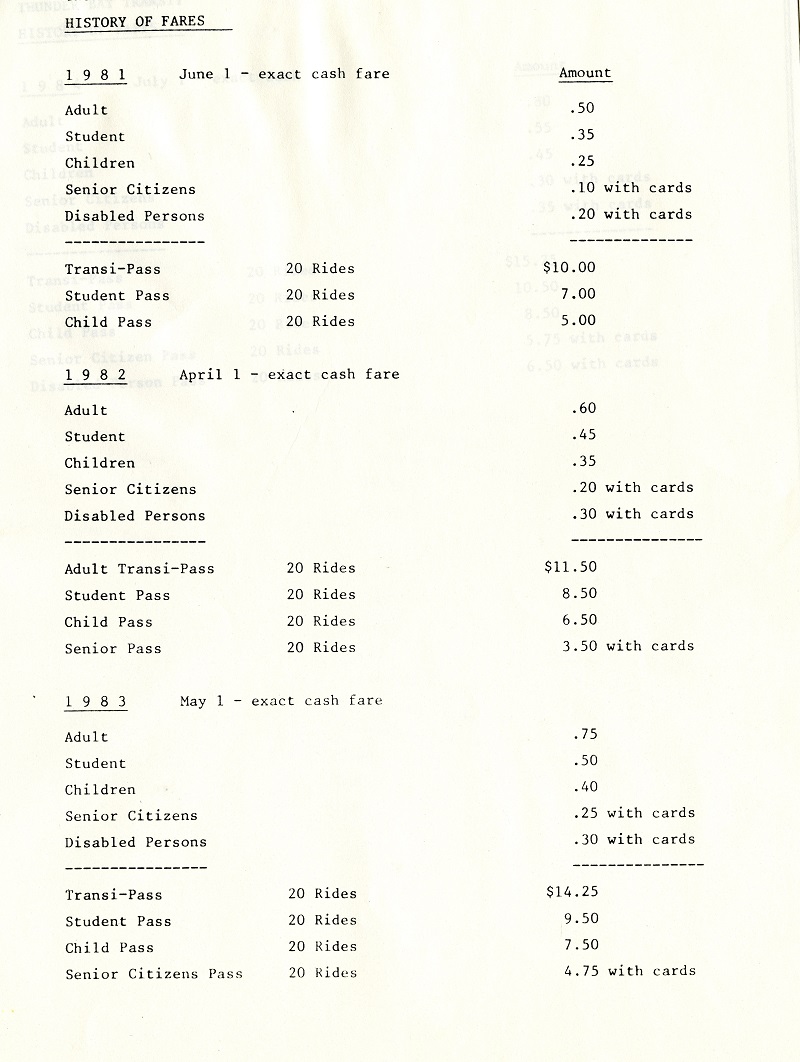
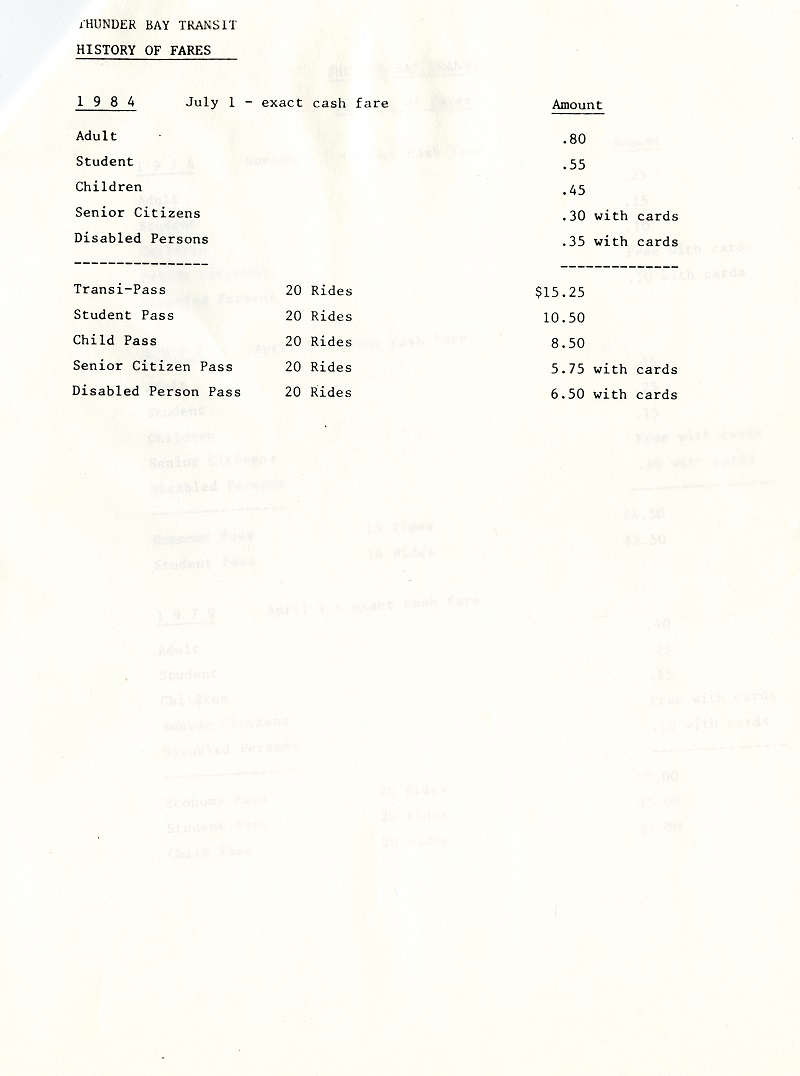
| History of Fares 1974-1984 |
|
|
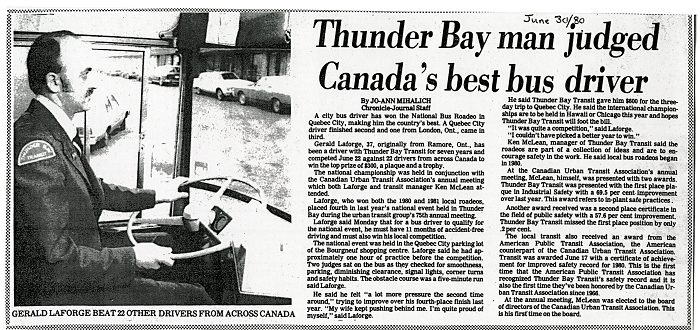
| Transit Roadeo |
|
|
| Photograph and Document Gallery |
|
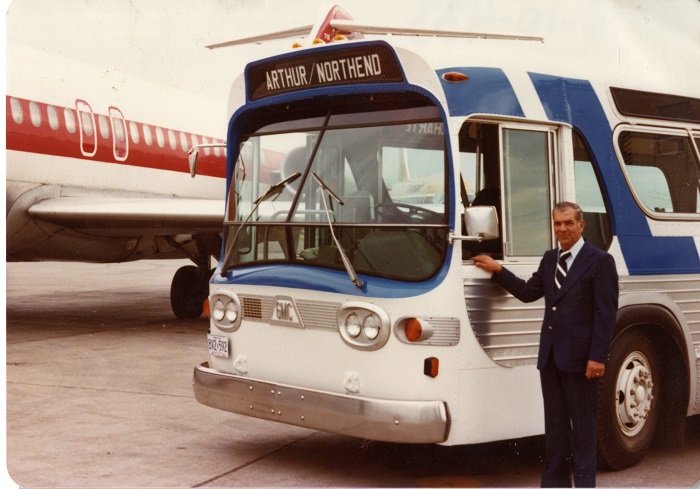
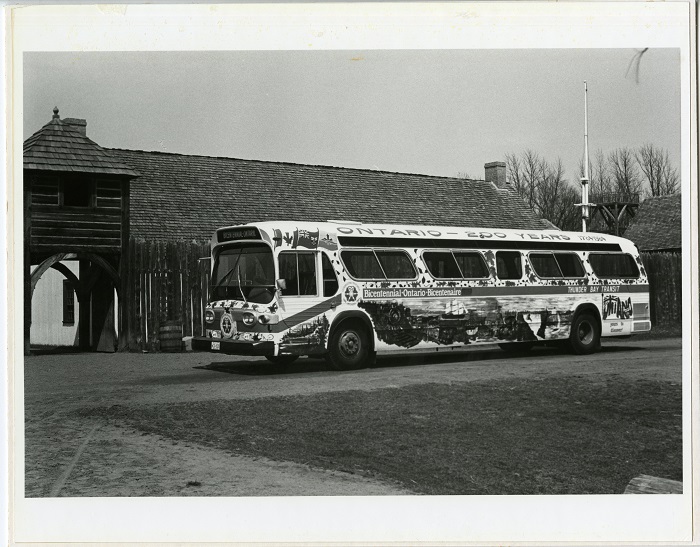
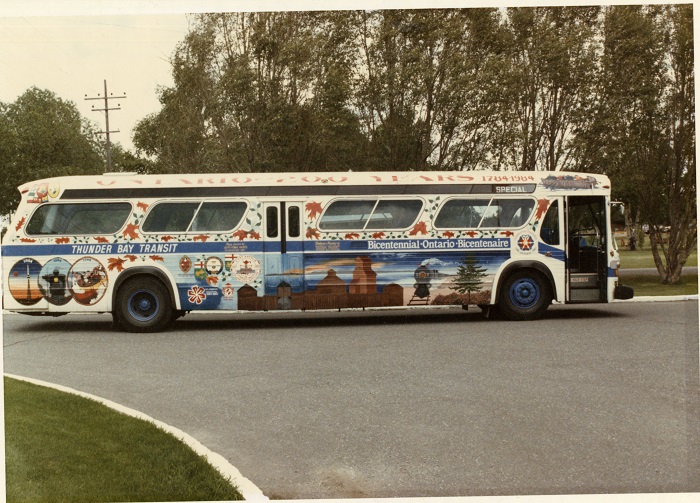
Title: B.C. Bus
Title: B.C. Bus
Title: Fare Policy 2nd Shoot
Title: Fare Policy 2nd Shoot
Title: Fare Policy 2nd Shoot
Title: Operations
Title: Operations
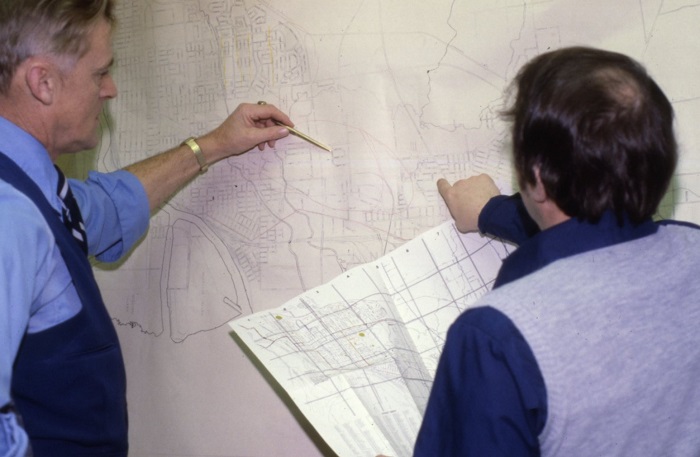
Title: Transit Planning
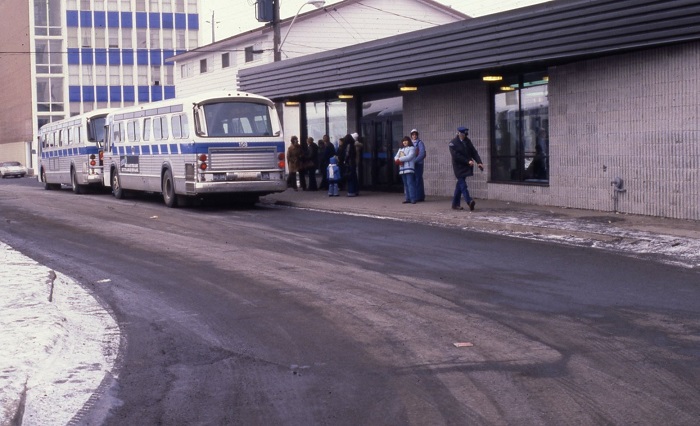
Title: South Terminal
Title: Main Office Depot
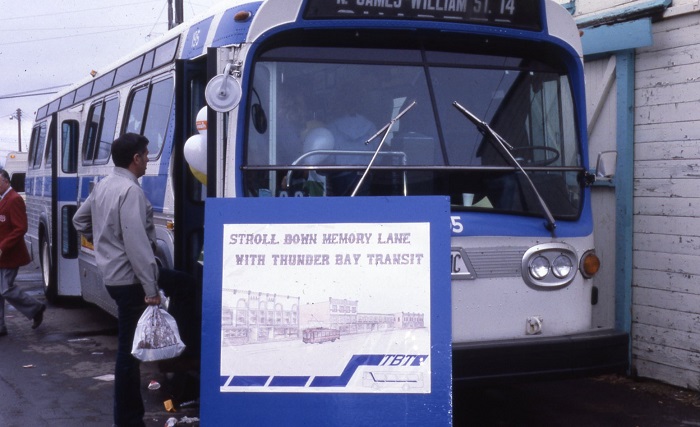
Title: Transit - Special Services
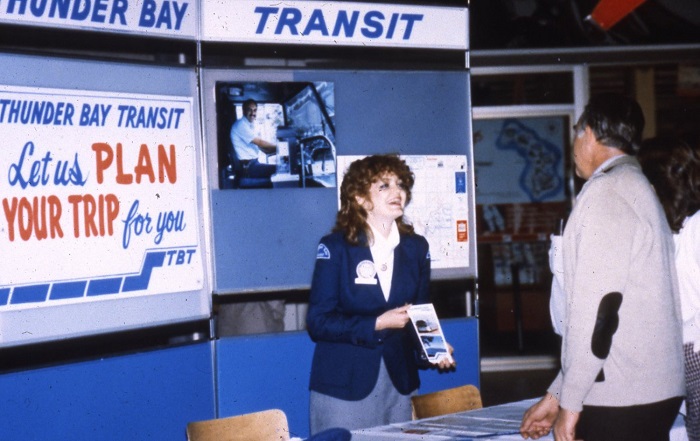
Title: "Let Us Plan" Booth
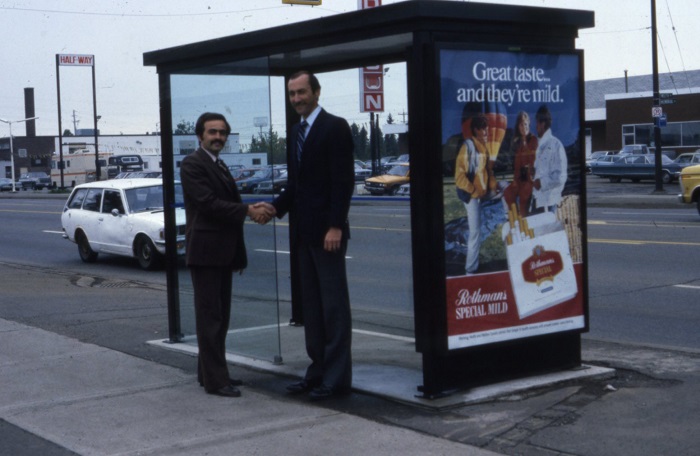
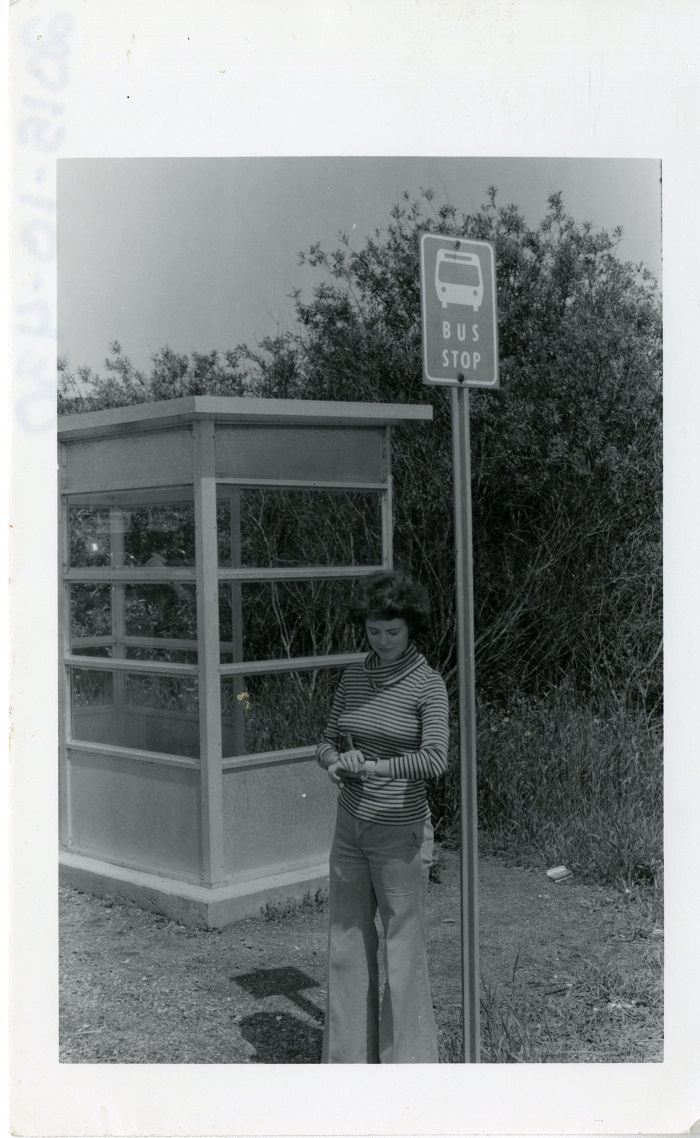
Title: Transit Operations - Bus Shelter
Title: Transit Operations
Title: Transit Operations
Title: Transit Operations
Title: Misc. Transit Photos
Title: Staff Photos
Title: Staff Photos Date: (c.1970s-1980s)
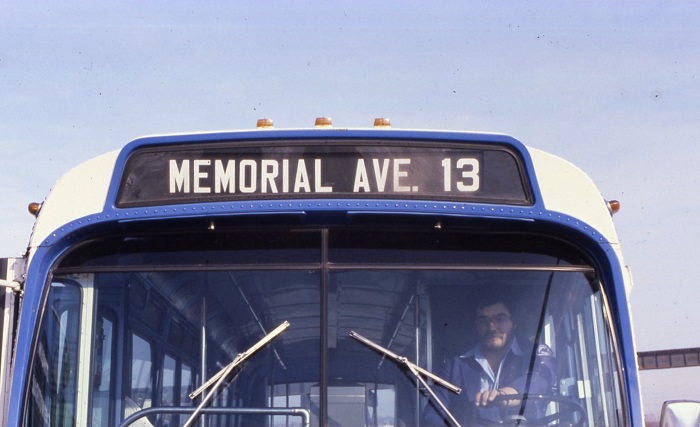
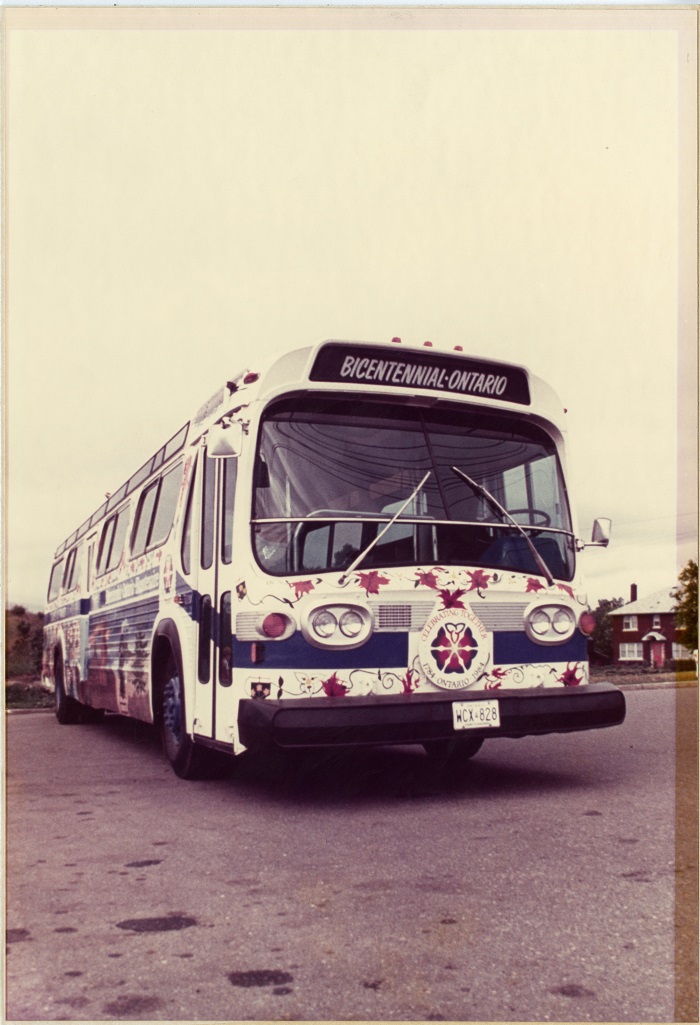
Title: B.C. Bus Title: B.C. Bus
Title: B.C. Bus
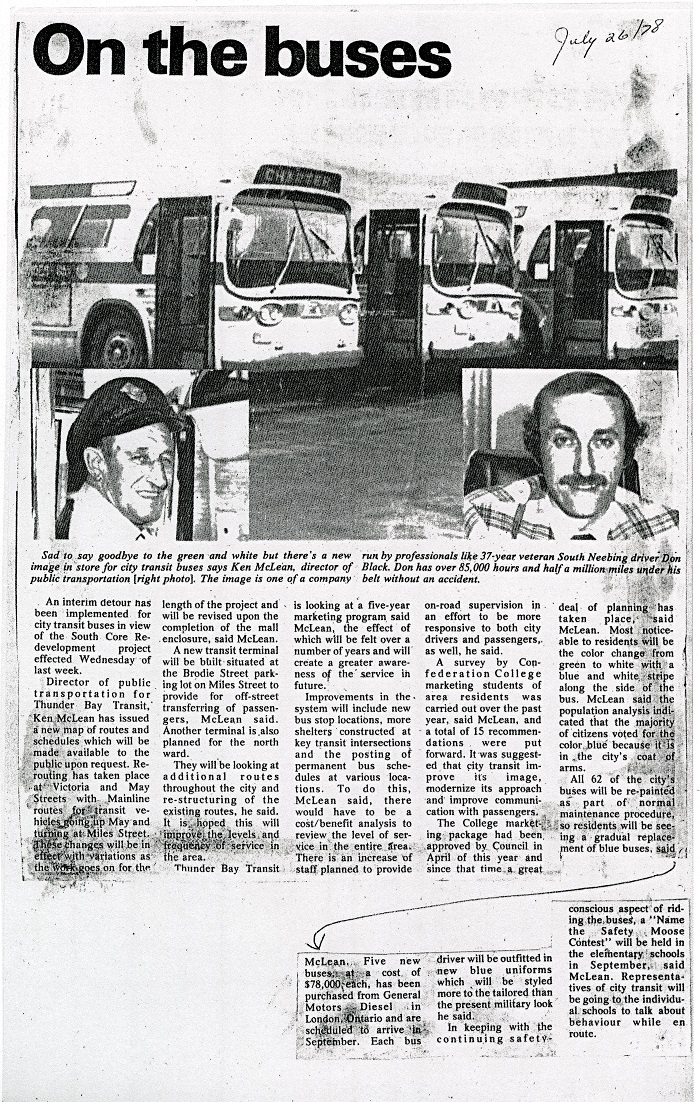
Title: "On the Buses"
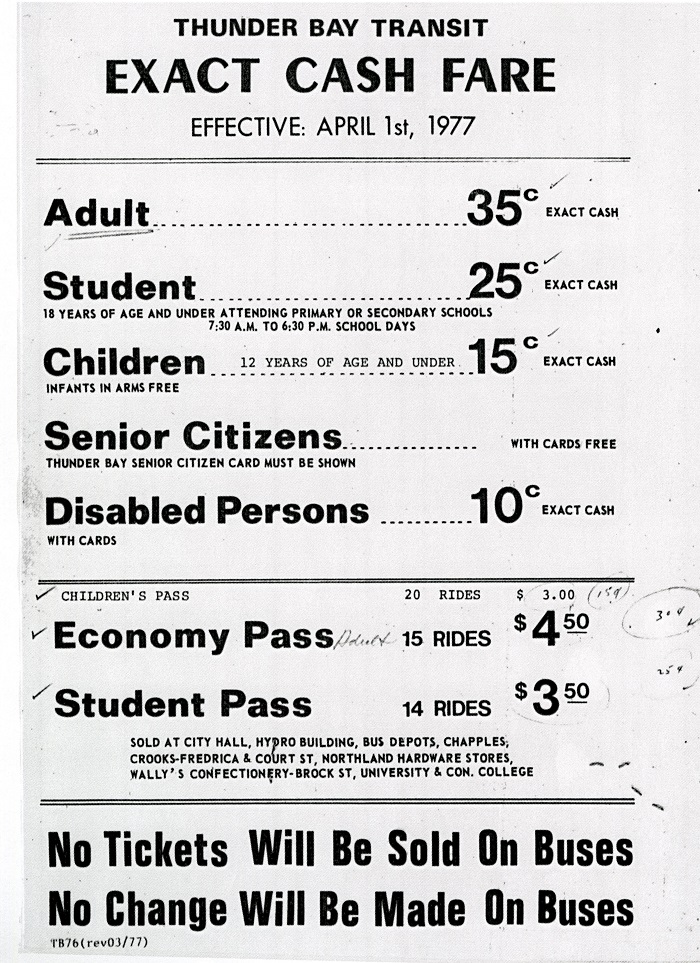
Title: "Exact Cash Fare"
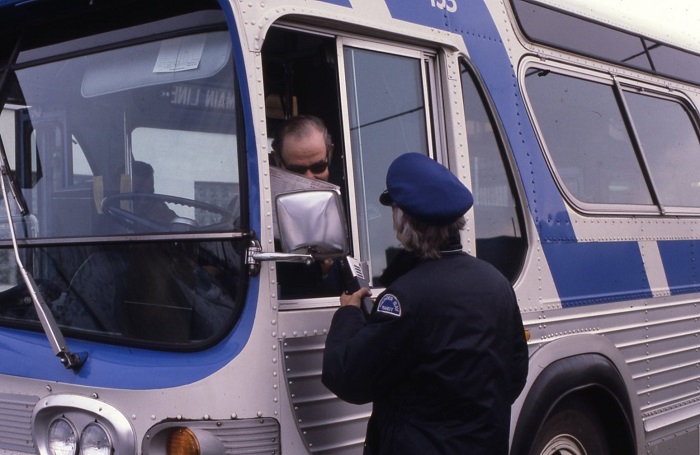
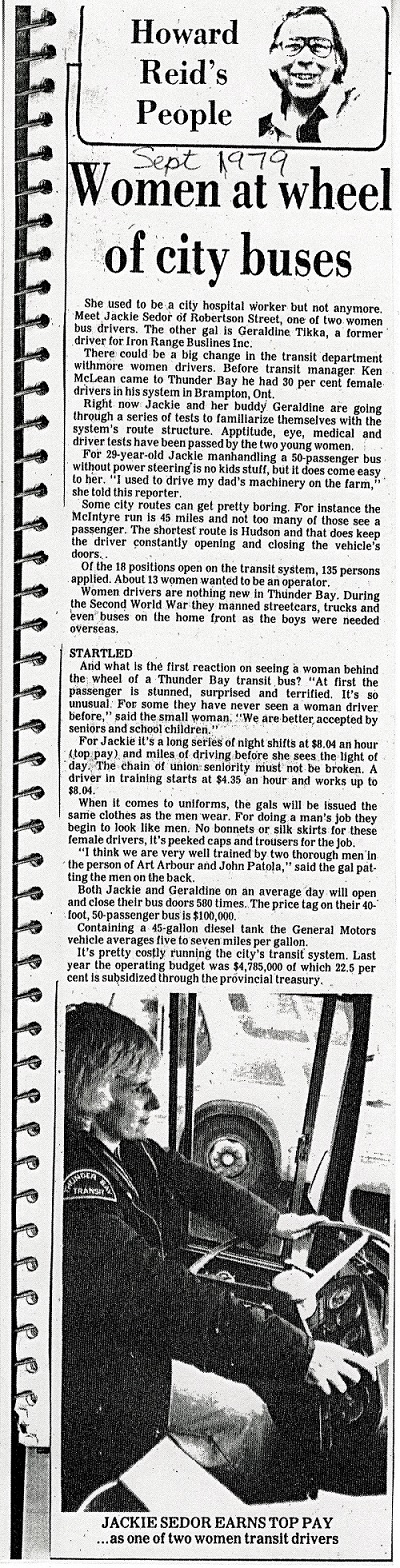
Title: "Women at Wheel of City Buses"
Title: "3 New Changes"
Title: "On the Buses"
Title: "Handi-Transit Workshop"
Title: "City Transit plans expansion, terminals "
Title: "Thunder Bay Man Judged Canada's Best Driver"
Title: "Schedule of Fares" |
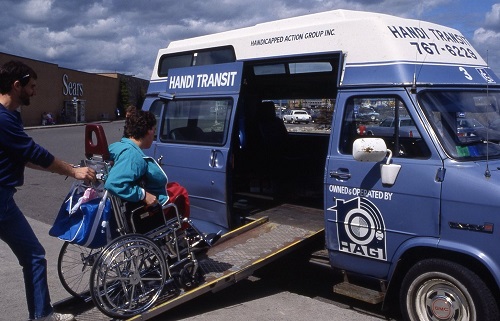 In July of 1972, the Rehabilitation Services Committee of the Lakehead Social Planning Council released their Disability Research Report concerning the needs of Thunder Bay’s physically disabled. Stemming from this research, the Handicapped Action Group (HAGI) was formed with their primary purpose being the improvement of housing and transportation for the handicapped. With the donation of a van from a local service club, a federal grant and a $2,500 municipal contribution, Handi-Transit was put into operation created on February 4, 1975, offering door-to-door transportation service to persons unable to board regular transit facilities. With the help of another small grant from the City and some additional federal assistance, Handi-Transit was operational until the Spring of 1976, as attempts to attain Provincial assistance failed. The Minister of Transportation and Communications indicated that no funding would be given until a proper policy concerning para-transit systems had been established by the Province, which was not expected until late 1978.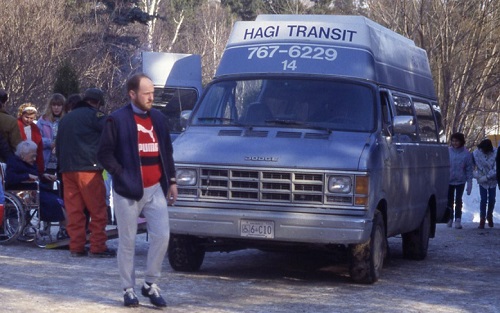
Contact Us
 Connect