







Reducing waste saves energy, time, money and valuable natural resources. Making small changes to reduce waste in our everyday lives makes a significant difference.
Waste reduction initiatives
Battery disposal |
|
Battery recycling safety Certain used household batteries can pose a fire risk. Lithium Ion (Li-Ion), Small Sealed Lead Acid rechargeable batteries, and lithium primary batteries must be individually bagged or have their terminals covered with tape. Learn more on how to prepare your batteries for disposal at the Environmental 360 Solutions website. Year-round battery recycling drop-off locations These following locations accept primary (single-use) household batteries throughout the year:
Residents should call businesses ahead of time. Some businesses may charge a fee to accept your items. Why recycle batteries? It's a waste of resources and a pollution hazard when batteries go into the landfill. Batteries release potentially toxic metals such as nickel, zinc, lead, mercury, lithium, cobalt and cadmium into the soil, water and air. In contrast, when batteries are recycled, useful materials are recovered and contamination is avoided. Battery recycling even lowers greenhouse gas production by reducing the need to mine new materials.
Learn more about recycling your batteries - including additional locations - at the Recycle Your Batteries Canada website.
|
Christmas waste reduction |
| A great amount of waste is generated during the holiday season. Use these Christmas Waste Reduction ideas to reduce the waste produced in your household over the holidays. |
Backyard home composting |
|
When we compost at home, we harness the natural process of decomposition and recycling of organic material into humus, which enriches any soil that contains it. Adding compost improves soil quality by providing important nutrients and helps the soil retain moisture, which will improve plant health. Backyard composting diverts organic material from the landfill. It's good for your plants and it can save you money by reducing the need for fertilizer. |
Second Spin bike reuse program |
|
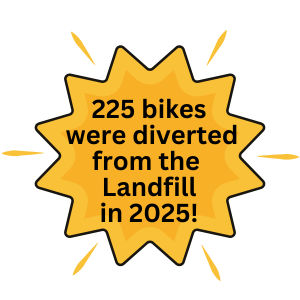
Second Spin is a seasonal bicycle reuse program that reduces waste by offering bikes that have been disposed of at the Landfill site to residents - free! 225 bikes were diverted from the Landfill in 2025! The program reduces waste by offering childrens' bikes that have been disposed of at the Solid Waste & Recycling Facility (Landfill) to residents for free. To provide free bikes, we visually inspect bicycles disposed of at the Landfill site for functionality. Then we add bikes in working or near-working condition to our inventory during the program's operating season.
Available bikesThe program is now open for summer 2026! Check the Second Spin webpage for available bikes! Request a bikeTo request a bike, please fill out the Second Spin Bike Request Form on the Second Spin webpage (form is inactive in the off-season]. We can help match you with a bike in our inventory. Note: please do not come to the Landfill without a pre-scheduled appointment to pick up a bike. Bike pickupOnce a time is scheduled to pick up a bike, please come to the Solid Waste & Recycling Facility at 5405 Mapleward Rd, park at the Landfill Administration building (on the left before the scales) and come inside the building. Do not walk or drive through the landfill gates on your own. A waiver form agreement must be signed by an adult (18 years or older) at the time of pickup. Note: We cannot guarantee accommodation for bike pickups which have not been requested through the Bike Request Form. |
Pumpkin compost drop-off bins |
|
Pumpkin Compost Bins are put in place by the City starting Nov. 1, for approximately 10 days. Bins are available at the following locations:
Please do not put candles, plastic bags or trash in the bins.
|
Hazardous product alternatives |
|
Making your own household cleaning products is less expensive, safer for you and for the environment, and there is less packaging. Make your own everyday cleaning productsAll-purpose cleaner 1/4 cup baking soda 1/2 cup white vinegar 2 litres of warm water Mix all ingredients together. For tough grease and grime, you can add a 1/2 cup of ammonia. Be careful though, ammonia when mixed with bleach produces deadly fumes. Glass cleaner 1/2 cup white vinegar or lemon juice 1/2 cup warm water Stir until mixed. Pour into a bowl or spray dispenser. This cleaner will effectively remove greasy fingerprints. Ball up old newspapers and rub on windows sprayed with mixture. Toilet bowl cleaner Mix baking soda and water and use a brush to clean the bowl. To disinfect, add a little borax and let it stand for 30 minutes and then scrub. Drop 1000 mg of vitamin C in the bowl and leave overnight, then scrub. The bad news is that frequent cleaning is the answer. Laundry detergent 1/3 cup washing soda 1 1/2 cups soap flakes Add 1/3 cup of washing soda as water is filling washer. Add clothes. Then add 1 1/2 cups of soap. Use 1/4 cup of white vinegar in the rinse cycle to soften clothes. Carpet shampoo 1/2 cup of dishwashing detergent 1/2 litre of boiling water Mix dish soap and boiling water. Let cool. Whip the paste into a stiff foam and apply to carpets with a damp sponge. Work into carpets, a small area at a time. Wipe off excess suds. Rinse with one cup of white vinegar mixed in 4 litres of luke warm water. Dry and vacuum.
Make your own garden productsFertilizers Instead of chemical fertilizers, use organic compost, and fish meal. Leave the grass clippings on the lawn instead of raking them. If you practise grasscycling, the nutrients from the clippings will be reabsorbed into the soil. When you think about it, if you fertilize your lawn too much it will grow faster and you will have to cut it more often. Do you really want to spend every Saturday cutting the lawn? Pesticides and herbicides Ant control: Pour a line of cream of tartar, red chili powder, paprika or dried peppermint at point of entry. Garden insects: Use organic gardening techniques. Strong hosing washes insects from plants. Pull weeds instead of using herbicides. The leaves of houseplants can be washed with soapy water and then rinsed. Fly killers Keep garbage cans clean. Wash and sprinkle dry cans with pure soap after they have dried. As an alternative, use flypaper strips available at hardware stores.
Tips for everyday choresOven cleaner Commercial oven cleaners are corrosive to skin and eyes. The best strategy for dealing with ovens is to line the bottom with aluminum foil or a metal tray that can be removed and cleaned in the sink. Spills are easier to clean up if attacked before they are baked on. Sprinkle tough spots with dry baking soda and leave for 15 minutes. Then scrub with a damp cloth. Put baking soda on a wet sponge to clean the glass oven door. Refrigerator freshener Put a dish of pure vanilla or an open box of baking soda in the fridge. Bathroom cleaners and disinfectants Bathroom cleaners need to be able to handle soap scum and mildew. Many commercial bathroom cleaners are marketed as disinfectants that kill germs. A good general purpose cleaner and a scouring powder are sufficient in most homes. Drain cleaners Use a plunger or mechanical snake and flush drain with 1/4 cup of baking soda followed by 1/2 cup white vinegar. Let stand for a few minutes then pour in boiling water. A strainer in your drain may help prevent clogs from forming. Pouring boiling water down your drains once a week should help too. Spot removers For blood, mildew, butter, chocolate, coffee, mud or urine stains, dissolve 1/2 cup of borax in 2 cups of cold water. Dab on stain and let dry, then wash as usual. For stubborn stains, dab spot with a cloth dampened with 1 teaspoon of vinegar in 1 quart of cold water. If this fails, try straight vinegar. Club soda or immediate cold water is considered a safe and effective spot remover for most stains. Ink stains should be soaked in milk. Wine stains can be removed by pouring salt and then cold soda water on the stain immediately. Soak in milk before washing. Gum: Rub with ice and gum will scrape off. Grease: Use borax on a damp cloth. Silver polish Soak silver in 1 quart warm water with 1 tsp. baking soda, 1 tsp. salt and a small piece of aluminum foil. Brass polish Mix equal parts salt and flour with a bit of vinegar and rub. Polish with Worcestershire sauce. Don't forget to wear your gloves. Furniture and floor polish Dissolve 1 tsp. lemon oil into 1 pint of mineral oil. Polish unvarnished wood with olive, peanut or almond oil. Rub toothpaste on wood furniture to remove watermarks. Rug and upholstery cleaners To clean and deodorize carpets, vacuum, sprinkle liberally with baking soda, and then vacuum again. Or, clean and deodorize carpets by mixing together 2 cups of cornmeal and 1 cup of borax. Sprinkle on carpets, leave for one hour and vacuum. For tough stains, try cold soda water or blot repeatedly with vinegar and soapy water. Always test for colour fastness on a hidden section of carpet. Litter box freshener Place baking soda or borax in the bottom of your pet's litter box.
|
Lawn and garden greening |
|
There are many ways you can help the environment in your own backyard. GrasscyclingGrass clippings are not accepted in the City's Leaf & Yard Waste program, or picked up at the curb. When mowing the grass, leave the clippings on the lawn. Clippings are a natural, nutrient-rich fertilizer. Leaving them on your lawn saves you time, reduces waste and promotes a healthy, resilient root system. In turn, a healthy lawn helps to purify our air and limit stormwater runoff. XeriscapingThe goal of xeriscaping is a garden in which the plants can survive during dry periods without water or fertilizers. Water your garden only when necessary, and use a soaker hose for a longer period, rather than a sprinkler or running hose for a shorter time. Also, use mulch (chopped leaves, bark or pea gravel) to reduce water evaporation. Pesticide-free gardeningAchieving a green and healthy lawn and garden without pesticides is not difficult, but takes a bit more planning. The key to a successful pesticide-free lawn and garden is using a variety of plants, and checking that they are naturally pest resistant. The next step is to provide conditions that will make the plants naturally healthy, which include appropriate soil, sun and water. |
Spring Up to Clean Up |
 As the snow melts, litter comes to the surface in our neighbourhoods and affects the beauty of our community. Spring Up to Clean Up brings residents out to pick up litter and help make our city clean, green and beautiful. Every year since 1997, thousands of community members volunteer their time to clean up Thunder Bay by picking up litter from local streets, parks, walking trails, and their own neighbourhoods. In 2026, Spring Up to Clean Up celebrates its 30th year! The month-long event is funded by City of Thunder Bay and delivered by EcoSuperior. Ways to Participate
For more information, see EcoSuperior's Spring Up to Clean Up webpage.
|
Treasure Exchange Days |
|
Are you searching for that special something? Want to get rid of an item you no longer need? Thunder Bay's Treasure Exchange Days are a great opportunity to exchange reusable household items, furniture, small appliances, toys, and more for free! Treasure Exchange Days are held twice a year, during a weekend in May/June and again in September. Fall 2026 Treasure Exchange Days will be held Saturday, Sept. 12 and Sunday, Sept. 13.
How Treasure Exchange Days work
The Treasure Exchange Days event is an action item from the City's Solid Waste Management Strategy.
|
Waste Reduction Week |
|
Each fall during the third week of October, residents of Thunder Bay take part in the nationwide Waste Reduction Week program to raise awareness of changes we can make to reduce waste. The City of Thunder Bay and many community partners coordinate a dynamic range of activities. |

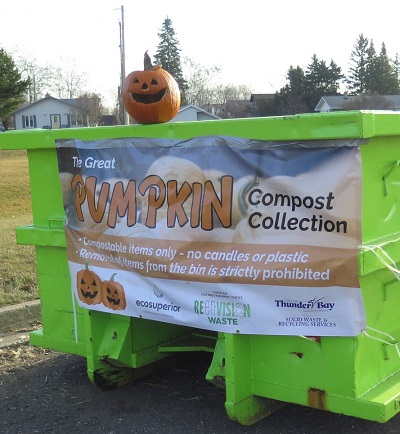 After Halloween celebrations are over, residents can drop off their pumpkins, jack-o-lanterns, and organic fall decorations to one of the pumpkin compost bins.
 Waste Reduction Week is in October
Contact Us
 Connect