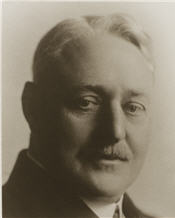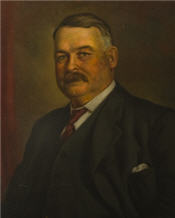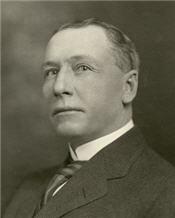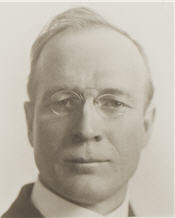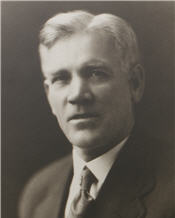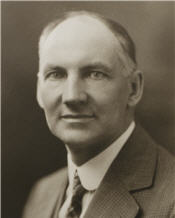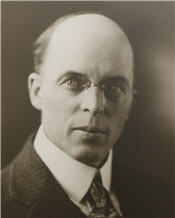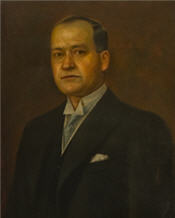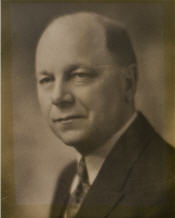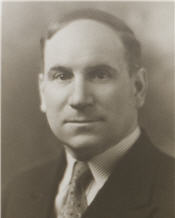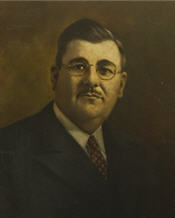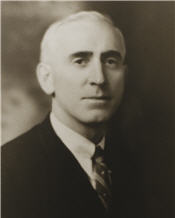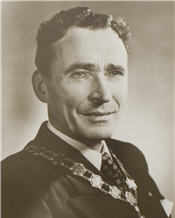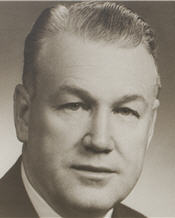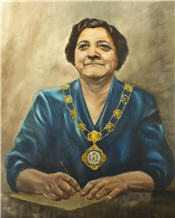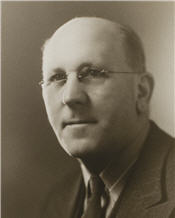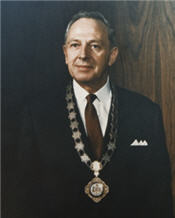

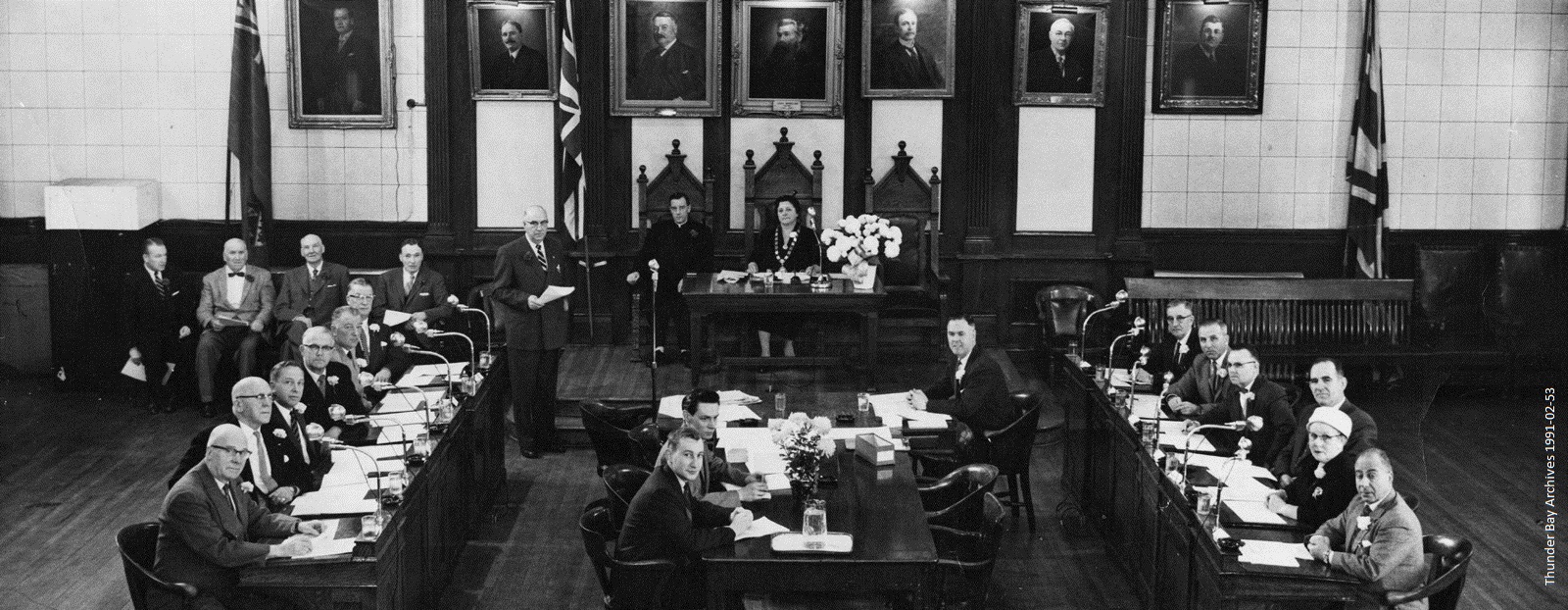
City of Fort William Mayors 1892-1969
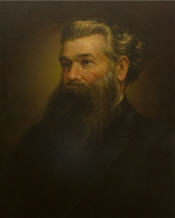
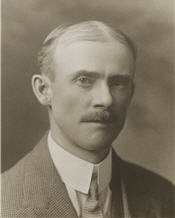
Mayor John McKellar - 1892-1898 |
|
John McKellar, the oldest son of the prominent McKellar family, grew up on the family farm at Fort William. The farm encompassed an ideal location and the McKellar family were able to secure many of their interests, including the separation of Neebing from Shuniah in 1881 and an agreement made with the Canadian Pacific Railway (CPR) in 1884 which directed the centre of CPR activity to Kaministiquia instead of the planned location in Westfort. The growing town of Fort William expanded into the McKellar land, rather than on CPR or Hudson's Bay Company land - which was exactly what the McKellars wanted. McKellar had been active in the governments of Shuniah and Neebing, and when Fort William was incorporated in 1892, he was named as its first Mayor. By the time of his death in 1900, the town of Fort William had achieved many developments, including the establishment of the central business district off the Town Plot, the introduction of necessary infrastructure such as electric street railways, a basic sewage system, and electric power, and an increased in population that surpassed that of Port Arthur. Although the McKellar family's influence was envied and resented by the people of West Fort, John McKellar remained the town patriarch throughout the 1890s. Both McKellar Street (formerly John Street) and the old McKellar General Hospital were named in his honour. Born: June 19, 1833, near Glencoe, Mosa Township, Middlesex County, Ontario Died: Feb. 4, 1900, in Fort William, Ontario at the age of 66 Councillor: Shuniah Councillor 1873-1875, 1877-1881; Neebing Councillor 1881-1887 Reeve: Reeve of Neebing 1888-1892 Mayor: 1892-1899 |
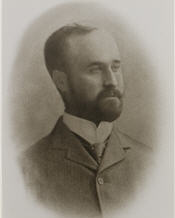
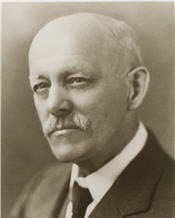
Mayor C. W. Jarvis - 1899-1900 |
|
Charles William Jarvis was born into a prominent Loyalist family on Prince Edward Island (P.E.I.) in 1866. Jarvis was educated in P.E.I., worked in the freight offices of the Canadian Pacific Rail in Emerson, Manitoba, and soon after joined the Ontario Bank. In August 1883, Jarvis was relocated to Port Arthur, where he teamed up with private bankers Ray Street & Co. Jarvis became the manager of the company’s Fort William branch in December 1890, and was named an official member of the firm in 1893. He also held the position of U.S. consular agent of Thunder Bay from 1895 until 1913.As Mayor, Jarvis obtained provincial grants for both a hospital and a high school in Fort William, and federal grants for a post office. In December 1911, he was elected to the Ontario Legislature as a Conservative for the Fort William riding. He was re-elected in 1914 and remained in office until an electoral defeat in 1919. During this time, Jarvis secured public buildings for the riding, most importantly the registry office and the experimental and industrial farm in Neebing. Jarvis successfully ran an insurance business, the Jarvis Agency, with his son Arthur, which was sold in December of 1929. Jarvis was also appointed local master of titles and registrar of deeds by the Ferguson Government in March 1928. Born: March 16, 1866, in St. Eleanor’s, Prince Edward Island Died: July 15, 1932, in Fort William, Ontario Councillor: 1896, 1904-1905 Mayor: 1899-1900 Member of Legislative Assembly (MLA): Conservative MLA 1911-1919 |
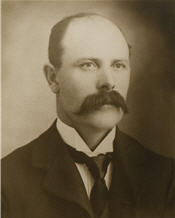
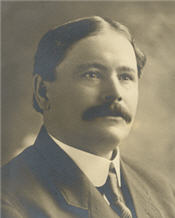
Mayor W. F. Hogarth - 1901 |
|
Walter Frederick Hogarth was born in Brantford, Ontario, where his father worked for the Grand Trunk Railway. Hogarth moved to the northwest in the 1880s, building a homestead in Manitoba and working for the Manitoba & Northwestern Railway. When Canadian Pacific Railway took over the Manitoba & Northwestern Railway, he was transferred to Fort William in the winter of 1886. After moving to Winnipeg to manage a business for several years, Hogarth came back to Fort William permanently in February 1893, and established a small feed and confectionery store. He had a block constructed on Syndicate Avenue in 1907 to house his grocery business which he sold in 1913, but returned to in 1919. In the intervening time, he served as President and General Manager of the Mount McKay and Kakabeka Falls Railway. Hogarth was elected Mayor of Fort William in 1901. During his tenure, he had the honour of welcoming the Duke and Duchess of York (the future King George V and Queen Mary) during their royal tour of Canada. Also during this year, the City of Fort William expanded its sewage system, acquired Mountain View Cemetery, and erected its first street signs. Active in politics, Hogarth ran as a Liberal in one provincial election in 1914, but lost to the incumbent C. W. Jarvis. He was also instrumental in the construction of the first municipal golf course in the 1920s. Born: June 30, 1864, in Brantford, Brant County, Ontario Died: May 4, 1936, in Fort William, Ontario at the age of 72 Councillor: 1898 Councillor Candidate: 1897 Mayor: 1901 |
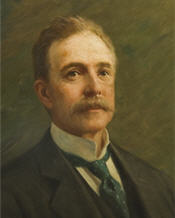
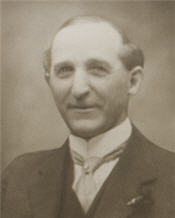
Mayor Joshua Dyke - 1902-1903 |
| Joshua Dyke, a Methodist Minister, came to Canada in 1871 from England and worked in various towns in Ontario and the Northwest. Upon settling in Fort William, he founded Wesley Methodist Church on Brodie Street. Dyke, however, began losing his voice which made it extremely difficult for him to speak publicly. He left his post as Minister and began a career in business.
During his two-year tenure as Mayor, Dyke founded a municipal telephone system and secured both the Copp Foundry and Vickers Park for the city. In March 1903, during Dyke’s second term as Mayor, Fort William’s first town hall burnt to the ground. Although Dyke had put his name forward for the 1909 Mayoral contest, he suffered a stroke in December 1908, and withdrew from the race. Born: September 15, 1849, in Wednesfield, Wolverhampton, Staffordshire, England Died: August 11, 1934, in Fort William, Ontario at age 84 Councillor: 1901 Mayor: 1902-1903 Mayoral Candidate: 1909 |
Mayor C. H. Jackson - 1904 |
| Clarence Hugh Jackson was born in Pictou, Nova Scotia, in 1872. His father worked in the locomotive industry and later moved the family to Prince Arthur’s Landing. It is said that Jackson’s father, Hugh Taylor Jackson, was the conductor of the first passenger train run by the Canadian Pacific Railway departing Port Arthur on June 11, 1882.
Jackson moved to Fort William in 1893 to open a boot and shoe store, C.H. Jackson & Co. He partnered with Albert E. Rutledge in 1896, and in 1897, moved the business to the Victoria Block, of which he and Rutledge later became owners. Jackson was elected Mayor in 1904, receiving 504 of the 636 votes cast. During his one-year in office, the new town hall and fire hall were erected and the Bell telephone system was purchased. He also travelled to Montreal in order to negotiate a deal with the Grand Trunk Pacific Railway which would situate their terminals in Fort William and build a bridge over the Kaministiquia River in West Fort. In 1919, Jackson and Charles Birkett played a significant role in financing and building the Prince of Wales Rink. Jackson served as assistant Secretary-treasurer of the Royal Edward Hotel in March 1928, and was named Fort William’s Registrar of Land Titles in 1932. He re-entered politics once for the 1929 Mayoral race but came in third. . Born: April 29, 1872, in Pictou, Nova Scotia Died: August 4, 1944, in Loon Lake, Ontario at the age of 72 Councillor: 1901-1903 Mayor: 1904 Mayoral Candidate: 1929 |
Mayor E. S. Rutledge - 1905-1906 |
| Edward Saunders Rutledge was born in 1863, the eldest of four brothers. Rutledge was educated in his home village of Markdale, Ontario and like many young men at the time, decided to head west. After working on the construction of the Canadian Pacific Railway in Saskatchewan, he moved to Ignace to run a general store. In approximately 1885, Rutledge and his brother Albert opened another store in Fort William’s Town Plot, which they ran until 1889.
In December 1891, Rutledge became Clerk for the Municipality of Neebing, and in March 1892, when Fort William was incorporated, he became the first Town Clerk, a post which he held until March 1900, when he then served as Town Collector for three years. In 1904, Rutledge was elected to Council, and in 1905 he became Mayor. As the new City hall had just been built, he had the honour of officially opening it to the public in October 1905. Rutledge was greatly opposed to the idea of amalgamation with Port Arthur, and even encouraged competition between the two cities. In 1906, he was acclaimed for a second term and Fort William saw the opening of the Ogilvie flour mill, a 20 year contract with the Kaministiquia Power Company, and the construction of the Canada Iron & Foundry Company and the Consolidated Elevator. Unfortunately the success of the Ogilvie flour mill was short lived as later that same year the mill’s elevator slid off the bank and into the Kaministiquia River. Rutledge was faced with turbulent times. Events of 1906, included a violent strike in October and an outbreak of typhoid in the city’s water supply which killed 80 people. In 1907, while Rutledge was Chairman of the Fort William Board of Water, Light and Telephone Commissioners, he was blamed for the poor telephone service, the long wait in obtaining Loch Lomond’s water supply, and strained labour relations. Because of these problems, in 1909, Council dissolved the Board and took control over utilities directly. Born: May 13, 1863, in Markdale, Grey County, Ontario Died: March 11, 1951, in Fort William, Ontario at the age of 88 Councillor: Neebing Councillor 1887, 1888; Fort William Councillor 1904, 1931 Councillor Candidate: Neebing Councillor 1889 Mayoral Candidate: 1914 Mayor: 1905-1906 |
Mayor James Murphy - 1907-1908 |
|
James Murphy, born in Iowa, moved to Winnipeg in 1882, and was employed by the Canadian Pacific Railway (CPR) Fuel Department. He then moved to Port Arthur at the age of 21 to work for the newly incorporated Dominion Coal, Coke and Transportation Co. It did not take long for Murphy to become foreman of the company, and in 1886, he was contractor for all the company’s coal. When the CPR moved their coal handling operations to Fort William, Murphy went with them and was in charge of running their coal dock on the Kaministiquia River until August 1903, when he opened his own coal-handling dock and yard. Murphy later established the Western Navigation Co. Ltd. in partnership with his brother Harry Murphy, was president of the Western Stevedore Company, supplied tug boats, and was involved in real estate. Murphy embarked upon his political career in 1898, when he was made Commissioner of Electric Light and Water. In August 1905, after the resignation of two Aldermen, Murphy and George Graham were elected to Council in a by-election. In 1907, Murphy was elected Mayor and when Fort William was incorporated that same year, he had the honour of being the first Mayor of the City of Fort William. He was re-elected in 1908 and served a second term. During his Mayoralty, Fort William saw the construction of its first high school on Marks Street, the establishment of the first Police Commission in 1907, the opening of the Loch Lomond Tunnel, and the start of major sewer construction. Both his brother Harry and his son Eugene also served as Mayor of Fort William.
Born: August 15, 1863, in West Liberty, Muscatine County, Iowa Died: June 15, 1928, in Fort William Ontario at the age of 65 Councillor: 1905 (September - December), 1906 Mayor: 1907-1908 |
Mayor L. L. Peltier - 1909-1910 |
|
Louis Lawrence Peltier was of French-Canadian descent and born in Vermont. He found work with the Grand Trunk Pacific Railway as a Freight Brakeman. Peltier played a large role in establishing the first trainmen’s organization in North America in 1879. In 1889, Peltier came to Fort William, where he worked as the Canadian Pacific Railway (CPR) Yard Master, later transferring to become a Conductor in 1891. He was elected General Chairman of the Order of Railway Conductors in June 1902, a position which governed the entire CPR system. Peltier was also elected as the Canadian legislative representative of the Order of Railway Conductors in May 1916, which involved taking part in parliamentary sessions in Ottawa. He held this role until 1931. Peltier was a trustee for the Fort William Public Schools for six years and played a large part in obtaining a high school for Fort William in 1899. His municipal political career began with a run for Councillor of Ward 2 in 1902, for which he was unsuccessful, but he was elected in 1903. In 1907, he ran for Mayor and lost to James Murphy but was victorious in 1909. He was acclaimed to a second term as Mayor in 1910; however, he was not present for the last two months as he was sitting on a board of conciliation in Winnipeg. As Mayor he had an important role in helping to resolve the bloody strike of the freight handlers and stevedores, and was known for supporting the working man. Born: June 8, 1853 or 1854, in Milton, Chittenden County, Vermont or Rutland, Vermont Died: March 7, 1939, in Magnetawan, Ontario at the age of 86 Councillor: 1903, 1908 Councillor Candidate: 1902 Mayoral Candidate: 1907, 1913 Mayor: 1909-1910 |
Mayor S. C. Young - 1911-1912, 1914-1915 |
|
Samuel Crawford Young was born in Hamilton, Ontario and moved to Winnipeg at the age of 18. He began work for the Canadian Pacific Railway in 1885, a career that lasted 14 years. Young began as a brakeman and later became a conductor on the Fort William-Ignace-Winnipeg route. In 1899, having been involved in a train accident at Finmark, he decided to leave railroading and enter the insurance and real estate business. In his years as a City Councillor, Young was a strong proponent of municipal ownership. Elected to his first term as Mayor in 1911, he resigned from the position in May 1912, due to personal interests. He was re-elected in 1914 to serve another two years. Though Young was involved in organized labour, he remained politically independent, and never belonged to, or organized for, any particular political party. Young had been made Captain in the 96th Lake Superior Regiment in 1906 and commanded company C. When the First World War broke out in 1914, Young was chosen to direct the left half of the 96th Battalion. He was later made commandant for training infantry officers in Western Canada. From May 1917, until the end of the war, he served in France as the Assistant Director of Railways and Docks at Cherbourg. Young was a member of a number of City commissions including the Fort William Water and Light Commission in 1899, and the Fort William Hydro Commission from 1927 to 1929. He was also named District Police Magistrate in September 1930 and City Police Magistrate in October 1934. He retired in 1935 after suffering a stroke. Born: September 3, 1865 in Hamilton, Ontario Died: January 4, 1936 in Fort William, Ontario at the age of 70 Councillor: 1895, 1906-1909 Mayor: 1911-1912 (May), 1914-1915 |
Mayor George Graham - 1912-1913 |
|
George Alexander Graham, the oldest of six children, came to Fort William from St. Catherines in 1875. He formed a lumber company with his brother and two cousins and built kilns, a sawmill, and a planing mill. The company, Graham & Horne, shipped lumber across the Northwest, and eventually expanded westwards into Vermilion Bay and the Rainy River District. Graham was also a significant figure in Fort William's real estate business. Some of the buildings that he constructed include a series of stores facing Union Station, the Graham and Horne Block, the Royal Bank building, the Royal Theatre, and the Traders Bank building. In August 1905, Graham was elected to Council in a by-election after the resignation of Councillor William Newcombe. He was re-elected again the following year. He is said to have been a thoroughly competent Mayor and won his second term in office easily. Born: May 17, 1857 in St. Catharines, Niagara Region, Ontario Died: June 5, 1927 at the age of 70 Councillor: Neebing Councillor 1882-1885, Fort William Councillor 1905 (September - December), 1906, 1912 (January - June) Councillor Candidate: Fort William Councillor candidate 1908 Mayor: 1912 (June - December), 1913 |
Mayor H. Murphy - 1916-1919 |
|
Harry (Henry) Murphy arrived in Fort William from Iowa in 1888. For a short time he operated a meat shop on Simpson Street, afterwards establishing the Western Stevedore Company with his brother James Murphy and Port Arthur coal merchants Louis and Phil Walsh. By 1921, their business was responsible for handling package freight over the docks and throughout the two cities. Murphy also ran several lumber camps at Nezah along the Canadian Pacific Railway. In 1915, Murphy was appointed acting Mayor when Samuel Crawford Young was absent due to military duties. He was then acclaimed as Mayor three times, from 1916 to 1918, and won the 1919 election almost as effortlessly. Murphy pushed to abolish the ward system and institute a smaller Council, but was unsuccessful in these attempts. He also insisted on the use of hydro power, re-opening the Canadian Car & Foundry Company in Fort William, and setting up a pulp and newsprint manufacturing center. Murphy had some success in securing railway equipment orders for the Canadian Car & Foundry Company, and in opening the Mission Mill, which later joined with the Abitibi Power and Paper Company of Canada. Murphy ran as a Liberal in the 1937 Ontario election on a ballot that also included Joseph Crawford running as an Independent Liberal. The vote was split between the two, resulting in a Conservative victory by Frank Spence. Sadly, Murphy was found dead in his compartment aboard a Canadian Pacific Railway (CPR) train en route to Toronto five days after the Ontario election took place. Born: September 14, 1870 in West Liberty, Muscatine County, Iowa Died: October 11, 1937 on a CPR train near Toronto, Ontario at the age of 67 Councillor: 1912-1915 Reeve: Reeve of Neebing Mayor: 1916-1919 |
Mayor A. H. Dennis - 1920-1921 |
|
Albert Hugh Dennis attended school in Welland County and worked in St. Catharines and St. Thomas, Ontario before arriving in Westfort in approximately 1902. He found work with the Port Arthur-Fort William Street Railway, followed by self-employment as a blacksmith. Dennis was later employed by the Canadian Pacific Railway as a blacksmith where he worked until his death in 1928, except for the two years he served as Mayor. Dennis started his political career by running as an Independent Liberal Party (ILP) candidate in 1911. During the 1917 Federal Election he ran as the ILP candidate for the Fort William and Rainy River riding. As a pro-labour figure, he was extremely popular in the post-war years. During his time as Mayor, Dennis reached a deal with the Fort William Paper Company and attempted to negotiate a deal with the province and Ontario Hydro for power for the new mill. Incidentally, Dennis was also the first Mayor of Fort William to choose to forgo his career in order to serve as Mayor full time. Dennis died in 1928 after undergoing an operation for appendicitis. He was serving his thirteenth term as a City Councillor at the time. Born: July 20, 1871 in Caistorville, Caistor Township, Lincoln County, Ontario Died: April 20, 1928 in Fort William, Ontario at the age of 56 Councillor: 1912-1917, 1919, 1925-1928 Mayor: 1920-1921 Mayoral Candidate: 1922 |
Mayor N. Edmeston - 1922-1925 |
|
Isaac Newton Edmeston was born in Huron County, Ontario in 1866 and as a young man travelled west to Neepawa, Manitoba where he lived for 13 years working as a millwright. He came to the Lakehead in either 1901 or 1904 to work on constructing grain elevators. Edmeston also spent some years during WWI constructing ships and railway cars at the Canadian Car & Foundry Company plant in Fort William. Edmeston was elected as Mayor in 1922 in a closely-contested race. In the early 1920s Edmeston was heavily involved in plans for hydro-electric development. His arguments to the Royal Commission persuaded them to set fixed prices for electricity from the Nipigon Power project. During his mayoralty, Edmeston also saw the opening of Chippewa Park, the lowering of the mill rate, and the creation of a long distance telephone connection to Winnipeg, Manitoba. Edmeston was a member of the Fort William Conservative Association for much of his life and was named Sheriff of the Thunder Bay District in 1926. He held this position for nearly 10 years, retiring in 1936. Born: May 29, 1866 in Drumbo, Blenheim Township, Oxford County, Ontario Died: October 16, 1942 in Toronto, Ontario at the age of 76 Councillor: 1918-1921 Councillor Candidate: 1939 Mayor: 1922-1925 Mayoral Candidate: 1926 |
Mayor J. E. Crawford - 1926-1928 |
|
Joseph Edmund Crawford was raised in Grey County, Ontario working on his father’s farm and sawmill. He attended school in Owen Sound and Toronto where he became a chartered accountant. When he arrived in Fort William in 1907, he was employed by the Pigeon River Lumber Company. Crawford also worked as Fort William’s City Auditor for three years and opened his own accounting firm in 1918. Throughout his political career, Crawford continued working as an accountant until his retirement in 1951. In Crawford's first run for Mayor in 1922, he was defeated by only six votes; however, he was acclaimed to Council to replace R. E. Rutledge in April of the same year. His second attempt at the Mayor's seat resulted in a loss by 25 votes. In 1926, he was victorious and became Mayor of Fort William. During his mayoralty, Fort William established a contract with Ontario Hydro, ending a 20-year contract with the Kaministiquia Power Company. Later, he spent one session as the Liberal Member of Legislative Assembly for Fort William; he ran again in 1937 as an Independent Liberal but was defeated. Born: December 2, 1877 in Invermay, Arran Township, Bruce County, Ontario Died: October 9, 1964 in Fort William, Ontario at the age of 87 Councillor: 1919-1921, 1922, 1923 Mayoral Candidate: 1922, 1924, 1925 Mayor: 1926-1928 Member of Legislative Assembly: Liberal MLA for Fort William Riding 1934-1937 |
Mayor N. B. Darrell - 1929-1930 |
|
Nathaniel Bascome Darrell was born in Brooklyn, New York where his father ran an import business. After his father died, Darrell and his mother and brother moved to Toronto to be closer to her family. In Toronto, Darrell started a produce business with his brother and a 'friend' who then absconded with everything they had. After this unfortunate occurrence, Darrell decided to move out west. Arriving in Fort William in 1910, Darrell worked for the Grand Trunk Pacific Railway and became the foreman of the coal docks. He then began work in the insurance business, eventually establishing his own agency, the N.B. Darrell Insurance Company. Having served as a Councillor for several years, Darrell won the three-way Mayoral race in 1929 and was acclaimed for a second term in 1930. He lost the 1931 Mayoral race to Eugene Grimes Murphy by a mere 47 votes. Throughout his political career he was involved in promoting Fort William as an industrial and tourist center, establishing a long distance telephone service, and ensuring that city streets were paved. Born: January 28, 1877 in Brooklyn, New York Died: June 8, 1941 in Toronto, Ontario at the age of 64 Councillor: 1922-1925, 1927-1928, 1934 Mayor: 1929-1930 |
Mayor E. G. Murphy - 1931-1932 |
|
Eugene Grimes Murphy was born in Fort William, Ontario in 1894 and attended Loyola College in Montreal. He spent several months in England with the Canadian Forestry Corps depot and entered the Royal Flying Corps as a flight cadet. In November 1919, Murphy was called to the Ontario bar and he opened his own firm in Fort William in March 1920. Murphy served as a Councillor from 1924 to 1928. When his father James Murphy passed away that year, Murphy decided to retire from politics to take over the presidency of his father’s company, which included Murphy Coal and the Fort William Times-Journal. He re-entered politics to run for the 1931 Mayoralty and won by only 45 votes over Nathaniel Bascome Darrell. Murphy was acclaimed for a second term in 1932. While Murphy was Mayor, Fort William saw the completion of the Neebing River interceptor sewer and sewage treatment facility in December 1932. The completion of this system helped relieve the unsanitary conditions facing the East End. In October 1933, Murphy travelled to New York City with relatives on a business trip. Three days after arriving, he died falling from a tenth story window of the Park Avenue Hotel where he had been staying. Some say he was simply trying to open the window when he suffered a heart attack or other complication due to heart disease, while others believe it was suicide. Murphy holds the honour of being the first Mayor of Fort William to have been born in the city. He was also the first Fort William Mayor born to a previous Fort William Mayor. Born: May 16, 1894 in Fort William, Ontario Died: October 20, 1933 in New York, New York at the age of 38 Councillor: 1924-1928, 1930 Mayor: 1931-1932 |
Mayor Robert B. Pow - 1933-1936 |
|
Robert Barclay Pow grew up and attended school in Manitoba. His first job was with the Northern Elevator Company in Emerson, Manitoba and he continued working at elevator companies for the rest of his career. He arrived in Fort William in 1908, working at the Consolidated Elevator Company, Empire Elevator Company, and Mutual Elevator. In 1916, Mutual promoted him to Superintendent and when they came under the control of the Smith-Murphy Grain Company in 1920, he was employed as a Manager. Pow eventually became Director in 1947, almost two decades after Smith-Murphy Grain Company combined with two other companies, forming the Reliance Grain Company Ltd. Pow served a number of terms on City Council and was elected Mayor of Fort William four years in a row from 1933 to 1936. During his first term as Mayor, the white cross on Mount McKay was introduced as a tribute to First Nations soldiers who had died in action. When the Ontario Municipal Board decided against building an airport in Fort William, Pow used his powers of persuasion to convince them to reverse their decision. In late 1940, Pow decided to run for Mayor once more, but was unsuccessful, facing harsh criticisms over his previous record from incumbent and fellow candidate Chisholm Ross. Born: July 7, 1883 in Emerson, Manitoba Died: April 25, 1958 in Fort William, Ontario at the age of 74 Councillor: 1929-1932, 1937-1940 Mayor: 1933-1936 Mayoral Candidate: 1941 |
Mayor B. C. Hardiman - 1937 |
|
Dr. Benjamin Charles Hardiman arrived in Fort William in 1906 with his family; his father was employed by the Canada Iron Foundry plant. In 1914, Hardiman graduated from medical school at Queen’s University and began a practice in East End, Saskatchewan, before enlisting with the army in 1916. He served both on Canadian soil and in England and France, arriving back in Canada by June 1919, where he worked as a medical officer for war veterans. After serving several years as a Councillor, Hardiman was elected Mayor of Fort William in 1937. During his term in office, he concentrated on reorganizing the Board of Health by restructuring the personnel and finance departments. He ran again for the 1938 Mayoralty, but was defeated by Chisholm Ross by a mere 58 votes. Hardiman had a successful general practice in Fort William and worked as the City’s coroner from 1951 to 1963. He also held the position of President of the McKellar Hospital Medical Staff in 1926. Born: Nov. 7, 1886 in London, England Died: April 4, 1966 in Fort William, Ontario at the age of 79 Councillor Candidate: 1929 Councillor: 1935-1936, 1939-1944, 1953-1958 Mayor: 1937 Mayoral Candidate: 1938, 1945 |
Mayor Chisholm Ross - 1938-1942 |
|
Chisholm Mackenzie Ross and his family first moved to Fort William in the late 1880s before moving to Chicago and then back to Fort William in 1905. Ross attended high school at Fort William Collegiate Institute and attended Ohio State University where he studied engineering for two years. Ross worked with his father and with James Whalen on numerous engineering and dredging projects in Fort William. He was made Vice-President of Northern Engineering Construction and Supply Company in 1916, the company which his father had founded in 1905. He held this position for 13 years before becoming President in 1932. Ross was a Public School Trustee for six years and a City Councillor for three. He was first elected Mayor in 1938, and won two more two-year terms after that, serving as Mayor until 1942. In May 1939, during Ross’ second term as Mayor, H. M. King George VI visited Fort William as part of his royal tour of Canada. Ross moved to Toronto in 1942 and was made Vice-President of the Emergency Manpower Commission of the Toronto district. Born: March 25, 1893 in Winnipeg, Manitoba Died: August 11, 1944 in Toronto, Ontario at the age of 51 Councillor: 1934-1936 Mayor: 1938-1942 |
Mayor Garfield Anderson - 1943-1948 |
|
In 1904, Garfield Anderson moved from his home town of Allenford, Ontario to the Rainy River District to set up a homestead. He opened a general store in Stratton, Ontario in 1912 and was married in December of the same year. He joined the army in 1915 and was deployed overseas in April 1917. Upon returning to Canada in early 1919, Anderson moved to Saskatchewan and then relocated to Westfort where he established a barber shop. As well as serving as a City Councillor, Anderson ran in Federal Elections in 1935, 1940, and 1949 as a Co-operative Commonwealth Federation (CCF) candidate. The CCF had been formed only a few years prior to this first campaign in 1935, and did not achieve much electoral success until a decade later. Anderson was victorious in securing the Mayoralty in 1943, defeating three opponents, and was re-elected consecutively for 1945 and 1947. During his time as Mayor, he closed Fort William’s electric street railway in 1947, and prepared for the new dial telephone system which would be introduced in 1949. He was also responsible for improving the benefits of City workers, introducing pension plans, sick leave, and unionization. Nearly 430 wartime houses were built to house employees of Canadian Car and Foundry Ltd. during the Second World War, under Anderson’s Mayoralty. Born: May 7, 1887 in Allenford, Amabel Township, Bruce County, Ontario Died: June 1, 1965 in Victoria, British Columbia at the age of 78 Councillor: 1935, 1938-1942 Mayor: 1943-1948 |
Mayor Hubert Badanai - 1949-1952, 1955-1958 |
|
Hubert (Umberto) Badanai emigrated from Italy to Canada in 1913 when he was only 18 years old. He worked in a brickyard at Rosslyn where he saved money for an education to improve his English. He enlisted in the 94th Battalion in 1916 at Fort Frances, and served overseas, including at Vimy Ridge, until he was discharged as a sergeant in 1919. Badanai was heavily involved in the automotive business from at least 1920, working as Service Manager at Fort William Motors from 1922-1924, and incorporating Kam Motors Ltd. in 1924. In 1937, Kam Motors was awarded the General Motors franchise for the area. During the interwar period, Badanai was concerned with easing tensions between the Italian community and other citizens of Fort William. It became important to assure the community that the local Italians were not in support of Mussolini. He soon became the most prominent figure among the Italian community, and served on the Fort William City Council throughout the 1940s. Badanai's election to Mayor in 1949 was not only a personal victory, but also broke a glass ceiling of ethnicity in Fort William. During his first tenure as Mayor, Badanai made the first telephone call using Fort William’s newly introduced dial system. At his re-election in 1958, Badanai called for the amalgamation of Fort William and Port Arthur, a move seen by many as revolutionary. He was elected to the House of Commons, representing Fort William as a Liberal, for five terms, between 1958 and 1972. His role as a Member of Parliament also included serving as Parliamentary Secretary for Public Works and for Citizenship and Immigration. Born: January 11, 1895 in Azzano Decimo, Friuli region, Udine Province, Italy Died: September 19, 1986 in Thunder Bay, Ontario at the age of 91 Councillor: 1940-1948 Councillor Candidate: 1937, 1939 Mayoral Candidate: 1953 Mayor: 1949-1952, 1955-1958 Member of Parliament: Fort William Riding, Liberal, 1958-1972 |
Mayor Gordon Carson - 1953-1954 |
|
Edward Gordon Carson was born in Fort William in 1911 or 1912. He worked for Famous Players for well over 40 years, and owned the Fort William Theatre located in Westfort. In his earlier days, Carson also worked as both Manager and Assistant Manager at the Royal Colonial, Lyceum, and Capital Theatres, all in Fort William. Carson also founded the School of the Air at the Royal Theatre, where local musicians would showcase their talents. Carson served as a Councillor for seven years before being elected Mayor of Fort William in 1953. This first election was considered a major upset, as he defeated incumbent Mayor Hubert Badanai in a close race. Badanai would unseat Carson again in the 1955 election. Carson also worked in provincial elections, and was a returning officer throughout the 1950s and 1960s. Born: 1911 or 1912 in Fort William, Ontario Died: 1999 in White Rock, British Columbia at the age of 87 Councillor: 1946-1952, 1962-1963 Mayor: 1953-1954 Mayoral Candidate: 1955, 1961 |
Mayor Catherine Seppala - 1959-1960 |
| Catherine Seppala was born in Fort William in 1907, the twelfth of 14 children, and lived most of her life in her home town. In 1953, she ran for a seat on Fort William’s Council and was victorious. She served as a Councillor from 1954 to 1958, when she decided to run in the 1959 Mayoral election. Once again, the determined Seppala proved triumphant, winning the 1959 election and becoming the first and only woman ever to serve as Mayor of Fort William.
Seppala was involved in the construction of the Westmount Hospital, as well as the Neebing River Conservation project. She belonged to many volunteer organizations, including the local Canadian Red Cross branch, where her work was rewarded by Queen Elizabeth II. Seppala was actively involved in 16 different organizations at the height of her volunteering career. In September 1961, Seppala was forced to resign due to illness. Fort William City Council chose John Oliver Booth as her replacement until the end of the year. Seppala passed away 14 years later in 1975 due to the same illness which had forced her resignation so many years earlier. Born: 1907 in Fort William, Ontario Died: July 4, 1975 in Thunder Bay, Ontario Councillor: 1954-1958 Mayor: 1959-1960 (September 13) |
Mayor John O. Booth - 1960 |
|
At the age of 19, John Oliver Booth traveled from England to South America, where he worked on a sugar estate as a plantation overseer for three years. After contracting malaria, Booth decided to move to Canada where he would be unlikely to suffer any recurrences. He found work with the Canadian Pacific Railway (CPR), first in Portage la Prairie, then in Fort William, where he became Chief of the CPR yard staff. When the First World War began, Booth traveled back to Europe and fought in France, but was wounded in action. He returned to Fort William in April 1919 and worked as Superintendent of grain doors for the Canadian National Railway from 1920 until his retirement in 1955. Booth sat on the Fort William Board of Education in 1934 and 1935, which marked the start of his political career. He then proceeded to win a Council seat nearly every year between 1936 and 1963, apart from a brief hiatus in the early 1950s when he sat as Hydroelectric Commissioner. He officially ran for Mayor once in 1943, but came third out of four candidates. When Mayor Catherine Seppala resigned due to illness in September 1960, Council chose Booth as her replacement and he served as Mayor of Fort William until the end of that year. After retiring from public life, Booth travelled widely. He was killed in 1972, as the result of a head injury incurred during a dispute with a visiting United States Air Force intelligence officer (who was later cleared of any wrongdoing). Born: December 1, 1889 in Wollaton, Nottinghamshire, England Died: January 7, 1972 in Thunder Bay, Ontario, at age 82 Councillor: 1936-1942, 1944-1951, 1956-1957, 1959-1960, 1961-1963 Mayoral Candidate: 1943 Mayor: 1960 (September - December) |
Mayor Ernest H. Reed - 1961-1969 |
|
Ernest H. Reed was born and raised in Toronto, Ontario. He and his family left Toronto for Fort William in 1952 when he was transferred by the Great West Life Assurance Company. He worked as a Branch Manager upon arriving in Fort William. After Reed felt he had had enough time to get to know the people and City of Fort William, he ran for Council in 1956, but was unsuccessful. In 1959, he was elected as a Councillor, and once again in 1960. Reed decided to run for the 1961 Mayoral election and proved victorious. He held the position of Mayor of Fort William for the next eight years. During Reed's tenure, the new Fort William City Hall was constructed on Donald Street. This building still serves as Thunder Bay City Hall today. Reed once said that one of the toughest times he faced in his Mayoral career was when City Clerk, Don Martin, and the Administrator and Treasurer, Sid Blake, died and needed to be replaced. He was also accused of driving an old garbage truck as his official vehicle while out on City business, and it became a long-running joke. Born: November 19, 1914 in Toronto, Ontario Died: October 6, 2004 in Barrie, Ontario Councillor Candidate: 1956 Councillor: 1959-1960 Mayor: 1961-1969 Mayoral Candidate: Thunder Bay Mayoral Candidate 1970 |
Contact Us

Mayor John McKellar - 1892-1898
Mayor C. W. Jarvis - 1899-1900
Mayor W. F. Hogarth - 1901
Mayor Joshua Dyke - 1902-1903
Mayor C. H. Jackson - 1904
Mayor E. S. Rutledge - 1905-1906
Mayor James Murphy - 1907-1908
Mayor L. L. Peltier - 1909-1910
Mayor S. C. Young - 1911-1912, 1914-1915
Mayor George Graham - 1912-1913
Mayor H. Murphy - 1916-1919
Mayor A. H. Dennis - 1920-1921
Mayor N. Edmeston - 1922-1925
Mayor J. E. Crawford - 1926-1928
Mayor N. B. Darrell - 1929-1930
Mayor E. G. Murphy - 1931-1932
Mayor Robert B. Pow - 1933-1936
Mayor B. C. Hardiman - 1937
Mayor Chisholm Ross - 1938-1942
Mayor Garfield Anderson - 1943-1948
Mayor Hubert Badanai - 1949-1952, 1955-1958
Mayor Gordon Carson - 1953-1954
Mayor Catherine Seppala - 1959-1960
Mayor John O. Booth - 1960
Mayor Ernest H. Reed - 1961-1969