




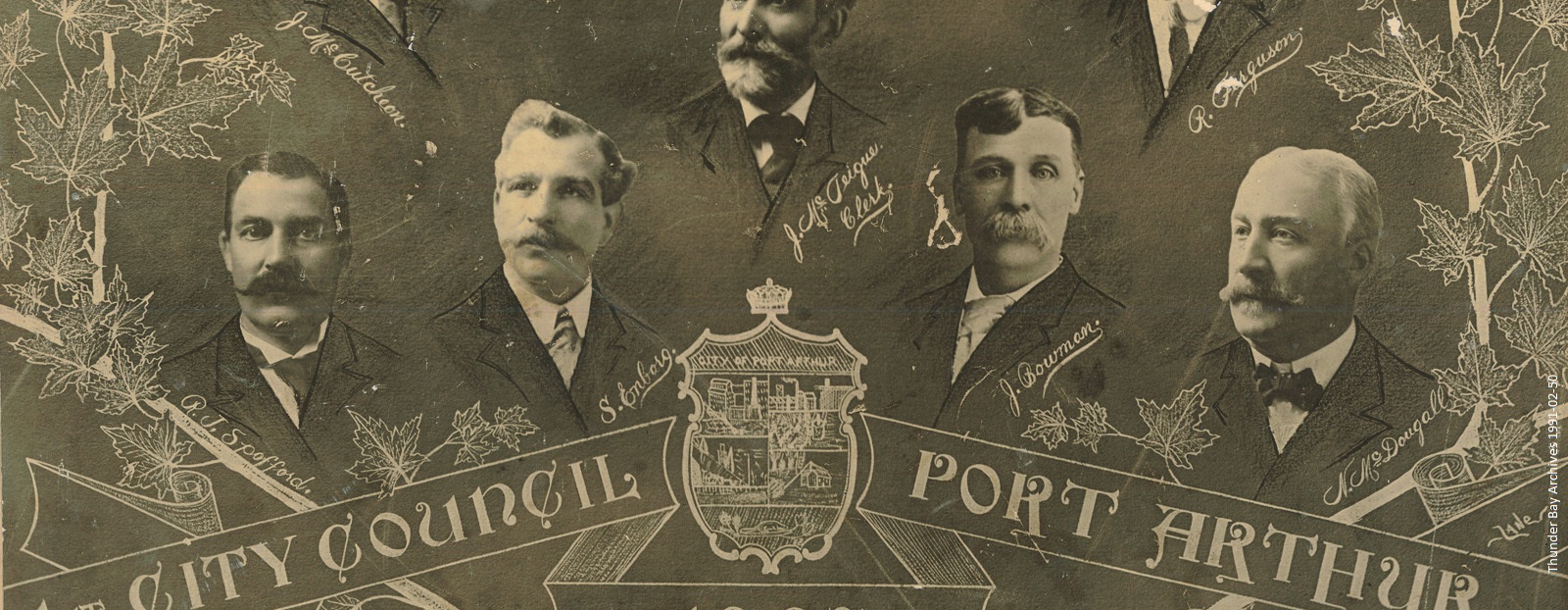


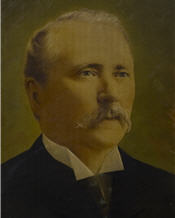
 Mayor Thomas Marks - 1884 Mayor Thomas Marks - 1884 |
| Thomas Marks was born in Ireland in 1834, and came to Canada as a child in 1842. Throughout the 1850s he worked as a merchant with his two older brothers at Bruce Mines in the Algoma District on Georgian Bay. Marks sent one of his employees to 'The Station' (which soon after became known as Prince Arthur’s Landing, and later Port Arthur) to build a general store, which then became the most important store under the Marks family’s control. Thomas Marks moved permanently to Prince Arthur’s Landing in 1872.
From this time up to his death in 1900, Marks was a leading figure in both commercial and municipal life in the area. He was a key figure in organizing the first municipal Corporation of Shuniah in 1873, and served as Reeve of Shuniah from 1875 to May 1884. In 1884, Port Arthur was incorporated as a town and, by acclamation, Thomas Marks became its first Mayor. Marks campaigned unsuccessfully for Prince Arthur's Landing to become the home of the Canadian Pacific Railway (CPR) connection to Winnipeg, instead of the favoured Fort William. He then played a significant role in the building of the Prince Arthur's Landing and Kaministiquia Railway, connecting Prince Arthur's Landing to the CPR. He was also involved in real estate, ship building, mining, lumbering, and hotel building and ownership -- he built the Northern Hotel which later became the Mariaggi. Marks had a huge influence on the development of Port Arthur, and is often referred to as 'one of the fathers of Port Arthur'. Born: June 21, 1834 in Kilfinnan, Ireland Died: July 9, 1900 in Toronto, Ontario at the age of 66 Reeve: Reeve of Shuniah 1875-1884 (May) Mayor: 1884 (May - December) |
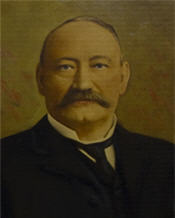 Mayor James Conmee - 1885 Mayor James Conmee - 1885 |
| James Conmee, who served as Councillor and Mayor, Member of Legislative Assembly for Algoma West, and Member of Parliament for Thunder Bay and Rainy River, was a popular political figure known for his involvement in utilities and mining.
Born in Grey County, he arrived in Fort William around 1872 to work on a sawmill on the Kaministiquia River. In 1876, Conmee established a contract to be mail carrier between Pigeon River and Silver Islet, and then began work in the lumber and railway contracting business, which included contracts with both the Prince Arthur’s Landing and Kaministiquia Railway and the Pacific Railway. Conmee served as assessor and tax collector for the Municipality of Shuniah, and was elected as Councillor in 1879. Despite his lack of formal education, he was recognized as an excellent speaker and debater. He was elected Mayor of Port Arthur for 1885, and almost immediately thereafter, secured a seat in provincial politics as a Liberal Member of Legislative Assembly for Algoma West. Throughout this time, he continued to work as a contractor on railway projects, and invested in utility companies. In 1885, Conmee and his business partner, John McLennan, were faced with a lawsuit for allegedly defrauding the Canadian Pacific Railway on their Lake Superior contracts. Both were cleared of all charges by 1889, and Conmee's public reputation as a strong-willed fighter grew. The collapse of the silver mining industry in the early 1890s brought a depression to the region, and changed the tone of Conmee's political career. By siding with his constituents against his party over new mining legislation, he damaged his chances of advancing any further in provincial politics. He ran in the Federal Election of 1896, and was elected Member of Parliament for Thunder Bay and Rainy River in 1904 and 1908. Born: October 13, 1848, in Sydenham Township, Grey County, Ontario Died: July 23, 1913, in Prescott, Arizona, at the age of 64 Councillor: Shuniah Councillor, 1879-1881 Mayor: 1885 Member of Legislative Assembly, Ontario: Liberal MLA Algoma West 1885-1904 Member of Parliament: Liberal MP Thunder Bay-Rainy River 1904-1911 |
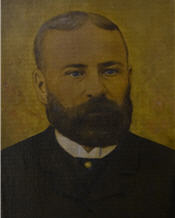 Mayor George Hugh Macdonell - 1886-1888, 1900 Mayor George Hugh Macdonell - 1886-1888, 1900 |
| George Hugh Macdonell was born in Toronto, descended from United Empire Loyalists. He was educated in Quebec, attended military schools in Montreal, and later served under Colonel Garnet Wolseley in the Red River Expedition.
After managing a storehouse in Montreal for a number of years, Macdonell worked for the Canadian Pacific Railway (CPR). By May 1882, he was living in Port Arthur and was involved with the Hamilton Powder Company on the Prince Arthur's Landing waterfront. Macdonell was also an insurance agent, and played a part in mining and CPR construction contracts to the east of Port Arthur. Macdonell's political career began after James Conmee left Port Arthur to pursue provincial politics. He was elected Mayor of Port Arthur from 1886-1888, and again in 1900. Macdonell ran against Conmee in the Ontario General Election in June 1890, but was defeated by Conmee's 786 votes to his 727. Macdonell was elected the Conservative Member of Parliament for Algoma district in the Federal Election of 1891, but was defeated by Albert Dyment in 1896. After this defeat Macdonell to return to Port Arthur where he once again took up contracting and politics. He left Port Arthur in July 1900 for work in Manitoba, and later was appointed Dominion Lands Agent in Medicine Hat, and then Lethbridge. He died in Lethbridge in 1920. Born: February 10, 1851 in Toronto, Ontario Died: April 1, 1920, in Lethbridge, Alberta Councillor: 1885 Mayor: 1886-1888, 1900 Member of Parliament: Algoma, 1891-1896 |
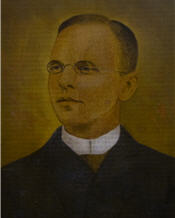 Mayor Thomas Ambrose Gorham - 1889 Mayor Thomas Ambrose Gorham - 1889 |
| Thomas Ambrose Milne Gorham worked as a public school teacher north of Toronto before apprenticing in a law firm. In February 1882, he was called to the bar, and later that same year, he moved to Winnipeg, where he was employed by the Canadian Pacific Railway (CPR) as a claims agent. Gorham established his own law firm in Port Arthur in 1885.
Gorham was elected Councillor in 1888. In the next year's Mayoral race, Gorham, an active Liberal, went head to head with a well-known local Conservative. Mud-slinging appears not to have hurt Gorham’s reputation, and he successfully gained the 1889 Mayoralty. In September 1889, Gorham formally greeted the visiting Governor General Lord Stanley to Port Arthur. Also in that year, Gorham was involved in a dispute with the CPR. In December, Train 103 was seized due to unpaid taxes. These events resulted in poor relations with the CPR for many years to follow. Gorham became the District Crown Attorney in October 1892, during a time of worsening depression. In the 1890s, Gorham also served as the Town Solicitor for Fort William. In November 1901, Gorham was granted the Judgeship of Halton County where he resided until his death in 1913. Born: Nov. 2, 1855 near Sparta, Yarmouth Township, Elgin County, Ontario Died: Oct. 4, 1913 in Milton, Halton County, Ontario at the age of 58 Councillor: 1888 Mayor: 1889 |
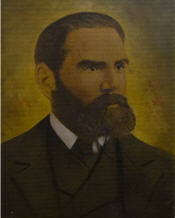 Mayor Aaron Squier - 1890 Mayor Aaron Squier - 1890 |
| Aaron Squier, born in Peel County in 1834, was living in Port Arthur by 1884 and worked as an insurance agent. He became in
Interested in politics in 1889 when the train incident occurred between the Canadian Pacific Railway (CPR) and the anti-CPR faction, putting an end to Thomas Ambrose Gorham's political career. Squier was elected Mayor for 1890 and spent a busy year in office. He tried to appease both parties in the CPR conflict, but was not particularly successful. He also made the decision to construct the street railway from Port Arthur to Fort William. The street railway project was of particular concern to Squier, and he felt that it should be built using private capital. This position did not sit well with the citizens of Port Arthur and he lost the 1891 election to James Farrand Ruttan. Port Arthur was facing difficult times due to the economic depression. After Squier lost the 1891 election, he and his wife decided to spend the winter months in Toronto. Eventually Squier sold his business and visited Port Arthur less frequently. His last visit was in 1904 and he passed away in Toronto in 1926. Squier Street and Squier Place were both named in his honour. Born: October 20, 1834 in Albion, Peel County, Ontario Died: April 9, 1926 in Toronto, Ontario at the age of 91 Councillor Candidate: 1888 Mayoral Candidate: 1891 Mayor: 1890 |
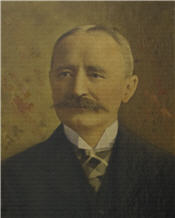 Mayor James Farrand Ruttan - 1891-1892 Mayor James Farrand Ruttan - 1891-1892 |
| James Farrand Ruttan began his career at the Ottawa post office, followed by a brief period of railway construction in Lindsey and a job at the Toronto law firm of Osler & Hammond. Ruttan ventured west in the early 1880s, following the Winnipeg land boom. He opened a real estate office in Port Arthur in March 1882 and moved to the area permanently in early 1883.
Ruttan became the McVicar family’s real estate agent and handled all sales of their widespread properties, including the sale of their property east of McVicar’s Creek, where the Canadian Pacific Railway (CPR) was forced to build their first station in Port Arthur. The difficulties that arose between the CPR and the McVicars soon became Ruttan’s. He was identified as being a public opponent of the CPR. And in 1889, at the time of the train capture due to unpaid taxes, he was serving as a member of Thomas Gorham's Council, which did not help. With a few years' experience as Councillor, Ruttan ran for Mayor and was elected in 1891. During his tenure, Ruttan saw the construction of the electric street railway; however, this project resulted in a large debt, the responsibility for which was attached to Ruttan in the public's eye. Ruttan was made Crown Lands agent for the Thunder Bay District in May 1889, a position he held until he was replaced by W. H. Hesson in July 1903. When the economy began to improve during the late 1890s, Ruttan sold 16 of the McVicar estate lots in Fort William and 300 lots along the southern waterfront. In May 1901, an out-of-court settlement with the CPR was finally reached in regards to the McVicar family properties. Ruttan died of pneumonia in 1904 and left his business to his brothers. Both Farrand and Ruttan Streets were named in his honour. Born: March 10, 1850 in Cobourg, Northumberland County, Ontario Died: Jan. 21, 1904 in Port Arthur, Ontario at the age of 53 Councillor: 1884, 1888-1889 Mayor: 1891-1892 Mayoral Candidate: 1893 |
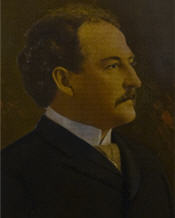 Mayor George Thomas Marks - 1893-1899 |
| George Thomas Marks, nephew of Port Arthur's first Mayor Thomas Marks, attended Trinity College School in Port Hope and arrived in Prince Arthur’s Landing in 1873. Marks was employed by several family ventures, such as the Prince Arthur's Landing and Kaministiquia Railway, the Thunder Bay Colonization Railway, and the Thunder Bay Dock, Forwarding and Elevator Company where he worked as an Agent, Bookkeeper, and Director.
Marks partnered up with his cousins, Harold Andrew Wiley and Franklin Samuel Wiley, in 1903, and established the Canadian North West Steamship Company and Neebing Navigation Limited. Their newly formed company began operating the lake-carrier Neebing, working in the grain and iron trades. Before first being elected Mayor in 1893, Marks had established himself politically as the treasurer of the Municipality of Shuniah, Shuniah Councillor, and Councillor for Port Arthur. When he first came to be Mayor, Port Arthur was in a state of disarray. He was often challenged by contentious ratepayers who seemed to question every decision, as well as by his rival, James Farrand Ruttan. During his seven years in office, Marks created the Electric Railway and Light Commission in 1895, a municipal electric-lighting plant in 1897, helped promote the Ontario and Rainy River Railway, redefined the town’s water limits, and reached a deal with the Canadian Pacific Railway after a long-standing dispute over taxes. Marks was also a strong supporter of amalgamation with Fort William. Born: August 31, 1856 in Bruce Mines, Algoma District, Ontario Died: May 21, 1907 in Toronto, Ontario at the age of 50 Councillor: Shuniah Councillor 1879-1881, Port Arthur Councillor 1885-1887 Councillor Candidate: Port Arthur Councillor Candidate 1888, 1901-1903 Mayoral Candidate: 1900 Mayor: 1893-1899 |
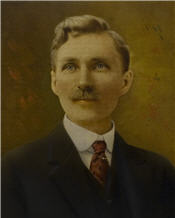 Mayor Issac Lamont Matthews - 1901-1902, 1909-1910, 1920-1923 Mayor Issac Lamont Matthews - 1901-1902, 1909-1910, 1920-1923 |
| Isaac Lamont Matthews was born of Scottish descent and was the eighth of nine children in his family. He was born and raised in Lanark County, Ontario, moved to Winnipeg, and arrived in Port Arthur in 1882, where he began working as a store clerk. Matthews later purchased this same store in 1887, and continued to own and operate department stores for most of his career.
When Matthews was first elected Mayor in 1901, the Canadian Northern Railway had just been established in the area and the Pigeon River Lumber Company had just arrived, providing the Port Arthur area with economic revival. During his early days as Mayor, Matthews improved the sewage and sidewalk systems, decided upon a municipal telephone system, was in talks for a water works system, and helped harness power from the Current River. Matthews was acclaimed as Mayor in 1909 and 1910, and during these two years oversaw many new developments for the City of Port Arthur. He signed a contract with the Ontario Hydro-Electric Commission which began providing Port Arthur with electric power, eliminated the positions of the Electric Railway and Light Commissioners, extended the street railway on Arthur Street, and opened various streets throughout the town. At this time, the City also saw the introduction of the Western Dry Dock and Shipbuilding plant at Bare Point, and the creation of a wireless station used for shipping. When Matthews was elected Mayor for a third period in the early 1920s, Port Arthur’s post-war finances were poor condition. Matthews worked to rectify the situation with the help of then Finance Chairman John Hourigan and as new pulp and paper mills were established, the economy and the City's funds improved. Born: May 1 or 4, 1859 in Middleville, Lanark Township, Lanark County, Ontario Died: August 17, 1941 in Port Arthur, Ontario at the age of 82 Councillor: 1896-1900 Mayor: 1901-1902, 1909-1910, 1920-1923 |
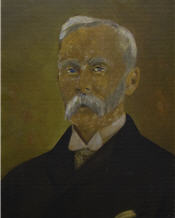 Mayor George Onésime Philémon Clavet - 1903-1904, 1906-1907 Mayor George Onésime Philémon Clavet - 1903-1904, 1906-1907 |
| George Onésime Philémon Clavet moved to Silver Islet from Quebec in 1871 when he accepted a position at a grocery store as a clerk. In 1875, he moved to Prince Arthur's Landing to establish his own store on South Water Street.
When Clavet ran for a position on the 1881-1882 Shuniah Council, he did not receive any votes. However, he was appointed Councillor for the Island Ward, as the two candidates running in that ward did not receive any votes either. He served from Sept. 1, 1881, until 1885. In 1900, when Mayor George Hugh Macdonell left Port Arthur to fulfill other obligations in Manitoba, Clavet acted as Mayor for all intents and purposes. It was not until 1903 that Clavet was actually elected Mayor. During his four years in office he proved to be very popular with the public. One of the challenges Clavet faced as Mayor was making sure that Port Arthur had a suitable water supply and sewage system. Thanks to his efforts, Port Arthur saw water flow through the city in September 1904. He also distinguished himself as a notable opponent of local brothels in 1903. Clavet had a large hand in shaping the City of Port Arthur Act as well as other legislation, and was the first Mayor of the new City of Port Arthur in 1907. During this period, he acquired land for the City from the Province, such as Reserve A and Waverly Park, and sought negotiations with the Grand Trunk Pacific Railway, the Canadian Pacific Railway, and the Federal Government to extend the boundaries of the breakwater. Clavet Street was named in his honour. Born: August 29, 1843 (or 1845) in St. Michel de Bellechasse, Quebec Died: July 11, 1909 in Port Arthur, Ontario Councillor: Shuniah Councillor 1881(September)-1885, Port Arthur Councillor 1900, 1902 Mayoral Candidate: 1899, 1901 Mayor: 1903-1904, 1906-1907 |
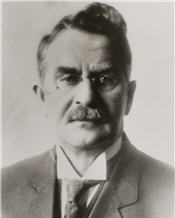 Mayor Richard Vigars - 1905 Mayor Richard Vigars - 1905 |
| Richard Vigars came to Canada from England with his family at the age of eight. The family continued to move around in Canada, where the men of the family worked as miners, and even lived in Michigan for a short time. They moved to Prince Arthur’s Landing in 1876, and Vigars and his older brother, William, built the District Court House. Vigars was working as a bricklayer by this time. The Vigars brothers worked on many projects, the most memorable including the Marks dock in 1876; laying the foundation, brickwork, and plaster of St. Andrew’s Roman Catholic Church in 1881; and the building of the Canadian Pacific Railway dock in 1882.
During the 1890s, the Vigars brothers became heavily involved in the lumber industry and secured a contract with the Ontario and Rainy River Railway, providing them with supplies for their stations and water tanks. In 1902, Vigars’ firm negotiated terms with the Canadian Northern Railway to build a warehouse and dock in Port Arthur and to make improvements to the West Fort coal dock. During Vigars’ time as Councillor in 1885, he acted as Mayor of Port Arthur and had to supply the passing troops of the Wolseley Expedition, who were on their way to put an end to the Riel Rebellion, with meals. He decided to resign from Council in September 1891, as he did not support the electric street railway and all its costs. He did not enter politics again until 1905, when he was acclaimed as the Mayor of Port Arthur. While Vigars was Mayor, he negotiated for the Atikokan Iron Works and the Pittsburgh Coal Company to be brought to Port Arthur. Vigars also laid the Port Arthur Salvation Army Citadel cornerstone on Sept. 8, 1905. Born: December 24, 1849 in Mary Tavy, Devon, England Died: June 25, 1930 in Port Arthur, Ontario at the age of 80 Councillor: Shuniah Councillor 1882 (January-June), 1883-1884, Port Arthur Councillor 1884 (May-December), 1885, 1891 (January-September) Mayoral Candidate: 1906 Mayor: 1905 |
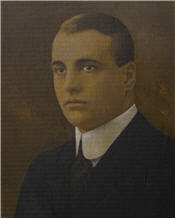 Mayor John James Carrick - 1908 Mayor John James Carrick - 1908 |
| John James Carrick was born in the United States to Canadian parents of British ancestry. The family moved to Southwestern Ontario in 1881, where Carrick grew up and attended school. Carrick worked with his father in the oil business, and then moved to Sault Ste Marie, Ontario where he began a long career in real estate speculation.
Carrick came to Port Arthur around 1903, and in partnership with George Mooring, was deeply involved in large real estate projects such as the Highland Park and Strathcona Heights subdivisions. Carrick was also involved in other property sales across the Lakehead, including Carrick Park, Victoria Park, the New Ontario fair grounds, and Mariday Park, which was named after his wife Mary Day. Carrick proved to be just as successful in politics as he was in real estate. He served as Alderman in 1907, and was elected Mayor of Port Arthur in 1908. In the very same year, Carrick was elected as a Conservative to the Ontario Legislature. In 1911, he was acclaimed as the Member of Parliament for Thunder Bay and Rainy River, sitting until the next election in 1917. He counted among his successes being a Member of Legislative Assembly, the construction of the Dog Lake dam, and promoting the construction of roads throughout the district. He also claimed he was responsible for securing large federal expenditures used on the Port Arthur harbour and breakwater, the Port Arthur Customs House and Armoury, and the Dominion Government elevator. Carrick was a believer in self-promotion. He established the Port Arthur Daily News in February 1906, and then used the newspaper to promote and advertise his own interests, both as a politician and as a real estate businessman. Carrick sold the newspaper in May 1918 to John Russell Smith of the firm Davidson & Smith. After the First World War began in 1914, Sir Sam Hughes granted Carrick the honorary rank of Lieutenant-Colonel, and in late 1915, he was stationed as a temporary Colonel to the staff at Canadian headquarters. At the end of the war, Carrick moved to Toronto, and by 1930 had established offices in the Sterling Towers at the corner of Bay and Richmond in the city’s downtown. Born: September 17, 1873 in Terre Haute, Indiana Died: May 11, 1966 in Mexico City, Mexico at the age of 93 Councillor: 1907 Mayor: 1908 Member of Legislative Assembly: Conservative, Port Arthur 1908 - 1911 Member of Parliament: Conservative, Thunder Bay and Rainy River 1911 - 1917 |
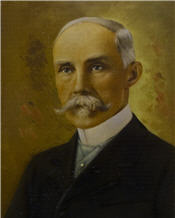 Mayor Samuel Wellington Ray - 1911-1912 Mayor Samuel Wellington Ray - 1911-1912 |
| Samuel Wellington Ray came to Prince Arthur’s Landing from Peterborough County, Ontario in 1876. He worked at the Ontario Bank, first as a teller, and eventually as an accountant. In June 1884, Ray resigned from the Ontario Bank to establish his own private bank with Noah K. Street, a prosperous merchant and moneylender. Unfortunately, Street died within the first three months of the bank’s opening.
Ray became very involved in mining finances during the 1890s, and developed several mining companies, including the Foley Mine (1890), the Tip Top Mine (1903), and the Animikie Mines Company (1928). In August 1892, a woman by the name of Louise Rose Bathurst accused Ray of raping her, and he was brought to trial in June 1894. He was found not guilty; however, the jury was still critical of his behaviour. Crown Attorney A. R. Lewis, an unpopular man, was in charge of Ray’s case and seemed to most people to be too enthusiastic about the whole ordeal. Ray had strong support from friends like James Conmee, and his reputation was not permanently harmed by the matter. Ray was first elected Mayor in 1911, and during his time in office, Port Arthur was given property around the Current River reservoir which was turned into a park. As Mayor, Ray also greeted His Royal Highness Prince Arthur, Duke of Connaught, on his second visit to the city that had been named after him. Born: Feb. 16, 1855 in Lakefield, Peterborough County, Ontario Died: March 7, 1939 in Port Arthur, Ontario at the age of 84 Councillor: 1901-1905, 1910 Reeve: Reeve of Shuniah 1902-1906 Mayor: 1911-1912 |
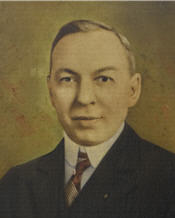 Mayor John Albert Oliver - 1913-1914 Mayor John Albert Oliver - 1913-1914 |
| John Albert Oliver attended law school and sat on the Toronto Board of Education for two years before working as a claims agent in Minneapolis. Oliver moved to Fort William circa 1894, where he worked as a manager and accountant for lumber camps.
Oliver was known as being both a devoted Conservative and an excellent speaker, both of which helped him gain a strong reputation as an organizer in public and political affairs. He began his political career in 1895, working as an organizer for J. G. King in the Algoma by-election. Oliver moved to Port Arthur in 1906 after being designated Crown Timber Agent for the district the previous year, and after serving several years on the Port Arthur Council, was acclaimed Mayor in 1913. During his two years in office, Oliver saw to the development of a new waterworks system, the construction of Lyon Boulevard Park in Current River, and moved the location of the intake pipe for the City’s drinking water supply as he was very concerned with public health issues. Oliver also advocated the acceptance of the Oriental population of Canada, which was faced with much discrimination at the time. During the 1915 Mayoral campaign, fellow candidate James Patrick Mooney criticized him heavily, and Oliver lost the election by a vote of 937 to 547. He ran for Mayor once more in 1919, and was again defeated, but by a slim margin of 87 votes. Born: Sept. 3, 1871 in North Elmsley Township near Perth, Lanark County, Ontario Died: April 3, 1924 in Port Arthur, Ontario at the age of 52 Councillor: 1910, 1912 Mayor: 1913-1914 Mayoral Candidate: 1915, 1919 |
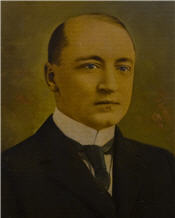 Mayor James Patrick Mooney - 1915 Mayor James Patrick Mooney - 1915 |
| James Patrick Mooney was born in Pembroke, Ontario and attended school in his home town as well as in Mattawa. He moved to Sault Ste. Marie where he was employed by the Lake Superior Corporation and organized and managed the first professional Canadian hockey team.
In the fall of 1906, Mooney relocated to Port Arthur to work in J. J. Carrick's offices as a bookkeeper and manager, eventually taking control of advertising. In 1911, Mooney established an insurance and real estate company, J. P. Mooney & Co., with partner James A. Kennedy. In 1918, Kennedy fled Port Arthur to take up rum-running, and was eventually found murdered in Ohio in 1928. Mooney sat on Port Arthur’s Council in 1911 and 1912, and ran in the Mayoral election of 1915. His victory over the incumbent John Albert Oliver came as a surprise to most citizens. His year in office coincided with an economic collapse, and he was particularly concerned with fixing the City's finances. Mooney also created the Public Utilities Commission to reduce the amount of work done by City Council by handling issues such as telephones, electric power, and the street railway. Mooney did not run again for Mayor in the 1916 election; however, he did run as Liberal candidate in the Provincial Election of 1919, but was defeated by Conservative Don Hogarth. He eventually ended his real estate and insurance career and opened up a manufacturers’ agent office on Pearl Street. Born: Oct. 23, 1877 in Pembroke, Renfrew County, Ontario Died: July 3, 1963 in Scarborough, Ontario at the age of 85 Councillor: 1911-1912 Mayor: 1915 |
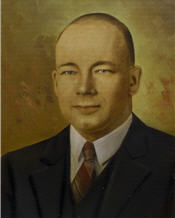 Mayor Donald James Cowan - 1916-1917 Mayor Donald James Cowan - 1916-1917 |
| Donald James Cowan graduated law school in 1908 from Osgoode Hall in Toronto and set up his own law firm in Port Arthur later that year.
In 1913, Cowan was elected to the City Council of Port Arthur, and held his seat until 1915. He was elected as Mayor in 1916, during the First World War, which undoubtedly made the position much tougher. Throughout his two years as Mayor, Cowan continued cutbacks that started with the outbreak of war in City spending, halting all capital expenses and reducing the salary of paid officials by four per cent. Cowan was also able to obtain Port Arthur Pulp & Paper Company Ltd. for the City of Port Arthur, closed bars throughout the city due to the proclamation of the Ontario Temperance Act in 1916, saw the Railway Marine and General Hospital become the Port Arthur General Hospital in November 1917, and the construction of the Richardson, Saskatchewan Co-operative and Grain Growers Elevators. In January 1919, Cowan was appointed the City Solicitor of Port Arthur, and held this post until November 1934. In November 1925, he also became the Crown Attorney of the Thunder Bay District, and in 1928, was named a King’s Counsel. He was elected to two terms in Parliament as a Conservative for the riding of Port Arthur-Thunder Bay, in 1926 and 1930. In July 1935, he was given the Judgeship of Brant County by Prime Minister R. B. Bennett, and there he stayed until retirement in 1958, at the age of 75. Born: Jan. 3, 1883 in Drumbo, Blenheim Township, Oxford County, Ontario Died: Jan. 14, 1964 in Brantford, Ontario at the age of 81 Councillor: 1913-1915 Mayor: 1916-1917 Member of Parliament: 1926-1935 |
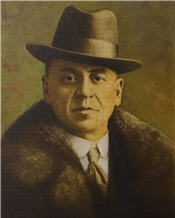 Mayor Edward John Blaquier - 1918-1919 Mayor Edward John Blaquier - 1918-1919 |
| Edward John Blaquier was born in Middlesex County, Ontario but had moved to Port Arthur by 1910, where he was part-owner of a shoe store. He spent time in Regina, Saskatchewan, and travelled around the country for business purposes. By 1913, he was back in Port Arthur, and established a real estate and insurance company which advocated the selling of lots in Jumbo Gardens. He also had a school house built in the subdivision in 1916.
In 1916, Blaquier’s first year on Council, he campaigned for an expansion of the City's lighting system to Jumbo Gardens. This was controversial, as the subdivision was outside the City limits in McIntyre Township. Blaquier's actions prompted criticism from the press, in particular the Port Arthur News Chronicle. Blaquier's two Mayoral elections were close contests, winning by only 17 votes in 1918, and by only 87 votes in 1919. During his two terms as Mayor, Blaquier adamantly defended maintaining and improving local business and industries, such as obtaining hydro-electric power for the city, improving Fort William Road, continuing the street railway to the elevators and pulp mill. Finances became a serious problem by the end of 1919, as the Financial Post nationally condemned both Port Arthur and Blaquier for mismanaging public money. Blaquier ran as an independent candidate in the provincial elections in 1919 and 1923, however, was unsuccessful both times. After the Provincial Election in 1923, Blaquier returned to his hometown, where he ran a fruit and chicken farm. He died in London, Ontario in 1943. Born: August 5, 1866 in London, Middlesex County, Ontario Died: December 19, 1943 in London, Ontario at the age of 77 Councillor: 1916-1917 Mayor: 1918-1919 |
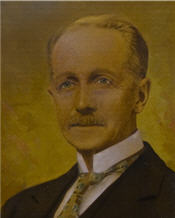 Mayor James White Crooks - 1924-1925 Mayor James White Crooks - 1924-1925 |
| James White Crooks graduated from the Ontario College of Pharmacy in 1885 and spent some time living in West Duluth before moving to Port Arthur in May 1886. It did not take long for Crooks to establish his own drugstore in 1891, and in 1895, he went into partnership with T. S. T. Smellie. Crooks soon became the manager of drug stores in both Port Arthur and Fort William, and purchased Clarke’s historic store in 1903. In February 1909, he was the sole owner of these businesses.
Crooks was acclaimed Mayor of Port Arthur in 1924 and served two terms in office. As Mayor, he was notably frugal. The City was in a difficult financial situation, and Crooks was reluctant to spend any money in hopes of rectifying it. As the City began showing signs of economic improvement in 1925, newer and younger politicians, such as Milton Francis, became more popular as they were willing to be more generous with the City’s finances. Crooks retired from the pharmacy business in the fall of 1935, while the family pharmacy continued to run under his son and grandson. In 1986, Shopper’s Drug Mart purchased the Crooks family drugstore. Born: February 3, 1866 in Woodstock, Oxford County, Ontario Died: September 4, 1944 in St. Petersburg, Florida Councillor: 1920-1923 Mayor: 1924-1925 |
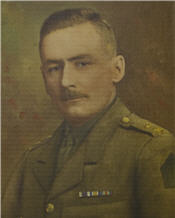 Mayor Milton Francis - 1926-1927 Mayor Milton Francis - 1926-1927 |
| Milton Francis moved to Fort William from Huron County, Ontario some time before 1907 and worked as Manager of the Nordheimer Piano Company. Later, he formed the Francis-Smith Agency, which operated two stores in Fort William and Port Arthur selling pianos and Victrolas.
In August 1914, Francis enlisted with the Canadian Expeditionary Force. When he left Canada to serve overseas in 1915, he was made Captain. During the war, Francis participated in the major battles fought at Ypres, the Somme, Vimy Ridge, and Passchendale. In August 1917, he was awarded the Distinguished Service Order for his valour at Vimy Ridge, and by 1918 he was an instructor in Aldershot, England, at the Senior Officers Staff School. Upon returning, Francis relocated his music store to Port Arthur, and also became Vice-President of a coal merchants' company. In 1925 he opened a lumber yard which incorporated with John Stirrett’s company, and became the Milton Francis Lumber Company. Francis was elected Mayor in 1926, at a time when the post-war cynicism and economic restraints were lifting. His platform included increasing tourism, establishing pulp and paper industries and subsidiaries, and looking into the loss of the Canadian National Railway terminals. Born: March 26, 1884 in Middlesex County, Ontario Died: June 4, 1950 in Port Arthur, Ontario at the age of 66 Mayor: 1926-1927 |
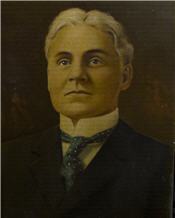 Mayor John Oswald Hourigan - 1928 Mayor John Oswald Hourigan - 1928 |
| John Oswald Hourigan moved with his parents and siblings from Southern Ontario to Port Arthur in 1886. Upon arriving in Port Arthur, Hourigan worked at the Ontario Bank and was a valued employee for 13 years. In 1897, he began work with the newly-formed Marks-Clavet-Dobie Company Ltd., starting as Secretary-Treasurer.
Serving eight years on City Council, Hourigan accomplished much for Port Arthur, both in and out of office. In 1909, he was a key figure in securing a deal with the Western Dry Dock and Shipbuilding Company for Port Arthur and helped clean up the City’s finances during the post-war years. While Hourigan was Finance Committee Chairman in the 1920s, he was able to turn a deficit of $460,000 in 1920 into a surplus of $60,000. Hourigan was also a believer in working more closely with the City of Fort William to establish economic and political ties. Hourigan sat on Port Arthur’s City Council in 1909 and from 1920 to 1927. He ran for Mayor in 1911; however was defeated by Samuel Wellington Ray. Hourigan was acclaimed as Mayor in 1928, and served one term in office. Born: July 30, 1866 in Smiths Falls, Lanark County, Ontario Died: December 5, 1930 in Port Arthur, Ontario at the age of 64 Councillor: 1909, 1920-1927 Mayoral Candidate: 1911 Mayor: 1928 |
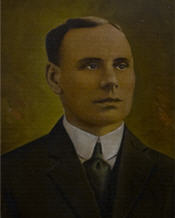 Mayor George Gibbon - 1929-1930 Mayor George Gibbon - 1929-1930 |
| George Gibbon came to Canada at age 14 with his family and relocated in Oliver Township in May 1883. From 1901 to 1904 he was employed by the Port Arthur street railway as a conductor. Gibbon then partnered with James D. Campbell to open a grocery store under the name of Campbell and Gibbon. Gibbon remained involved in the grocery business as late as 1950.
Gibbon was founder of the Children's Aid Society of Port Arthur, instituted in March 1916 when it split from the Fort William society, and held the position of local superintendent. He was actively involved in child welfare throughout his life. In 1935, Gibbon was appointed Relief Administrator, by the Ontario Department of Public Welfare, and oversaw the districts of Thunder Bay, Kenora and Rainy River. Gibbon sat on Port Arthur’s City Council from 1916 to 1919, as a mid-year replacement in 1922, and from 1923 to 1928. He was acclaimed as Mayor in 1929, and again in 1930, a time when the country was facing the Great Depression. As unemployment rates soared, Gibbon went to Ottawa to seek help on behalf of the city. Gibbon ran again in the 1931 Mayoral election, but lost to Percy Victor Ibbetson. Born: December 3, 1867 in Marske or Woodby, Yorkshire, England Died: September 17, 1951 in Port Arthur, Ontario at the age of 83 Councillor: 1916-1919, 1922 (August-December), 1923-1928 Mayor: 1929-1930 Mayoral Candidate: 1931 |
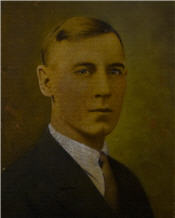 Mayor Percy Victor Ibbertson - 1931-1932 Mayor Percy Victor Ibbertson - 1931-1932 |
| Percy Victor Ibbetson attended school at Wesley College and the University of Manitoba, before being called to the Manitoba bar in 1924 and the Ontario bar in 1927.
Ibbetson was elected as a Councillor for Port Arthur in 1930. One year later in 1931, he ran for May winning a close race over three other candidates. When Ibbetson came to office, the country was facing the worst of the Great Depression. During his Mayoralty, Ibbetson was faced with two protests led by angry citizens, one in July 1931 and again in October 1932. Ibbetson was appointed Thunder Bay District Crown Attorney, starting in 1940 until his retirement in 1958. At times, he noted how challenging it could be to oversee such a large area. He tended to be apprehensive of 'judge-made' laws, preferring to rely on statutory law. Born: September 21, 1897 in Gladstone, Manitoba Died: July 2, 1973 in Thunder Bay, Ontario at the age of 77 Councillor: 1930 Mayor: 1931-1932 |
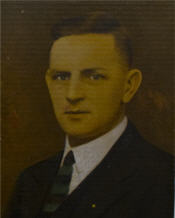 Mayor George Blanchard - 1933 Mayor George Blanchard - 1933 |
| George Blanchard arrived in Port Arthur in 1916 and was employed by C. D. Howe & Company before taking over William Hood's architectural business in 1920. As a prominent architect in Port Arthur, Blanchard designed many noteworthy buildings including the Port Arthur General Hospital, Queen Elizabeth School, the Coca Cola plant, and the Port Arthur Golf and Country Club.
The Ontario Government Works Office appointed Blanchard Superintendent of Northwestern Ontario, and he also served as president of the Children’s Aid Society. Blanchard was also the treasurer of the Municipality of Shuniah for 17 years before leaving to work at the new Port Arthur Mental Home as resident superintendent. During his years as a City Councillor and as Mayor, the Great Depression was at its worst. People were extremely unhappy with the high unemployment rates, and ratepayers were resentful of the taxes they were required to pay. It was quite a trying time for both Blanchard and the City of Port Arthur. Born: March 3, 1891 in Kingston-upon-Hull, England Died: July 19, 1978 in Vernon, British Columbia at the age of 87 Councillor: 1931-1932 Mayor: 1933 |
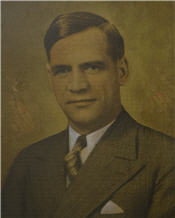 Mayor Charles Winnans Cox - 1934-1948, 1952 Mayor Charles Winnans Cox - 1934-1948, 1952 |
| Charles Winnans Cox was born near London, Ontario in 1882, and ventured out west during his teenage years, working as a ranch hand in Alberta. Cox had relocated to Port Arthur by 1908, and was working as a timber contractor by 1912, taking out pulpwood from Black Bay. By the early 1920s, Cox was the most prominent timber operator in the area, obtaining pulpwood from Nipigon, Hurkett, and Black Bay, and supplying such companies as the Hammermill Paper Company and the Detroit Sulphite Pulp and Paper Company. Cox incorporated his company, Charles W. Cox Co. Ltd., in 1924, and also worked as a general contractor.
In the Provincial Election of 1934, Cox ran as a Liberal for the Port Arthur riding and was elected with nearly 60 per cent of the vote. He was appointed Minister Without Portfolio by Premier Mitchell Hepburn in 1936. In 1937, Cox’s face was burned and scarred by acid after an affair with a 32-year-old school teacher ended badly. The incident proved to hurt his provincial political career, as he was elected again, but was not made Cabinet Minister. He held this seat until 1943, the entire term concurrent with his service as Mayor of Port Arthur. Later, Cox represented the Fort William riding at Queen's Park for one term. Cox was first elected Mayor of Port Arthur in 1934 and served an astounding 16 years in office, nearly all of it consecutively. During his time as Mayor, Cox used his powers of persuasion to convince the government to choose Port Arthur to be the site of a new mental health hospital, rather than Fort William. In 1948, Cox decided to retire as Mayor of Port Arthur, but then chose to run in the Fort William Mayoral election. Unsurprisingly, he was defeated by the Fort William politician Hubert Badanai. He did win the Fort William seat in the provincial election of that year. His last political victory was his election once more as Port Arthur's Mayor in 1952, defeating incumbent Frederick Oliver Robinson by 113 votes. Born: July 7, 1882 in Westminster Township, Middlesex County, Ontario Died: March 28, 1958 in Port Arthur, Ontario at the age of 75 Councillor: 1932 Member of Legislative Assembly: Liberal MLA Port Arthur Riding 1937-1945, Liberal MLA Fort William Riding 1948-1951 Mayoral Candidate: Port Arthur Mayoral Candidate 1933, 1950, 1953; Fort William Mayoral Candidate 1949 Mayor: 1934-1948, 1952 |
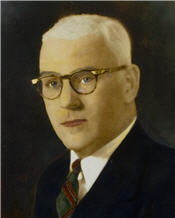 Mayor Frederick Oliver Robinson - 1950-1951, 1953-1955 (Aug.) Mayor Frederick Oliver Robinson - 1950-1951, 1953-1955 (Aug.) |
| Frederick Oliver Robinson was the first Mayor of Port Arthur to be born within the city. He grew up, went to school, and was married in Port Arthur. He worked as a skilled machinist for the Canadian National Railway (CNR) for 25 years, and was elected to the Ontario Legislature in 1943, representing the Port Arthur riding as a member of the Co-operative Commonwealth Federation (CCF). Even while serving at Queen's Park, he continued to work for the CNR between sessions, and once elected as Mayor, worked as a machinist on weekends.
In 1943, Robinson was elected to the Board of Education, where he remained until 1945. While a member of the Board, Robinson pushed for the establishment of a university or centre for higher learning. Thanks in part to Robinson’s dedication; the Lakehead Technical Institute was created on June 4, 1946. The institute would later become Lakehead University. Robinson was elected to Port Arthur City Council in 1946 and sat on Council for three years. He was elected Mayor in 1949 and served five and a half years in office. His career in municipal politics was concurrent with sitting as a Member of Legislative Assembly for Port Arthur. During his time as Mayor, Robinson made many improvements to the City of Port Arthur, including: installing new sidewalks, pavement, storm sewers, and water connections; creating new offices for health and welfare; creating new schools and street lighting; and opening a new fire hall in Current River. In August 1955, Robinson resigned his post as Mayor to take on a new position as Personnel and Public Relations Officer for the Port Arthur Public Utilities Commission. Born: August 2, 1903 in Port Arthur, Ontario Died: June 26, 1969 Councillor: 1946-1948 Member of Legislative Assembly: CCF, 1943 (August) – 1951 (November) Mayoral Candidate: 1951 Mayor: 1949-1951, 1956-1955 (August) |
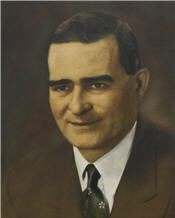 Mayor Albert James Hinton - 1955 (Sept. - Dec.) Mayor Albert James Hinton - 1955 (Sept. - Dec.) |
| Albert James Hinton moved to Canada from England with his parents when he was three years old. After completing his education, Hinton worked at the Thunder Bay Mill as a mechanic and millwright for nearly 38 years.
Hinton was a member of Port Arthur’s City Council from 1947 until 1958. When Frederick Oliver Robinson resigned as Mayor on Aug. 31, 1955, Council voted to elect Hinton as his replacement. He served as Mayor from Sept. 1 to Dec. 31, 1955. Although Hinton was only Mayor for a short period of time, in his many years as Councillor he had established a strong working relationship between the city and its employees. While he was Mayor, Hinton continued to work at the Thunder Bay Mill. One day, he experienced a serious accident when an explosion occurred, resulting in first and second degree burns to his face and neck. Despite these injuries, he was able to fulfill his role as Mayor though to the end of the year. Born: 1908 In Southampton, England Died: April 3, 1963 at the age of 55 in Port Arthur, Ontario Councillor: 1947-1958 Councillor Candidate: 1959 Mayor: 1955 (September - December) |
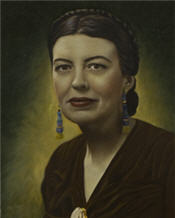 Mayor Eunice Marian Wishart - 1956-1958 Mayor Eunice Marian Wishart - 1956-1958 |
| Eunice Marian Wishart, born in New York, was adopted by an aunt and uncle, her uncle was postmaster of Port Arthur at the time, after the death of her parents.
Wishart came to join Port Arthur’s City Council in 1948, elected as the City's first female Councillor. After serving on Council for a number of years, Wishart ran for Mayor first in 1952 and then again in 1956. She bought airtime on local radio stations and purchased advertisements in local newspapers to raise awareness of her campaign. Her efforts paid off. Wishart was elected the first female Mayor of Port Arthur in 1956, receiving more votes than her three male opponents combined. During her Mayoralty, Port Arthur experienced many positive changes. Wishart developed a civic reserve fund, implemented cheaper parking, acquired a squatters’ area beside Lake Superior, constructed a sewage disposal plant, began reassessing property values, and secured cheap natural gasoline for the city. Apart from her involvement in municipal politics, Wishart belonged to numerous organizations. Some of her roles within these organizations included being Vice-President of the of the Northwestern Ontario Municipal Association; Convener of Economics for Provincial Council of Women for Ontario; Director of the Canadian Child’s Health League of Canada; Patron of the Ontario Association of Film Councils; President of the Thunder Bay Film Council; Director of the Thunder Bay John Howard Society; and Director of the Port Arthur YMCA. Wishart relocated to Toronto in 1974 as she wished to be closer to her family. She remained in Toronto until her death in 1982. Born: Utica, New York Died: 1982 in Toronto, Ontario Councillor: 1948-1952, 1954-1955, 1960 (November – December) Councillor Candidate: 1959, 1960 Mayoral Candidate: 1952 Mayor: 1956-1958 |
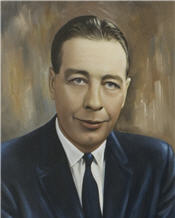 Mayor Norman Robert Wilson - 1959-1961 Mayor Norman Robert Wilson - 1959-1961 |
| Norman Robert Wilson, who was not originally from Port Arthur, was trained as an accountant and worked for nearly 20 years as an accountant and automotive executive. He was heavily involved in the automotive industry and was president of his own company, N. R. Wilson Motor Co. Ltd.
Wilson was a past President of Rotary Club and the Thunder Bay Auto Dealers Association; the Director of the Chamber of Commerce; and the General Canvass Chairman of the Community Chest. Wilson was involved with the YMCA, and as a young man, was involved in boxing and dancing. Wilson was elected Mayor of Port Arthur in 1959, was acclaimed for his second term, and elected for his third. While in office, his main goals were to run the city more efficiently, attract new industries, and keep the City’s finances on track. Born: 1908 (date unconfirmed) Mayor: 1959-1961 |
|
|
| Saul Laskin was born in Fort William and completed his education in both Fort William and Toronto. In 1937, he returned to the region and worked at a clothing store and at his father's furniture business. After serving overseas during the war, Laskin took over his father's business and founded his own store, Laskin's Furniture and Appliances, which he ran from 1946 into the late 1980s.
In 1959, Laskin was elected Councillor for the City of Port Arthur, marking the start of his political career. He sat on Council for two years and was then elected Port Arthur Mayor from 1962 to 1969. When Port Arthur and Fort William amalgamated in January of 1970, Laskin was elected the first Mayor of the newly formed City of Thunder Bay. Laskin had been a long-time supporter of amalgamation and was thrilled to head the new City of Thunder Bay. Laskin was very involved with the community and belonged to many organizations and institutions including the Royal Canadian Legion, the Chamber of Commerce, Congregation Darchei Noam, and Lakehead University which bestowed him with an honorary doctorate and the title Fellow of Lakehead University. In the late 1980s, Laskin and his wife Adele moved from Thunder Bay to Toronto. He resided in Toronto until his death in 2008. Born: May 15, 1918 in Fort William, Ontario Died: Oct. 4, 2008 in Toronto, Ontario at the age of 90 Councillor: Port Arthur Councillor 1959-1960 Mayor: Port Arthur Mayor 1962-1969, Thunder Bay Mayor 1970-1972 |
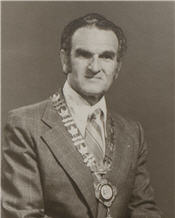 Mayor Saul Laskin - Port Arthur 1962-1969 - Thunder Bay 1970-1972
Contact Us
 Connect